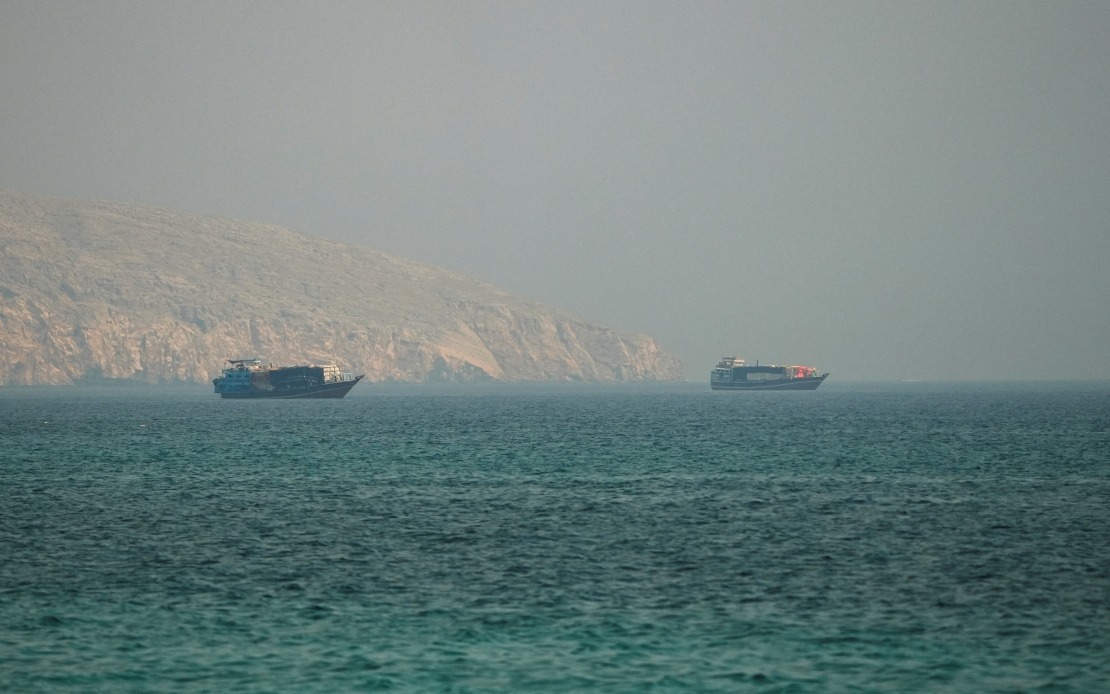
Oman has firmly rejected the idea of imposing mandatory transit fees on vessels passing through the strategically vital Strait of Hormuz, instead backing a voluntary payment model for navigational services. Speaking at the 137th International Maritime Organisation Council session in London this week, an Omani representative outlined the country's position on one of the world's most sensitive maritime chokepoints, where roughly one-third of global seaborne oil passes annually. The statement underscores Oman's effort to balance the concerns of shipping nations and its regional partners while preserving international maritime law principles.
According to reports citing officials familiar with negotiations, Oman recently tabled a proposal to the United States and other Western governments that would allow shipping companies to voluntarily contribute fees for using the strait, rather than face compulsory tolls. This approach represents a pragmatic middle ground in an increasingly contentious debate over who bears responsibility for securing one of the world's most critical maritime routes. The Omani initiative draws inspiration from existing voluntary contribution systems successfully operating in the Strait of Malacca and Singapore, two other crucial Asian waterways through which trillions of dollars in trade flow annually.
The significance of Oman's intervention lies in its geographic position and diplomatic standing in the region. As a sultanate that maintains careful neutrality and enjoys relatively cordial relations with neighbouring Iran while also cooperating with Western powers, Oman has positioned itself as a potential broker in maritime disputes affecting the Persian Gulf. The country's emphasis on voluntary arrangements rather than mandatory payments reflects an understanding that coercive financial schemes could escalate tensions in an already volatile region where maritime incidents have triggered military responses and heightened concerns about freedom of navigation.
Oman's representative reaffirmed during the council session that the sultanate remains committed to the principle of transit passage enshrined in international maritime law. This commitment matters considerably for Malaysian stakeholders and Southeast Asian nations more broadly, as it reinforces a rules-based approach to shipping that protects the interests of all maritime nations, regardless of size or military capacity. Any erosion of transit passage principles in the Strait of Hormuz could establish dangerous precedents affecting other critical Asian waterways, including the Strait of Malacca itself.
The proposal emerged amid escalating tensions in the Persian Gulf. Earlier reports indicated that Iran had begun imposing unilateral transit fees on certain vessels traversing the strait, a move that alarmed shipping companies and maritime trading nations. The development prompted the United Arab Emirates and several allied countries to submit a formal complaint to the IMO Council condemning what they characterised as unlawful toll collection by Iran. This coordinated international response illustrated the seriousness with which maritime nations view attempts to unilaterally tax passage through international waters.
Iran responded by submitting its own proposal, asserting that it has maintained consultations with Oman regarding management and coordination arrangements for administering the waterway in accordance with international law and domestic regulations. Iranian officials emphasised that these discussions remained ongoing, suggesting potential diplomatic pathways existed. The positioning of Oman as intermediary in these exchanges hints at behind-the-scenes negotiations aimed at resolving the dispute without escalation.
The voluntary contribution model that Oman champions merits closer examination for Malaysian and regional readers. The Strait of Malacca arrangement, which Oman's proposal apparently mirrors, involves shipping companies voluntarily contributing to costs associated with maintaining safe passage, navigational aids, and maritime security. This system respects international law while acknowledging that countries bordering crucial straits incur legitimate expenses in preserving safe navigation. Such arrangements could prove workable in the Hormuz context if all parties accept the framework and maintain transparency regarding how collected fees are deployed.
For Southeast Asia, the stakes in the Hormuz dispute extend beyond immediate commercial interests. Malaysia's significant shipping industry and its role as a key trading nation dependent on global maritime commerce mean that any disruption to freedom of navigation principles affects regional prosperity. Additionally, the precedents established regarding how international waters are managed influence discussions about passage through the Malacca Strait and other Asian maritime chokepoints. Malaysian policymakers therefore have reason to monitor developments in Hormuz closely and support diplomatic initiatives that preserve rules-based maritime governance.
The IMO Council session, conducted in London from July 6 through 10, provided the institutional venue for these competing proposals and national positions to be aired and debated. The organisation serves as the appropriate forum for resolving such disputes, and the fact that multiple nations formally presented their positions suggests that diplomatic channels remain open despite underlying tensions. The involvement of major maritime trading nations and regional powers indicates that stakeholders recognise the consequences of allowing the situation to deteriorate further.
Oman's emphasis on preserving safe and open sea lanes while strengthening resilience in global maritime supply chains reflects pragmatic understanding that instability in the Strait of Hormuz harms all parties—regional states, shipping companies, and energy-importing nations alike. The sultanate's willingness to work collaboratively with the IMO and member states suggests a diplomatic approach rather than an adversarial one. This orientation could provide foundation for broader agreement on managing the strait in ways that respect sovereignty concerns while maintaining international maritime principles.
Moving forward, the effectiveness of Oman's voluntary fee proposal depends on several factors. First, all significant maritime users must perceive the arrangement as equitable and transparent. Second, the designated fund manager must credibly account for expenditures and prove that collected fees directly benefit navigational safety and security. Third, major shipping nations and energy importers must accept that such payments constitute legitimate costs of commerce rather than illicit tolls. If these conditions are met, the Omani model could offer a sustainable solution.
For Malaysian observers and policymakers, the unfolding situation in the Strait of Hormuz serves as instructive case study in maritime diplomacy and international law. As an ASEAN member state and significant maritime nation with vital interests in freedom of navigation, Malaysia should track how international consensus forms around the Hormuz question. The principles adopted there will likely influence future discussions about managing other critical Asian waterways and protecting shipping routes essential to regional economic prosperity.

