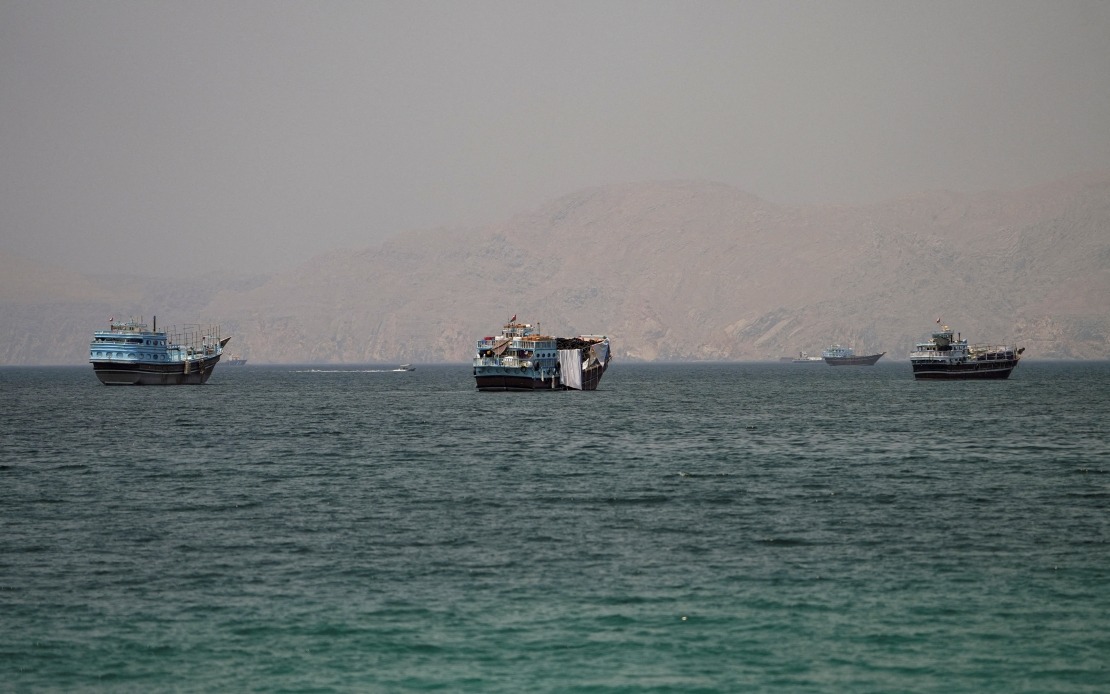
Oman has reinforced its commitment to maintaining unrestricted maritime transit through the Strait of Hormuz, one of the world's most strategically vital waterways, following high-level discussions between Omani and Iranian officials in Muscat. The reaffirmation comes as part of broader international efforts to stabilise the region following recent diplomatic breakthroughs between the United States and Iran, developments that carry significant implications for Southeast Asian trade and energy security.
Omani Foreign Minister Badr Albusaidi issued his statement after hosting substantive talks with two prominent Iranian figures: Parliament Speaker Mohammad Bagher Qalibaf and Foreign Minister Abbas Araghchi. The conversation centred on a recently concluded memorandum of understanding between Washington and Tehran, with particular focus on provisions governing freedom of navigation and commercial vessel operations through the Strait of Hormuz. Albusaidi's public commitment underscores Oman's traditional role as a neutral mediator in Gulf affairs and its interest in preserving the corridor as a trade artery free from artificial restrictions or tariffs.
The Strait of Hormuz represents a chokepoint through which approximately one-third of global maritime petroleum trade passes annually, making its security and accessibility a matter of intense concern for nations far beyond the Middle East. For Malaysia and other Southeast Asian economies heavily dependent on energy imports and export-oriented maritime commerce, any disruption to this passage directly affects shipping costs, fuel prices, and supply chain stability. The recent diplomatic engagements therefore carry particular weight for regional policymakers and business communities monitoring geopolitical developments that could reshape trade dynamics.
The momentum behind these discussions emerged from a significant development last week when the United States and Iran remotely signed a fourteen-point memorandum of understanding at the Burgenstock resort in Switzerland. This agreement established a sixty-day negotiating window intended to resolve longstanding contentious issues, including management of Iran's uranium enrichment activities, its nuclear programme trajectory, and other unresolved bilateral grievances. Importantly, the document explicitly commits both parties to ensuring safe commercial passage through the Strait of Hormuz without toll structures or artificial impediments, addressing one of the most volatile dimensions of US-Iran tensions.
The accord also stipulates an immediate and comprehensive cessation of military operations across all theatres, with particular emphasis on Lebanon, alongside removal of the American naval blockade that has constrained Iranian economic activities. These provisions represent a significant diplomatic shift from years of escalating confrontation and represent efforts to create space for negotiated solutions to entrenched disputes. The agreement's scope extends beyond bilateral US-Iran concerns to encompass regional stability measures affecting multiple nations.
Complementing these initiatives, Qatar and Pakistan jointly announced on Sunday that they had facilitated agreement on establishing a dedicated de-confliction mechanism involving the United States, Iran, and Lebanese parties. This institutional arrangement aims to monitor adherence to commitments regarding cessation of military activities in Lebanon under the terms of the Islamabad Memorandum of Understanding. The creation of such verification mechanisms reflects international recognition that successful implementation of any agreement requires institutionalised mechanisms to track compliance and rapidly address disputes.
Oman's diplomatic intervention and Albusaidi's public statements serve multiple functions within this evolving landscape. First, they signal to the international community, particularly trading nations, that a Gulf state with close ties to both Iran and Western powers views the new diplomatic trajectory as constructive and worthy of support. Second, Oman's emphasis on international law and toll-free passage provides political cover for all parties to maintain face while adhering to established maritime conventions and principles. Third, the high-level engagement demonstrates that regional states possess agency in shaping outcomes and are not merely passive observers of great power negotiations.
For Malaysian stakeholders, these developments offer cautiously positive signals regarding the stability of critical maritime corridors essential to national prosperity. Any escalation of tensions in the Strait of Hormuz, whether through increased military posturing or implementation of toll mechanisms, would immediately trigger spikes in global energy prices and shipping costs, thereby inflating consumer expenses and reducing export competitiveness. Conversely, the current diplomatic trajectory, if sustained, could produce a more predictable operating environment for Malaysian shipping companies and energy importers.
However, observers note that the sixty-day negotiating window represents merely an initial phase in what promises to be protracted and complex diplomacy. Historical precedent suggests that translating general principles into binding agreements addressing specific technical details, verification procedures, and enforcement mechanisms requires sustained political will from all parties. The participation of multiple mediators and the phased approach reflects awareness that building sufficient trust to implement such arrangements demands incremental confidence-building measures.
The emphasis placed by multiple parties on international law and established maritime conventions also signals an attempt to ground these arrangements in universally recognised principles rather than ad-hoc bilateral deals. This framing proves particularly significant for Southeast Asian nations, which benefit substantially from rules-based international maritime order and free navigation principles. Any agreement that reinforces rather than undermines these foundational principles advances the interests of regional trading states.
Moving forward, Malaysia and other ASEAN members have clear interest in monitoring implementation of these agreements and, where appropriate, offering diplomatic support for arrangements that maintain Strait of Hormuz accessibility. The region's economic dependence on energy imports and its role as a major maritime trading hub position Southeast Asian nations as significant stakeholders in Gulf stability. Engagement with Omani, Iranian, and other regional diplomats regarding these matters could enhance ASEAN's voice in regional security architectures affecting critical commons.