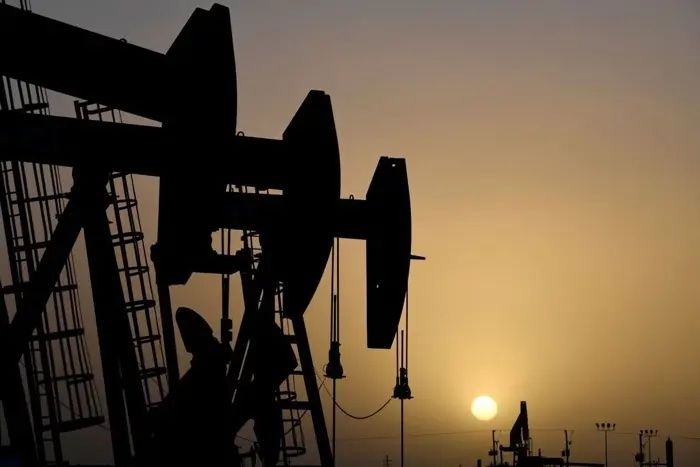
Crude oil benchmarks extended their weekly rally on Friday as military tensions between the United States and Iran intensified across the Persian Gulf, dimming hopes that a recently brokered pause in hostilities would hold firm. Brent crude futures advanced 70 cents to settle at $84.93 per barrel, reflecting a 0.83% gain, while West Texas Intermediate climbed 81 cents to $79.76—erasing losses from the prior trading session. Both contracts have notched nearly 12% in gains this week, positioning Brent toward a third consecutive weekly advance and WTI on track for a second straight weekly increase. The price momentum underscores how deeply geopolitical risk premiums remain embedded in global energy markets, particularly as the conflict shows signs of broadening beyond conventional military exchanges into threats targeting critical shipping infrastructure.
The resurgence of direct military action between Washington and Tehran marks a significant departure from the relative calm that followed last month's understanding to pause active hostilities. On Wednesday, the US launched two substantial waves of air strikes in a single day, predominantly targeting Iranian military installations near the nation's southern coastline. American forces continued offensive operations on Thursday, with the US Central Command announcing a sixth consecutive night of strikes designed to "further degrade Iranian military capabilities." The intensity and frequency of these operations signal that the earlier ceasefire arrangement has largely deteriorated, replaced by a cycle of tit-for-tat military escalation that risks destabilising the entire region and threatening one of the world's most critical energy transit corridors.
Iran's retaliation has been swift and substantial, deploying missiles and drone systems against American military installations housed in neighbouring countries, including Jordan, where a recently expanded air base drew particular attention. Meanwhile, the Qatar defence ministry reported that its armed forces successfully intercepted an Iranian missile attack in the early hours of Friday, though the interception operations resulted in shrapnel injuries to a civilian child. These incidents underscore how the conflict is no longer confined to direct bilateral exchanges but increasingly involves third countries and risks civilian casualties—a troubling escalation that could further destabilise regional security dynamics and attract greater international intervention.
Perhaps most concerning for global energy markets is the emerging threat of Red Sea supply disruptions. According to three sources who spoke with Reuters, Iran's leadership has directed its Houthi allies—the political and military organisation that controls significant portions of Yemen—to prepare for potential closure of the Red Sea shipping route if American forces attack Iranian power infrastructure or critical energy facilities. This conditional threat represents a dramatic expansion of the conflict's geographic footprint and potential economic consequences. The Red Sea represents a vital conduit for global trade and energy flows, and any sustained disruption would immediately ripple through supply chains and energy markets far beyond the Middle East, affecting Southeast Asian economies highly dependent on stable crude imports.
Tim Waterer, chief market analyst at KCM Trade, characterised the emerging security landscape as a "dual-risk scenario" in which traders must contend with direct disruptions to the Strait of Hormuz—already threatened by the intensifying US-Iran hostilities and their potential to limit oil exports from the Persian Gulf—as well as the secondary threat of Red Sea closure. "The potential threat of the Red Sea becoming another major supply disruption point is further complicating the global oil outlook," Waterer observed, noting that this layered risk environment maintains a persistent geopolitical premium across both Brent and WTI futures. For Malaysian and Southeast Asian traders, the implications are particularly acute, given the region's heavy reliance on crude flowing from Middle Eastern sources through these exact passages.
The deteriorating security situation has prompted urgent warnings from international energy authorities. Fatih Birol, executive director of the International Energy Agency, expressed genuine concern about the trajectory of events during remarks at a Council on Foreign Relations event in Washington on Thursday. "Oil security is still a critical issue," Birol stated, adding that he remained deeply worried about the situation if conditions failed to stabilise within coming weeks. His comments reflect the IEA's assessment that current supply arrangements remain vulnerable to further disruption should the escalating US-Iran confrontation continue unabated or metastasise into broader regional conflict involving additional state and non-state actors.
From a technical perspective, oil market analysts at IG have noted that West Texas Intermediate could potentially test mid-$80s price levels if the benchmark maintains support around the mid-$70s range. This suggests that despite the current rally, there remains room for further price appreciation should geopolitical developments worsen. For Malaysian energy consumers and industries reliant on stable crude pricing, the $80-plus level already represents a concerning threshold—high enough to exert upward pressure on domestic fuel costs and industrial inputs while remaining volatile enough to create planning uncertainty for businesses and consumers alike.
The implications for Southeast Asia extend well beyond simple price movements at the pump. Malaysia, as a significant oil-exporting nation itself, faces a complex calculus: while higher crude prices theoretically benefit producers, sustained elevated prices risk dampening global economic activity and, critically, disrupting the normalised supply flows that Asian refiners depend upon. Prolonged uncertainty could also drive energy-intensive industries to seek alternative sourcing arrangements or to shift capacity elsewhere, undermining regional competitiveness. Furthermore, the threat of shipping disruptions in the Red Sea directly impacts Malaysian-bound trade flows, not merely energy but containerised goods transiting from Europe and Africa to Asian markets.
The trajectory of these tensions will likely prove decisive in determining whether energy prices stabilise or face further volatility. Should the US and Iran find a diplomatic off-ramp in coming days or weeks, markets could rapidly discount the geopolitical premium currently embedded in prices, potentially triggering a swift correction downward. Conversely, should military escalation continue or the Houthi threat materialise into actual Red Sea shipping attacks, crude could test significantly higher levels, upending the delicate balance many Asian economies have built around the current price environment. The watching brief on US-Iran relations has therefore become essential for anyone concerned with Southeast Asia's economic trajectory, energy security, and import competitiveness in global markets.

