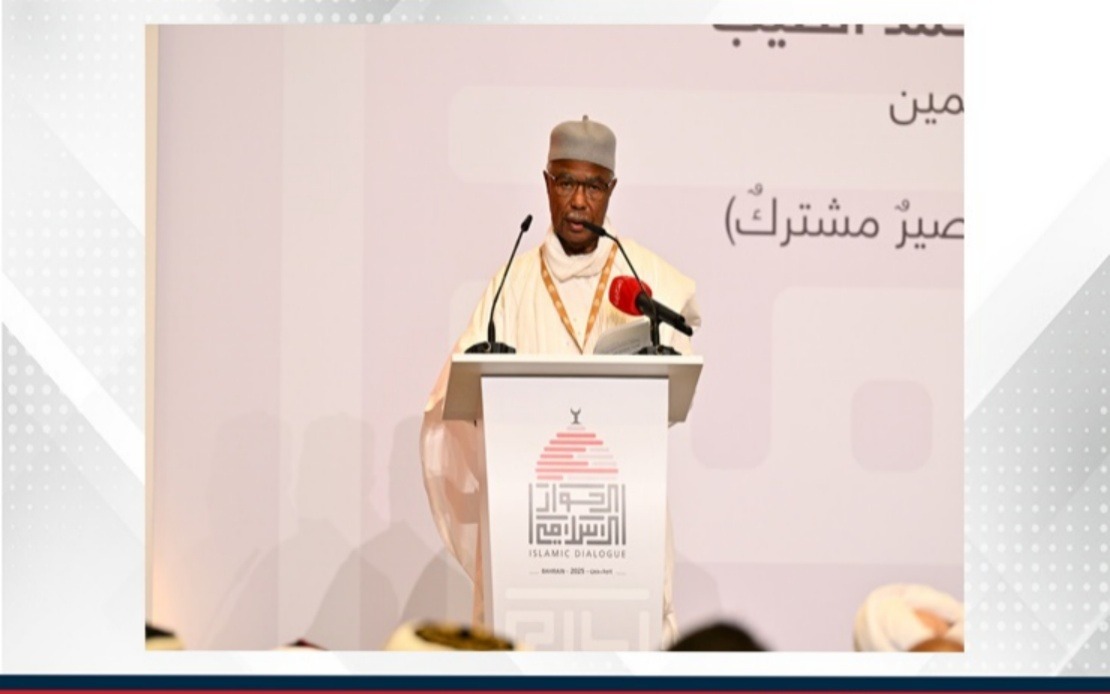
The Organisation of Islamic Cooperation has thrown its weight behind a landmark defense pact forged by Turkey, Saudi Arabia, and Pakistan, signalling broad institutional support for what leaders are characterizing as a transformative moment in regional security architecture. The tri-nation agreement, formally signed on Friday in Mecca, has already drawn commendation from the 57-member OIC, with Secretary-General Sharein Brahim Taha issuing a statement of "strong appreciation and support" that underscores the geopolitical significance being attached to the arrangement across the Islamic world.
The accord emerged from a high-level summit held at Al-Safa Palace in Mecca, where Turkish President Recep Tayyip Erdogan, Saudi Crown Prince Mohammed bin Salman, and Pakistani Prime Minister Shehbaz Sharif convened to formalize their defense cooperation framework. This gathering of three consequential regional powers reflects a deliberate diplomatic effort to consolidate influence and establish a coordinated security posture at a moment of considerable turbulence in the Middle East and South Asia. The venue itself—Islam's holiest city—was chosen to emphasize the religious and civilizational dimensions of the partnership beyond its purely strategic elements.
Taha characterized the agreement as "an important strategic step" that demonstrates the three nations' dedication to advancing regional cooperation and international engagement. In his official comments, the OIC chief positioned the pact as instrumental to the organization's broader agenda of fostering unity among member states on matters of collective security. The language deployed—invoking terms such as "fundamental pillar" and describing the accord as "historic"—indicates that the OIC views this arrangement as qualitatively different from routine bilateral or trilateral agreements, suggesting instead a paradigm shift in how major Muslim-majority nations are approaching shared defense challenges.
Central to the agreement's architecture is a mutual defense clause establishing that armed aggression against any signatory shall be treated as an assault against all three nations. This provision mirrors classical collective defense frameworks seen in organizations like NATO, transposing such security logic into an Islamic context. By anchoring the pact to principles of shared burden-bearing and unified deterrence, the three countries have constructed a mechanism designed to deter potential adversaries through the credible threat of coordinated response. Turkish officials emphasized that the arrangement targets no specific country, framing it instead as a defensive posture oriented toward maintaining regional equilibrium and preventing destabilization.
For Southeast Asian observers, particularly Malaysian policymakers, this Turkish-Saudi-Pakistani alignment carries implications for how the wider Islamic world—and OIC dynamics specifically—may evolve. Malaysia holds considerable diplomatic standing within the organization and maintains strategic relationships with all three signatories. The emergence of a security bloc among major Muslim powers could reshape diplomatic coalitions and alliance patterns that Malaysia must navigate carefully, especially given the organization's traditional emphasis on consensus-building and the balanced representation of diverse interests.
Taha's statement explicitly linked the agreement to the OIC's mandate of addressing mounting security threats facing member states. The region has indeed witnessed rising instability, from Iranian-Israeli tensions to deepening sectarian conflicts and the persistent challenge of transnational terrorism. By endorsing this tripartite arrangement, the OIC effectively validated a strategy of burden-sharing among capable states—a pragmatic acknowledgment that the organization itself lacks the military capacity to guarantee security for its membership. This approach tacitly recognizes that coalitions of willing and able countries may prove more effective than universal OIC mechanisms in confronting contemporary security dilemmas.
The agreement also reflects Saudi Arabia's evolving security posture following its diplomatic rapprochement with Iran brokered by China in 2023. By anchoring itself to partnerships with Turkey and Pakistan—nations with substantial military capabilities and regional influence—Riyadh appears to be building a complementary security architecture that operates alongside its broader diplomatic engagement strategy. Turkey brings NATO access and Mediterranean power projection, while Pakistan contributes South Asian footprints and nuclear deterrence, creating a configuration that enhances Saudi Arabia's capacity to manage threats across multiple theaters.
Pakistan's inclusion in the arrangement underscores its strategic value as a nuclear-armed state with significant regional reach. Islamabad has long sought recognition as a pivotal player in both South and West Asian security architectures, and this trilateral agreement provides formal institutional validation of that role. For Pakistan, the pact offers opportunities to diversify its security partnerships beyond its traditional reliance on the United States and China, while simultaneously strengthening ties with the Arab world at a moment when Saudi and Emirati investments carry particular importance for Pakistan's fiscal stability.
The OIC's endorsement carries symbolic weight beyond mere institutional approval. By framing the agreement as embodying "shared determination to address growing security challenges," Taha positioned the pact as consistent with the organization's foundational mission of promoting Muslim solidarity. This framing helps insulate the arrangement from potential criticism that it represents exclusionary great-power politics incompatible with OIC principles of inclusive membership. However, the reality that only three countries have committed to mutual defense obligations reflects the practical challenges facing universal security arrangements among OIC members with divergent interests and capacities.
Looking ahead, the agreement's success will depend on whether the three parties can operationalize their commitments through genuine defense cooperation, joint exercises, and integrated planning mechanisms. The vagueness of current public statements about implementation details leaves considerable room for interpretation and potential divergence in expectations. Turkey's NATO commitments, Saudi Arabia's balancing act between regional powers, and Pakistan's complex security environment create potential friction points that could test the pact's durability if regional crises demand coordinated response.
The Mecca Joint Defense Agreement also signals a shift in how Islamic multilateralism is being practiced in the contemporary era. Rather than relying exclusively on consensus-based universal organizations, major Muslim powers are constructing variable-geometry coalitions tailored to specific security challenges. This approach reflects the political maturity of the OIC member states in recognizing that formal universalism sometimes obscures practical necessity for targeted cooperation among capable actors. For Malaysia and other mid-sized OIC members, navigating this landscape of overlapping security arrangements and coalitions will require diplomatic sophistication and careful attention to maintaining balanced relationships across the organization's emerging power structures.

