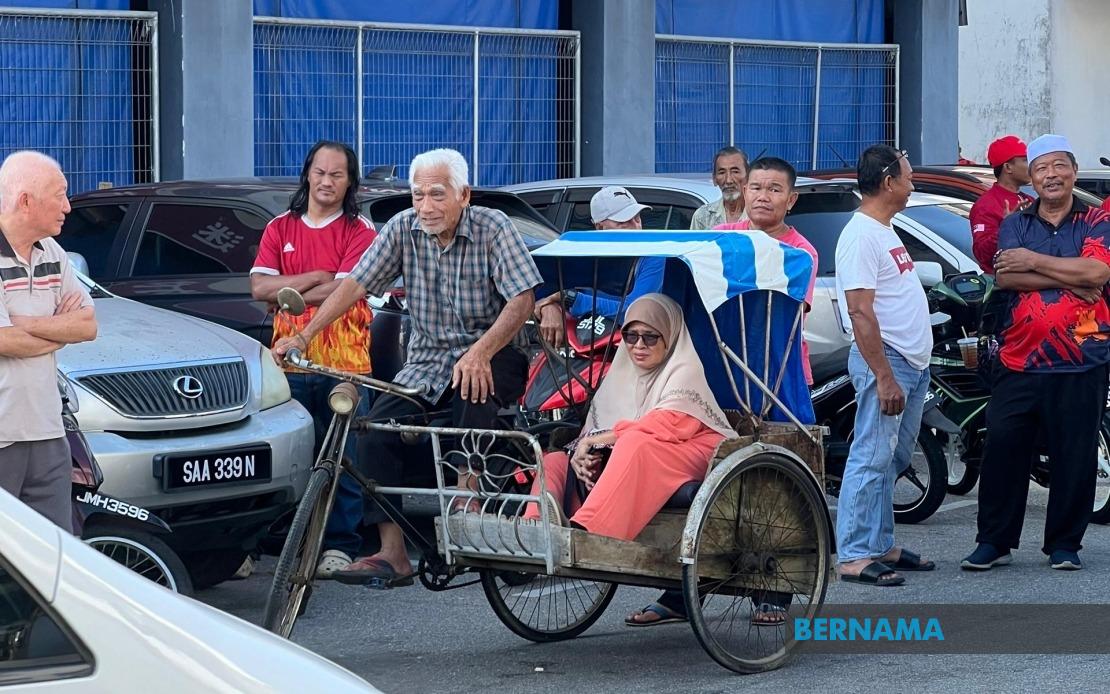
Abdul Razak Pelangga, an 86-year-old imam, pedalled his traditional trishaw nearly a kilometre through oppressive midday heat in Batu Pahat on July 5 to grant his wife's long-held wish of viewing Prime Minister Datuk Seri Anwar Ibrahim in person. The journey from their home in Kampung Parit Bugis to Kedai Kopi Hailam Sri Medan in Senggarang represented far more than a simple commute—it was a deeply personal pilgrimage rooted in decades of admiration and a chance meeting from years past.
Abdul Razak's decision to forgo the convenience of a car or motorcycle in favour of his trishaw reflected both practical consideration and symbolic choice. He explained that navigating a vehicle through the crowded streets would have presented logistical challenges in securing parking during the busy morning, making the humble three-wheeled transport the most sensible option. Yet his selection also underscored a generational approach to civic participation, one that prioritises accessibility and community presence over modernity's conveniences.
The PM's visit formed part of the PMX Meet-and-Greet Programme for the Senggarang state constituency, held in conjunction with the Johor state election scheduled for July 11. Anwar Ibrahim spent approximately 50 minutes at the coffee shop, engaging with local residents and absorbing the atmosphere of this small town constituency. The visit carried significance beyond typical campaign activities, representing an opportunity for direct interaction between Malaysia's political leadership and ordinary citizens in a relatively intimate setting.
Abdul Razak's connection to the Prime Minister carries historical weight. Many years before Anwar rose to his current position, he visited the Masjid Raudhatul Jannah Parit Bugis to perform prayers. Abdul Razak, serving as the mosque's imam, led the congregational prayers that day and subsequently exchanged greetings with the then-political figure. That encounter, though brief, left a lasting impression. When Abdul Razak learned of the PM's scheduled visit to Senggarang, the memory of that past interaction motivated him to bring his wife to witness the moment firsthand.
For Abdul Razak's wife, Jamilah Samsudin, aged 64, this represented a rare opportunity to see the Prime Minister outside of television broadcasts. Malaysian households have followed Anwar Ibrahim's political trajectory through media coverage spanning decades, yet seeing a public figure in physical proximity carries an emotional resonance that screens cannot replicate. Although the large gathering prevented Abdul Razak and Jamilah from achieving face-to-face contact with the PM, the experience of witnessing him from a close distance satisfied their objective and created a shared memory for the couple.
Abdul Razak's excitement extended beyond the PM's visit. He disclosed his enthusiasm about fulfilling his civic responsibility during the July 11 election, noting that this particular voting opportunity held special significance—it coincided with his 87th birthday. While he had exercised his right to vote on numerous previous occasions throughout his long life, there was something uniquely meaningful about casting his ballot on the anniversary of his birth. This convergence of personal and national moments reflected a lifelong commitment to democratic participation.
The Johor state election itself represents a significant political event within Malaysia's electoral calendar. The 16th Johor state election occurs against the backdrop of ongoing governance and political developments at both state and national levels. Early voting was scheduled for July 7, allowing certain categories of voters to participate before the main polling day, while the primary election day of July 11 would determine the composition of the state assembly. These elections provide opportunities for constituents to assess their representatives' performance and chart the state's political direction.
Abdul Razak's story encapsulates several dimensions of Malaysian political culture and civic engagement. It demonstrates the enduring respect many Malaysians maintain for their leaders, rooted often in personal encounters or historical memory rather than purely partisan calculation. It reveals the role of emotional connection and symbolic participation in how citizens relate to electoral processes and national leadership. Moreover, it illustrates how small gestures—pedalling a trishaw through heat—can represent meaningful expressions of civic duty and personal devotion within the Malaysian context.
The presence of Pakatan Harapan Communications Director Datuk Fahmi Fadzil, who also holds the Communications Minister portfolio, alongside the PM underscored the political significance attached to the Senggarang visit. High-level representation at such grassroots engagements signals the importance placed on maintaining voter connection and ensuring media coverage of campaign activities. For constituencies like Senggarang, such visits bring heightened attention and resources that can influence electoral dynamics and community engagement levels.
Abdul Razak's narrative also touches upon themes of family partnership and shared political consciousness. His decision to bring his wife, his recollection of sharing his past meeting with the PM, and their joint anticipation of the visit all suggest a household unit engaged collectively in political life. This family-centred approach to civic engagement remains common among Malaysian voters, particularly in older generations who view voting and following political developments as shared responsibilities and interests within the household unit.

