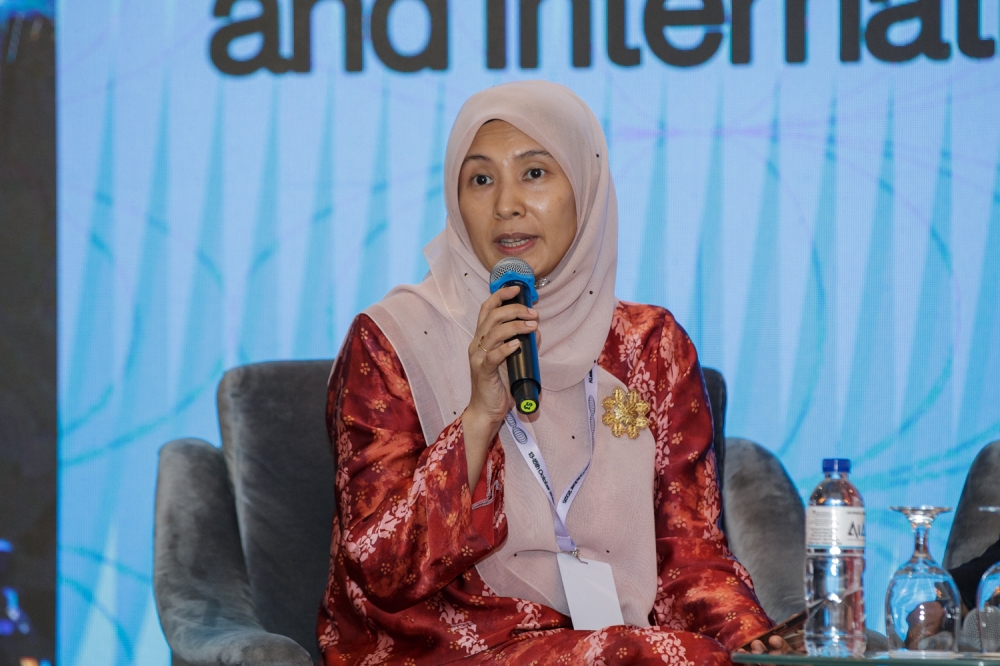
Nurul Izzah Anwar, the deputy president of Parti Keadilan Rakyat (PKR), announced her decision to step down from the position, citing her intention to pursue further academic studies. The move marks a significant development within the party hierarchy and signals a deliberate shift in her professional priorities at a time when Malaysian politics continues to navigate evolving coalition dynamics and governance challenges.
The resignation of Nurul Izzah, who is also the daughter of PKR President Anwar Ibrahim, carries implications beyond a simple personnel change. Her withdrawal from the deputy president role suggests a thoughtful reassessment of her career trajectory and personal aspirations, occurring within the context of Malaysia's increasingly complex political landscape where party positions demand substantial time and attention.
As a prominent figure within PKR's leadership structure, Nurul Izzah has been instrumental in various party initiatives and public-facing roles. Her academic ambitions represent a deliberate choice to prioritize intellectual development over immediate partisan duties, a decision that reflects the growing recognition among political figures that continuous professional development remains essential in addressing contemporary policy challenges.
The timing of this resignation carries particular significance for PKR, which has served as a central component of Malaysia's ruling coalition. The party faces ongoing expectations regarding reform agendas, governance performance, and internal organizational coherence. Nurul Izzah's departure from the deputy president position creates both an immediate succession question and an opportunity for the party to restructure its leadership team around emerging priorities.
For Malaysian observers of political succession and party management, the move demonstrates how personal development goals and public responsibility can intersect within political careers. Rather than viewing the resignation as a departure from politics entirely, it represents a recalibration of engagement that allows for sustained intellectual growth whilst maintaining broader involvement in public discourse and party activities.
The PKR leadership structure now requires reorganization to address the vacant deputy president position. This presents an opportunity for the party to evaluate its internal talent pipeline and consider how to strengthen organizational capacity across multiple leadership levels. The transition also invites reflection on how the party balances continuity with renewal.
Nurul Izzah's educational pursuits speak to a broader trend within Asian political circles where leaders increasingly combine academic credentials with practical governance experience. Many contemporary policymakers recognize that engaging with scholarly research, theoretical frameworks, and academic communities enhances their capacity to address complex policy questions ranging from economic development to social welfare reform.
Within the context of Southeast Asian politics, the decision also illustrates how political families navigate the tension between dynastic expectations and individual aspirations. Nurul Izzah's choice to temporarily step back from a high-profile party position demonstrates agency in determining her own career path rather than remaining locked into predetermined roles based on family prominence.
The immediate challenge for PKR involves identifying a suitable replacement who can command party respect, bridge different factional interests within the organization, and advance the party's strategic objectives. This succession question occurs amid broader considerations about coalition stability, government performance metrics, and the party's capacity to deliver on reform commitments that originally defined its political identity.
For Malaysian voters and observers monitoring PKR's trajectory, Nurul Izzah's departure from the deputy president position invites consideration of how parties sustain momentum and credibility when senior figures adjust their involvement levels. The transition provides an opportunity to assess whether the party possesses sufficient organizational depth and emerging leadership talent to function effectively across multiple levels of seniority.
The resignation also reflects evolving attitudes within Malaysian politics regarding work-life balance and professional development. The recognition that pursuing advanced studies remains compatible with political engagement—rather than requiring complete withdrawal from public life—suggests a maturation in how political careers are structured and understood across different generations of leaders.
Looking forward, Nurul Izzah's decision may influence broader conversations within PKR and the wider political establishment about how to create pathways that allow serious political figures to undertake significant educational commitments without necessitating permanent exits from public discourse. This approach could ultimately strengthen the quality of political leadership by ensuring that those in positions of responsibility maintain intellectual engagement with evolving challenges and contemporary scholarship.
The transition represents neither crisis nor disruption but rather a predictable evolution within organizational life cycles. For PKR, the challenge involves translating this change into renewed focus on party objectives, clearer articulation of governance achievements, and sustained engagement with constituencies who depend on the coalition's continued political effectiveness.

