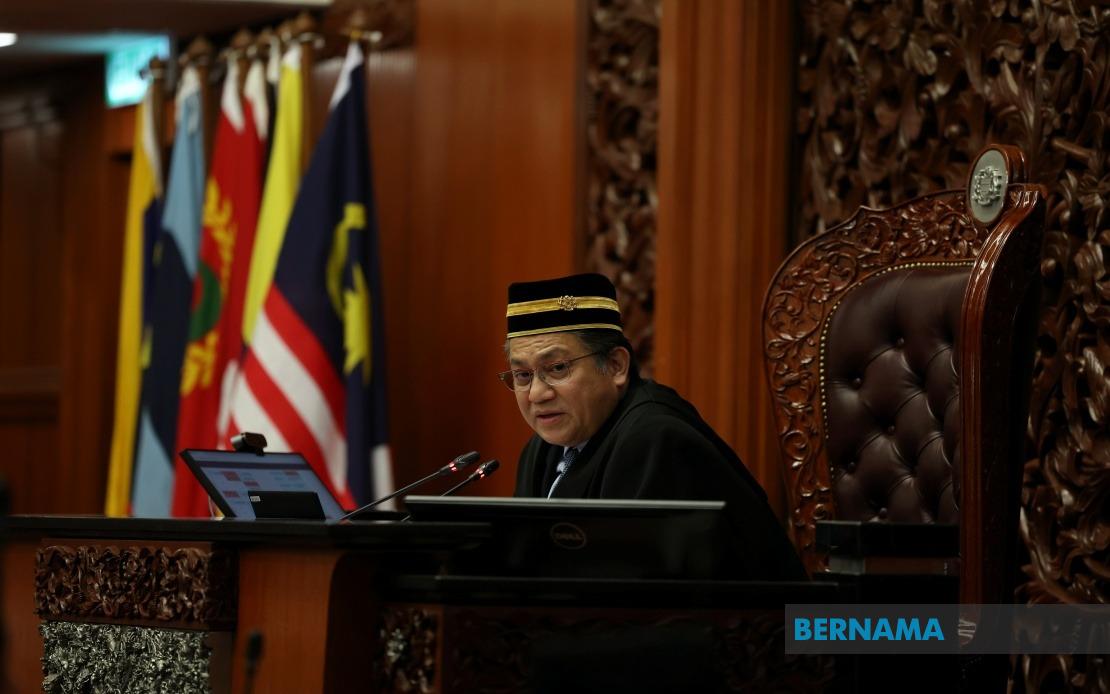
Senator Datuk Nur Jazlan Mohamed has been reappointed as Deputy Speaker of the Dewan Negara for a consecutive second term, following his nomination by Higher Education Minister Datuk Seri Zambry Abd Kadir, who presented the candidacy on behalf of Prime Minister Datuk Seri Anwar Ibrahim. The announcement was made during proceedings at the Upper House on July 20, with Nur Jazlan emerging as the sole candidate for the position, signalling consensus among parliamentary stakeholders regarding his continued leadership in the chamber.
Nur Jazlan's reappointment by His Majesty the Yang di-Pertuan Agong extends his tenure as Deputy Speaker until June 14 2029, commencing from June 15 2026, granting him a full three-year mandate to oversee Upper House operations. This reappointment underscores the confidence placed in him to manage parliamentary business and maintain decorum in the Senate, one of Malaysia's two legislative chambers that reviews and deliberates on bills passed by the lower house.
The 60-year-old lawmaker, who carries considerable institutional experience, initially assumed the Deputy Speaker position in June 2023. His political standing within UMNO remains robust, evident from his concurrent roles as a member of the party's Supreme Council and chief of the Pulai Division. These leadership positions within Malaysia's largest coalition party suggest his significance in the current political landscape and his influence in shaping policy direction.
Nur Jazlan's parliamentary journey spans nearly two decades, having represented the Pulai constituency in the Dewan Rakyat from 2004 until 2018. Between 2015 and 2018, he served as Deputy Home Minister, a portfolio that exposed him to security and governance matters affecting the nation. His transition to the Senate represents a shift toward institutional oversight rather than direct constituency representation, though his UMNO responsibilities continue to anchor him in grassroots politics.
Alongside Nur Jazlan, fellow Senator Mussodak Ahmad was also reappointed for a second term as an Upper House member representing the Kedah State Legislative Assembly. Mussodak's reappointment runs from March 20 2026 to March 19 2029, positioning him for continued participation in Senate deliberations. As Kedah PAS secretary, Mussodak represents the Islamist party's interests in the Upper House, contributing to the multiparty composition that characterises Malaysia's legislative body.
Mussodak's background includes previous electoral contests for the Bayu and Guar Chempedak state seats in Kedah, demonstrating engagement with state-level politics before his initial appointment as Senator in March 2023. His reappointment by the Kedah State Assembly reflects confidence from the state's ruling coalition in his contribution to national legislation and oversight mechanisms.
The Senate's composition through appointed rather than directly elected senators shapes parliamentary dynamics distinctly. Appointments by the Yang di-Pertuan Agong, state assemblies, and other appointing bodies mean that Senate members often bring diverse professional and political backgrounds. This diversity theoretically enhances deliberative capacity, though it also reflects political calculations by appointing authorities seeking representation aligned with their interests.
Nur Jazlan's unopposed reappointment suggests relative political stability within governing coalitions despite Malaysia's historically fragile coalition arrangements. The absence of competing nominations for a relatively high-profile position indicates either consensus around his stewardship or insufficient political will among other potential candidates to mount a challenge. Either interpretation speaks to the current political equation's balance.
The timing of these reappointments aligns with the Senate's legislative calendar, which commenced a ten-day sitting on July 20 2026 extending through August 4. This session represents the Second Meeting of the Fifth Term under the 15th Parliament, signifying that Malaysia's current political cycle remains in its relatively early phase. Senate business during this period will likely encompass policy reviews, legislative scrutiny, and parliamentary questioning of government ministers and agencies.
For Malaysian governance broadly, Senate appointments merit scrutiny regarding democratic representation and institutional independence. While appointed chambers provide space for expert input and cooler deliberation compared to elected houses, they also concentrate power in appointing authorities' hands. Nur Jazlan's continued prominence reflects UMNO's significant role in shaping national institutions, while Mussodak's reappointment demonstrates PAS's integration within governing structures despite recent electoral volatility.
The reappointment framework underscores how Malaysia's hybrid parliamentary system balances popular representation with appointed expertise. Senators often include academics, professionals, and community leaders selected for specialized knowledge, creating legislative bodies with broader perspectives than purely elected chambers might produce. Yet the political dimension remains central, with parties leveraging Senate appointments to consolidate influence and reward loyal members.
Looking ahead, Nur Jazlan's strengthened position through reappointment positions him prominently within UMNO's institutional hierarchy. His continued presence in the Senate, combined with party leadership responsibilities, suggests his retention as a significant figure in negotiations around coalition formation and policy formulation within the governing establishment. The stability signalled through unopposed reappointments contrasts with electoral uncertainties in lower house politics, offering relative predictability within parliamentary institutions.

