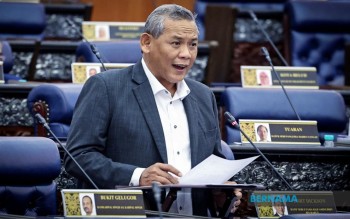
Datuk Seri Aminuddin Harun, the Port Dickson Member of Parliament and former Negeri Sembilan menteri besar, has called for more balanced discourse surrounding Lembaga Tabung Haji's troubled investment portfolio, emphasising that financial setbacks cannot automatically be attributed to wrongdoing. Speaking during parliamentary deliberations on the Royal Commission of Inquiry findings, Aminuddin stressed that investment management inherently involves exposure to market volatility, and distinguishing between legitimate market losses and those resulting from poor governance or ethical breaches remains essential for informed public discussion.
The RCI report, released on July 29, examined Tabung Haji's operations between 2014 and 2020, identifying significant weaknesses in management and governance. Among its principal recommendations was the initiation of forensic audits on 14 investments that had experienced substantial declines. This forensic approach reflects broader concerns about whether losses resulted from external economic conditions or internal failures—a distinction Aminuddin considers crucial to understanding what truly transpired within the institution that manages savings for millions of Malaysian pilgrims.
Aminuddin's intervention carries particular weight given his background in state governance. He advocates for a fundamental overhaul of how Tabung Haji recruits its senior leadership, arguing that the institution has historically prioritised political patronage over professional qualifications. Rather than viewing board positions as honors to distribute among party loyalists, he contends such roles demand individuals with demonstrated expertise in investment management, Islamic finance, risk assessment, and corporate governance. This represents a stark departure from practices that have apparently prevailed, where personal connections and political alignment often determined advancement.
The former menteri besar outlined comprehensive screening criteria that should govern future board appointments. Beyond basic investment experience, candidates should demonstrate proficiency across multiple disciplines: Islamic finance principles, risk management frameworks, accounting standards, auditing procedures, legal matters, and hajj pilgrimage administration. Crucially, Aminuddin insisted that all potential board members must publicly disclose potential conflicts of interest, ensuring transparency that current selection processes may have lacked. His proposal effectively establishes a professional standard that distinguishes Tabung Haji appointments from ordinary civil service or corporate positions.
Aminuddin also endorsed the RCI's recommendation that sitting politicians be barred from serving as Tabung Haji's chairman or board members. This prohibition addresses a fundamental structural problem: active politicians controlling an institution entrusted with public savings creates inherent conflicts between political objectives and fiduciary responsibility. By preventing concurrent political office-holding, the recommendation attempts to insulate Tabung Haji from electoral cycles and partisan pressures that have arguably compromised investment decisions in the past.
Parallel concerns were raised by Datuk Mohd Isam Mohd Isa, the Tampin representative, who questioned whether the RCI's temporal scope adequately captured Tabung Haji's complete narrative. Mohd Isam argued that limiting the inquiry to 2014-2020 left a critical five-year gap, since substantial developments occurred between 2020 and 2025. His argument highlights a methodological tension: forensic investigations must balance depth within a defined period against the risk of missing subsequent patterns or consequences. By proposing that the Public Accounts Committee conduct parallel scrutiny covering 2022-2026, Mohd Isam suggests that oversight mechanisms beyond the RCI should address ongoing governance questions.
The RCI process itself represents a significant institutional response to alleged failures. Announced in 2021 with members appointed in January 2022, the commission presented its findings to the Yang di-Pertuan Agong in August 2022. The resulting 211-page report contained 25 recommendations for systemic improvements. As of July 30, Tabung Haji had implemented approximately 75 per cent of these recommendations, indicating substantial movement toward reform, though the remaining quarter suggests either ongoing resistance to certain proposals or practical implementation challenges.
The distinction Aminuddin emphasises between market losses and governance failures carries practical consequences for how Malaysian society evaluates institutional accountability. If losses resulted primarily from external economic headwinds affecting asset classes in which Tabung Haji had legitimately invested, then the policy response differs markedly from scenarios involving conflicts of interest or negligent decision-making. Yet the very need for forensic audits on 14 specific investments suggests suspicion that internal factors may have compounded market difficulties. The forensic process will require technical expertise to reconstruct decision-making sequences and determine whether available information was properly evaluated.
For Malaysian Muslims who entrust savings to Tabung Haji for religious purposes, these governance discussions carry profound resonance. The institution represents more than a financial vehicle; it embodies a social contract between the state and believers regarding stewardship of resources dedicated to Islamic observance. When governance structures prioritise political connections over professional competence, the implicit trust undergirding this arrangement fractures. Aminuddin's insistence on merit-based appointments reflects recognition that institutional legitimacy requires both competent management and perceived fairness in how leadership positions are allocated.
The broader regional dimension merits consideration as well. Southeast Asian financial institutions serving specific religious or ethnic constituencies face similar tensions between political pressure and fiduciary independence. How Malaysia addresses Tabung Haji's governance challenges may influence approaches elsewhere in the region. Establishing robust screening mechanisms and prohibiting politicians from institutional control offers a potential model for other jurisdictions grappling with comparable issues around public institutions serving particular communities.
Moving forward, the implementation trajectory of RCI recommendations will demonstrate whether Malaysia's political and administrative systems can genuinely separate professional management from political reward-dispensing. Aminuddin's call for comprehensive screening criteria and explicit conflict-of-interest declarations represents ambitious institutional engineering. The test will involve whether future governments nominate board members meeting these exacting standards or revert to traditional patronage patterns. The 75 per cent implementation rate thus far provides cautious optimism, though the most challenging reforms—fundamentally altering appointment culture and prioritising expertise over connections—may encounter institutional resistance as new opportunities for position-granting emerge.

