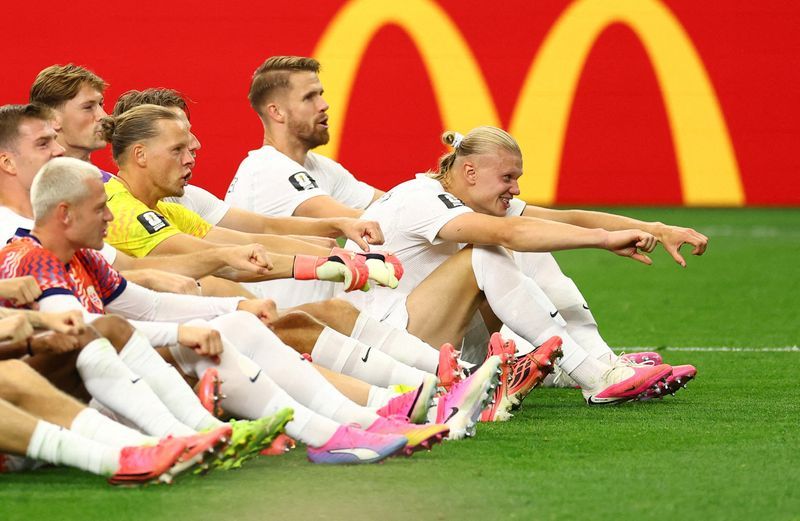
Norway's romantic return to the World Cup finals stage concluded with defeat in Miami on Saturday, falling 2-1 to England after extra time in the quarter-finals. Yet despite the disappointment of being eliminated just shy of the semi-finals, Stale Solbakken's squad has provided the Scandinavian nation with genuine cause for optimism. The team's journey through the tournament demonstrated that Norwegian football has matured considerably from its historical identity, establishing itself among the world's most competitive programmes and showcasing a generation of players capable of competing with the sport's traditional powerhouses.
Norway's presence at this World Cup carried symbolic weight beyond the pitch. Having spent 28 years in the international wilderness since their last finals appearance, the Norwegian Football Association embraced their Nordic heritage by arranging a pre-tournament photoshoot featuring the squad dressed as Viking warriors. This deliberate invocation of their seafaring ancestors proved prescient, as the team's supporters adopted the "Viking row" celebration throughout the competition, becoming one of the tournament's most recognisable and enduring images. The visual identity resonated with international audiences, and American spectators particularly warmed to the team's charismatic talismanic figure, Erling Haaland, whose infectious personality and prolific goal-scoring prowess captured imagination across the United States.
The Norwegian campaign itself unfolded with mounting drama and vindication of Solbakken's tactical approach. Progressing from their group stage proved a baseline expectation given their strength during qualification, where Haaland's extraordinary productivity established them as genuine contenders. However, the decisive moment arrived during their last-32 encounter against Ivory Coast, when Haaland's double strike secured a 2-1 victory and set the stage for what followed. That win represented genuine progress, yet it paled in comparison to what came next. Facing Brazil in the subsequent round, Norway produced a performance that transcended mere competence, methodically outplaying one of world football's most revered national teams and emerging with an improbable 2-1 victory that sent their travelling support into delirium and ignited genuine speculation about an unexpected path to the final.
The quarter-final against England ultimately proved a step too far, however. The physical and mental toll of their success against Brazil and earlier victories accumulated as the tournament progressed. Jude Bellingham's two extra-time goals punctured Norwegian hopes after they had established an initial lead, with the Manchester City midfielder's clinical finishing exploiting tiredness that had finally claimed Haaland and captain Martin Odegaard. Yet the manner of their elimination should not obscure the genuine achievement their tournament represented. Returning to the world stage after nearly three decades of absence, they demonstrated unmistakable signs of a football nation operating at an elite level rather than merely making up the numbers among 32 competing sides.
Beyond the immediate tournament result, Norway's football ecosystem indicates that this World Cup appearance marks the beginning of a sustainable competitive period rather than a fleeting anomaly. Domestic club Bodø/Glimt has established itself as a consistent European competition participant in recent years, regularly competing in the continent's top tournaments and serving as both a platform and production line for talented young players. This club-level success indicates a broader cultural shift within Norwegian football, gradually erasing the outdated perception of the country as practitioners of unsophisticated kick-and-rush football. Instead, a generation of technically gifted, tactically aware players now represents the nation, with European club football providing crucial development pathways that prepare them for international competition.
The leadership trio of Solbakken, Odegaard, and Haaland epitomises the contemporary Norwegian football character. Beyond their undoubted ability, these individuals exude a distinctive calm self-assurance rooted in Nordic culture. They demonstrate the capacity to remain psychologically grounded in both triumph and adversity, approaching achievement with measured perspective while maintaining fierce competitive intensity. Critically, they display a healthy capacity for self-mockery that prevents arrogance from calcifying, a cultural trait that permeates Norwegian society more broadly and manifests in their interactions with international media and opposing teams.
Solbakken's assessment of his team's tournament, delivered with characteristic Nordic understatement, reveals deeper confidence about Norway's trajectory. By observing that summer 2026 has proven "fairly OK," the manager deployed diplomatic language that masks genuine satisfaction with exceeding expectations. More significantly, his subsequent analysis proved more revealing about his philosophy and the squad's self-perception. He articulated conviction that his players now genuinely believe they can compete meaningfully against the world's strongest teams, not merely participate respectfully but establish themselves as genuine contenders. This psychological shift represents perhaps the most valuable legacy of the tournament for Norwegian football, transcending the temporary glory of quarter-final participation.
The coach emphasised that numerous squad members departed Miami convinced of their capacity to hold their own among elite international company. This belief system, once internalised and reinforced through continued competitive success, becomes self-perpetuating. Players who trust their abilities to compete with the best invariably perform with greater confidence and conviction, elevating their individual performances and collective team function. Solbakken has successfully planted seeds that should flourish across coming qualification cycles and future tournaments, provided the federation maintains investment in developing the talent pipeline that Bodø/Glimt and other clubs are nurturing.
For Southeast Asian observers, Norway's resurgence offers instructive lessons about football development trajectories. The Scandinavian model emphasises integrated technical development from youth level, strategic investment in club infrastructure, and patience in building sustained success rather than pursuing short-term fixes. While geographical and economic circumstances differ substantially, the methodical, long-term approach that has revitalised Norwegian football provides a template worthy of consideration for regional federations seeking to elevate competitive standards. The path from international irrelevance to World Cup quarter-finals typically requires generational commitment rather than opportunistic recruitment or tactical gimmicks.
Norway's 2026 World Cup chapter has closed, but the narrative extending forward promises genuine intrigue. With Haaland and Odegaard still in their athletic primes, with supporting cast members gaining invaluable tournament experience, and with a domestic football structure demonstrating capacity to develop elite-level talent, the Scandinavian nation possesses legitimate foundations for sustained international relevance. Whether they can capitalise on this momentum through the 2030 and 2034 World Cups will determine whether this tournament marked a temporary surge or the beginning of a new era of Norwegian football prominence.

