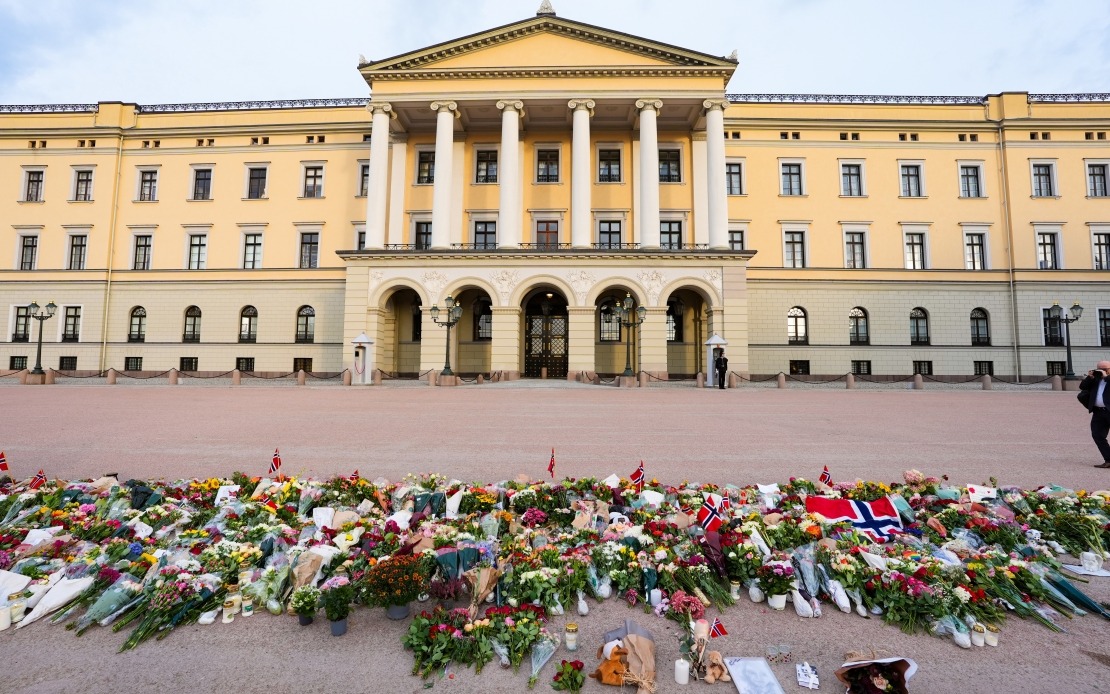
Norway's King Harald V passed away on Friday morning, ending a reign spanning more than three and a half decades. The 89-year-old sovereign died peacefully at the National Hospital in Oslo at 6.35 am local time, the Royal Palace confirmed. His death marks a significant transition for the Nordic kingdom, which now enters a period of formal constitutional succession procedures and ceremonial observance. The royal flag above the palace was promptly lowered to half-mast in recognition of the nation's loss.
The late king's final hospitalisation began on August 17 when he was admitted for medical assessment. His doctors subsequently revealed that he had been undergoing cortisone treatment for hemolytic anemia, a chronic blood condition characterised by the destruction of red blood cells and accompanied by fluid retention. Despite initial management of this underlying disorder, his clinical condition deteriorated sharply when he developed a serious bacterial bloodstream infection, complications that ultimately proved insurmountable and hastened his decline in recent days.
Crown Prince Haakon automatically assumed the Norwegian throne through the constitutional framework governing succession in the kingdom. Under Norway's established procedures, formal recognition of the new monarch requires the government to convene an extraordinary Council of State at the Royal Palace, where his official royal name will be formally announced. Unlike some European monarchies, Norway has dispensed with coronation ceremonies as part of its modern constitutional practice, streamlining the transition of power through legislative and administrative channels rather than elaborate ceremonial investiture.
The new king must also comply with constitutional requirements mandating that he take an oath before the Storting, Norway's parliament, formalising his position as head of state. This oath-taking represents a crucial constitutional moment that binds the sovereign to uphold the nation's laws and governance frameworks. The procedural requirements, though less visually prominent than traditional coronations in other kingdoms, carry substantial constitutional weight and public significance within Norwegian democratic tradition.
Harald's reign represented one of Europe's longest continuous monarchies in the modern era. He ascended to the throne on January 17, 1991, following the death of his father King Olav V, having waited considerably longer than many other heirs before assuming sovereign duties. At the time of his passing, he held the distinction of being Europe's oldest currently reigning monarch, a testament to both his longevity and the stability of Norway's institutional continuity. His 35-plus years on the throne encompassed profound transformations in Norwegian society, including the nation's deepening integration into international affairs and its management of oil wealth.
The succession carries particular resonance for Nordic governance, as Norway's constitutional monarchy has long served as a model for balanced royal authority within democratic frameworks. King Harald maintained a notably approachable public persona, frequently engaging with Norwegian citizens and symbolising national unity across social and regional divides. His extended reign witnessed the evolution of the monarchy's role from ceremonial figurehead to active participant in national discourse, though always within constitutionally prescribed boundaries that prioritise parliamentary sovereignty and democratic principle.
Crown Prince Haakon, who now becomes King Haakon, brings his own experience to the throne having served in various official capacities and undertaken significant royal duties throughout his adult life. His accession continues the direct line of succession that has characterised Norwegian monarchy for generations, ensuring institutional stability during the transition period. The new king's generation represents a modern approach to constitutional royalty, balancing tradition with contemporary expectations regarding accessibility and engagement with diverse segments of society.
For Malaysia and Southeast Asia, Norway's peaceful succession underscores the stability afforded by well-established constitutional frameworks for transferring power, even when involving elderly or long-reigning figures. The Norwegian model demonstrates how institutional rules can facilitate orderly transitions without political disruption or uncertainty, offering instructive parallels for nations navigating questions of leadership succession and monarchical authority within democratic systems. The formal procedures being followed, while less dramatic than some alternative governance models, reflect the maturity of Norway's institutions and the broad consensus supporting constitutional monarchy as a stabilising force.
The passing of King Harald also marks a historical milestone for Scandinavia and northern Europe more broadly. His reign encompassed Cold War geopolitics, the post-Cold War reconfiguration of international relations, and Norway's continued navigation of relationships with NATO, the European Union, and Russia across the Baltic region. His tenure coincided with transformative periods in Nordic integration and the emergence of environmental concerns as paramount political considerations, domains where Norway's leadership proved particularly influential given its energy wealth and Arctic positioning.
As Norwegian society observes an appropriate period of national mourning, official ceremonies and commemorations will occur in coming weeks, providing opportunity for public reflection on the late king's legacy. The formal accession of the new monarch will proceed according to constitutional schedule, with parliamentary proceedings and state events marking the formal completion of succession arrangements. These procedures, though sometimes appearing purely ceremonial to external observers, carry deep significance within Norwegian constitutional tradition and democratic practice, affirming the rule of law and institutional continuity that have defined the nation's governance for generations.

