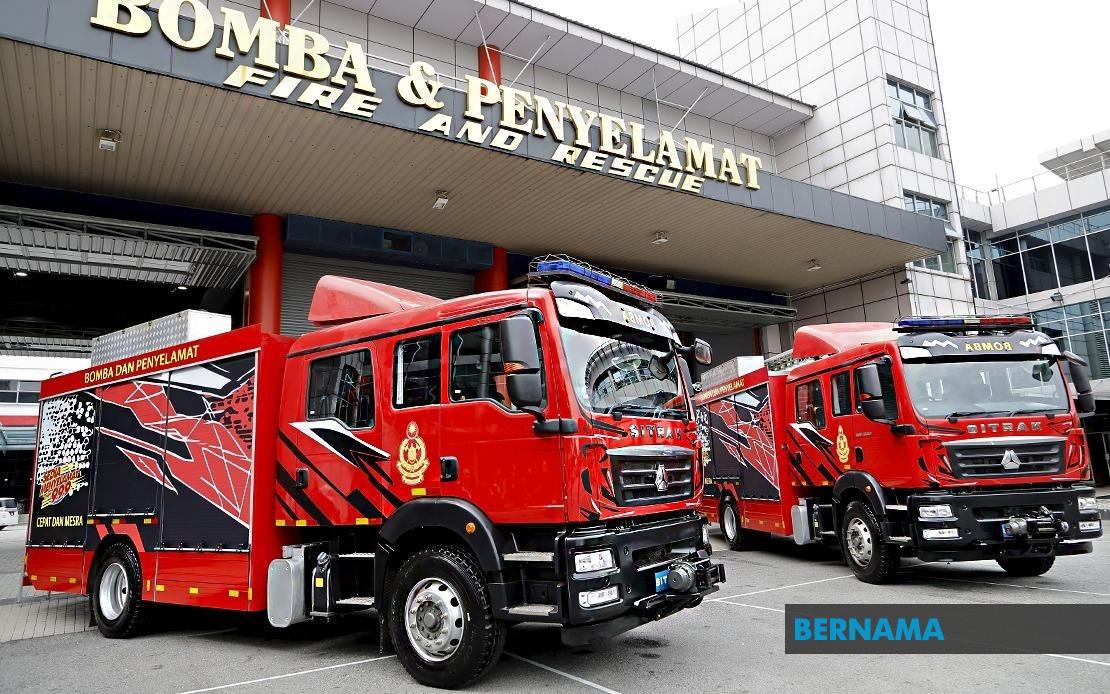
A moderate earthquake originating from North Sumatra shook buildings across the Klang Valley on July 22, triggering an immediate response from Malaysia's Fire and Rescue Department (JBPM) as residents and office workers felt tremors reverberating through multiple structures. The earthquake, measuring 5.7 on the Richter scale, was centred approximately 55 km southwest of Langsa, Indonesia, sending seismic waves across the region and prompting concerned calls to emergency services from the Malaysian side of the border.
The first tremor report reached Selangor JBPM at 12.31 pm, just thirteen minutes after the initial earthquake struck. The call came from the Kajang Municipal Council (MPKj) building, where occupants had felt the ground shake beneath them during the early afternoon hours. Selangor JBPM assistant director of operations Ashrul Riezal Asbar explained that a response team from the Kajang station was immediately despatched to conduct a comprehensive structural assessment of the premises. Following their inspection, officials confirmed that despite the tremors, the building had sustained no visible damage and remained entirely safe for continued use by staff members.
Within minutes, a second emergency call was logged at 12.40 pm from INTI International College Subang, located on Jalan SS15 in the Subang Jaya area. A rescue team from the Subang Jaya station responded swiftly to the college campus, where students and faculty had experienced the distinctive rolling sensation characteristic of moderate-magnitude earthquakes. Like their colleagues at the Kajang site, these inspectors found the college building to be structurally sound with no cracks or damage requiring remedial attention. The college was declared safe for normal operations, and students were able to return to their regular activities.
A third incident materialized in Bandar Tasik Selatan when occupants of Menara B2 Maju Link on Jalan Lingkaran Tengah 2 contacted Kuala Lumpur JBPM at 12.32 pm reporting tremors in the high-rise office building. The emergency call prompted the deployment of a response team from the Sungai Besi station to the location. Upon arrival at the scene, rescue personnel discovered that building management and occupants had already taken precautionary action, with nearly all workers having evacuated the tower and congregated in designated safe assembly areas on the building grounds. The tremor event had lasted approximately fifteen seconds, enough time for people to notice the movement and seek shelter outside.
When the JBPM team completed their structural examination of Menara B2 Maju Link, they applied the same rigorous assessment standards used at the other two locations. Their detailed inspection found no cracks in the building's structural elements, no damage to critical systems, and no signs of compromise to the edifice's integrity. The team issued confirmation that the building was in good condition and suitable for immediate reoccupation, allowing the workforce to return to their offices and resume their work day.
Beyond the official emergency response and building inspections, the earthquake also generated significant chatter across social media platforms, particularly on the Threads application, where residents and workers from surrounding areas sought reassurance and shared their personal experiences. Users from the Shah Alam locality and broader Klang Valley region posted accounts of feeling the tremors, comparing notes and attempting to identify the source of the disturbance. This crowdsourced verification process, typical of modern earthquake response, helped individuals distinguish between the genuine seismic event and the everyday vibrations that sometimes accompany urban environments.
One Threads user operating under the handle 'nabilaishah' posted from Section 26 offering a brief account of the tremor sensations experienced in that neighbourhood. The post received engagement from other users who had felt similar movements, creating an informal network of confirmation that spread reassurance across the social media community. Meanwhile, another user identified as 'nadiaxzailan' described a common initial reaction to earthquake activity—the moment of uncertainty when subtle vibrations make people question whether they are actually experiencing ground movement or merely imagining environmental fluctuations.
Nadiaxzailan elaborated on her experience, explaining that while concentrating on work at her desk, she noticed the furniture around her beginning to vibrate and sway slightly. Her first instinct was to dismiss the sensation as a figment of her imagination, perhaps a trick of her mind or the normal settling of an office building. Only after consulting with colleagues seated nearby and checking the cascade of posts appearing on social media did she gain confirmation that the tremor was real and resulted from actual seismic activity. This type of scenario—where office workers and residents verify earthquake experiences through peer consultation and digital platforms—has become increasingly common across Southeast Asia as smartphone penetration and social media usage have expanded.
The earthquake's relatively moderate magnitude and the fact that it originated from across the international border in Indonesia, rather than from any active fault zone directly beneath Malaysian territory, meant that the impact on the Klang Valley remained limited to transient tremors rather than structural damage or casualties. The rapid and professional response from Malaysia's Fire and Rescue Department exemplifies the readiness of the country's emergency services to address seismic events and reassure the public. The systematic inspection of three separate buildings and the clear communication that all structures were safe for occupancy helped contain public anxiety and demonstrated the effectiveness of disaster response protocols.
For residents and businesses in the Klang Valley and broader Selangor region, the July 22 earthquake served as a reminder of the region's proximity to active seismic zones and the importance of understanding earthquake safety procedures. While major seismic events remain relatively uncommon in Peninsular Malaysia, the area sits not far from the complex tectonics of the Indonesian archipelago, where numerous fault zones and subduction systems generate regular earthquakes. This incident highlighted the value of regular building inspections, clear emergency procedures, and public awareness about appropriate responses to ground shaking, lessons that extend beyond this single event to inform long-term resilience planning across the region.

