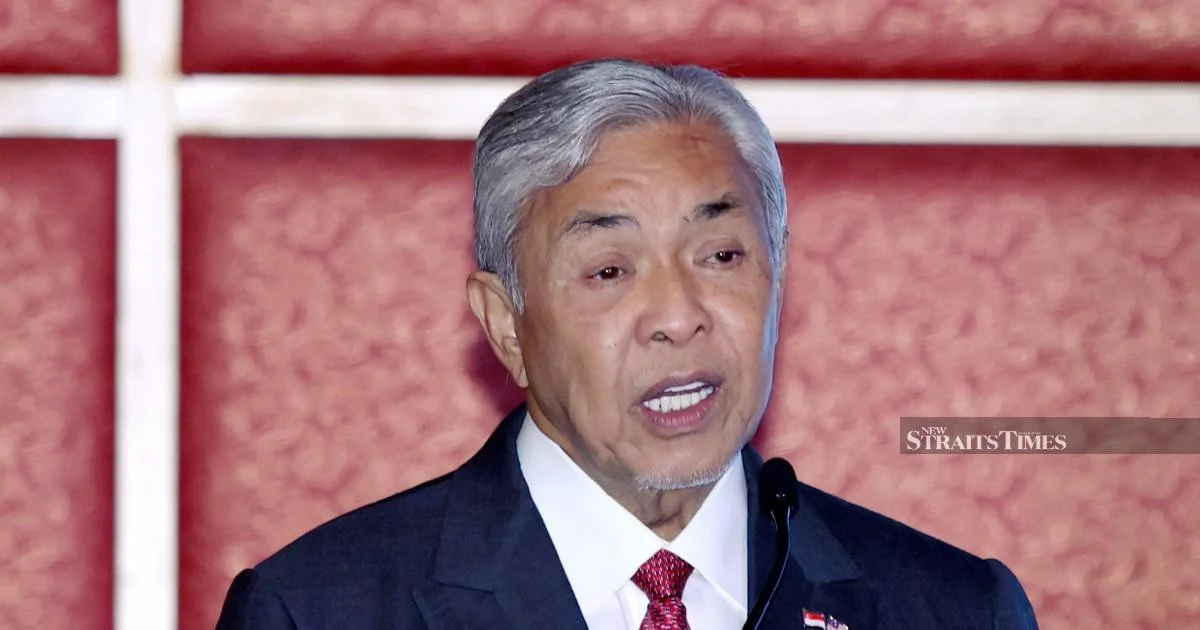
Umno president Datuk Seri Dr Ahmad Zahid Hamidi has categorically denied that his party has struck any deal with Pas over parliamentary seat negotiations ahead of the Negri Sembilan state election, effectively dismissing recent speculation about potential coalition arrangements between the two Islamic-leaning parties.
The statement comes at a critical juncture for Umno's political strategy in the state, where seat allocation has traditionally been a contentious issue among coalition partners. Zahid's assertion underscores Umno's position that any discussions with Pas remain preliminary and non-committal, though the exact status of informal talks between the two parties remains unclear.
Negri Sembilan presents a particularly complex political landscape for Umno, given its status as a state where multiple coalitions have competed for dominance. The state's electoral dynamics have shifted considerably over recent years, with voters demonstrating willingness to switch allegiances between Barisan Nasional, Pakatan Harapan, and other political groupings. This volatility has made seat negotiations more delicate than in other states where political alignments are more established.
The timing of Zahid's denial is significant, coming as both Umno and Pas navigate their broader relationship within and outside government structures. The two parties have a complicated history of cooperation and competition, sometimes aligned through Perikatan Nasional arrangements and at other times pursuing independent political strategies. Their interplay in Negri Sembilan reflects these broader national political tensions.
Denying formal agreements while potentially engaging in exploratory discussions is a common political tactic in Malaysia, where parties seek flexibility to adjust strategies based on ground sentiment and party dynamics. Umno's position suggests the party may be keeping its options open—neither fully committing to Pas nor entirely closing the door to collaboration depending on how pre-election negotiations develop.
For Malaysian voters in Negri Sembilan, such statements carry practical implications. Seat-sharing arrangements directly affect which candidates will contest which constituencies, ultimately determining the choice of representatives available to voters. When major parties claim no agreements exist, it signals that candidate selections and electoral positioning may still be in flux, potentially delaying campaign preparations and voter engagement efforts.
Pas, as a partner in the political landscape, would likely want clarity on whether cooperation with Umno is viable for the state election. Ambiguity on this front complicates party strategising and could impact internal discussions about resource allocation and campaign focus. The party must decide whether to pursue independent candidates in constituencies or concentrate on specific strongholds.
The broader context involves Umno's attempt to strengthen its position after facing electoral challenges in recent years. Rebuilding voter confidence and demonstrating effective governance capacity are critical objectives. In this environment, seat negotiations become not merely about sharing constituencies but about signalling to voters which parties possess sufficient strength and unity to govern effectively.
Regionally, Malaysia's coalition politics draws attention from other Southeast Asian democracies grappling with similar power-sharing arrangements. The fluidity of arrangements between Umno and Pas illustrates how pragmatism often trumps ideology in Malaysian politics, where governance opportunities can supersede philosophical differences.
Zahid's categorical denial also serves to maintain Umno's independence narrative. By rejecting claims of formal agreements, the party reinforces its image as a strong, autonomous political force not dependent on other parties' goodwill. This positioning is crucial for maintaining morale among Umno members and projecting strength to potential voters who prefer supporting established leaders rather than relying on coalition arrangements they perceive as unstable.
Going forward, developments in Negri Sembilan will likely provide revealing indicators about the true status of Umno-Pas relations. Whether cooperation materialises in specific constituencies or parties field separate candidates will speak louder than official denials. Political observers and analysts will be watching closely to determine if the current lack of formal agreement translates into genuine competition or represents standard political positioning ahead of finalised coalition arrangements.
The situation underscores the perpetual challenge Malaysian parties face in balancing coalition necessities with individual party interests. For Negri Sembilan voters, monitoring these negotiations remains essential to understanding what political options will be available during voting and what kind of representation different constituencies might expect following the election.

