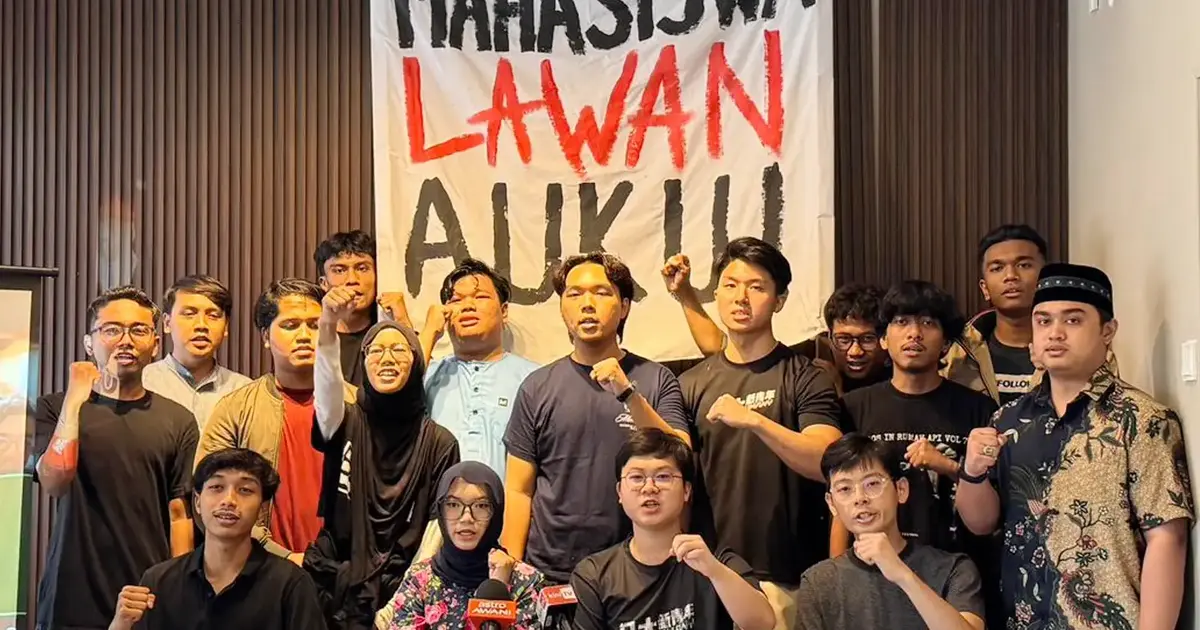
Prime Minister Anwar Ibrahim has moved to reassure student bodies and civil rights advocates by declaring that the government will not introduce new laws designed to specifically constrain the activities of university students, in the aftermath of dismantling the controversial AUKU provision. The statement represents a significant policy direction for the new administration, signalling a deliberate shift away from the restrictive framework that has governed campus life for decades.
The abolition of the AUKU's prohibitive clause, which had long prevented students from engaging in political activities and advocacy work, marks a watershed moment in Malaysia's approach to higher education governance. Student unions and educational observers have closely monitored the government's intentions following this reform, concerned that authorities might simply replace one restrictive measure with another in a different legislative form. Anwar's explicit rejection of this path provides clarity on the administration's ideological stance toward campus expression and political participation among the youth.
This commitment carries particular weight given Malaysia's history with student activism. The AUKU provisions, enacted decades ago, became synonymous with campus restrictions that limited free speech and political engagement in ways that observers argued were incompatible with democratic norms. Their removal signals not merely a technical legal change but a philosophical repositioning of how the state views the role of students in the broader democratic ecosystem. The Prime Minister's declaration that he opposes legislation that specifically targets students goes beyond the mere removal of old rules; it establishes a protective boundary against future restrictions framed in alternative legislative language.
For Malaysia's university ecosystem, this stance has immediate practical implications. Student organisations, dormitory associations, and campus-based advocacy groups can now operate with greater confidence that the government will not introduce successor restrictions disguised under different statutory labels. This legitimacy creates space for younger Malaysians to participate more directly in political discourse, whether through campus forums, student publications, or coordinated advocacy campaigns on matters of national concern.
The policy also reflects broader regional trends in Southeast Asia, where several countries have grappled with questions about student participation in public life. While some nations maintain tight controls over campus activities, others have gradually liberalised their approach, recognising that educating citizens without enabling their civic participation creates credibility gaps. Anwar's position aligns Malaysia with the latter trajectory, positioning the country as relatively progressive on this governance question compared to some regional peers.
However, the absence of new student-specific restrictions does not automatically translate into absolute freedom for campus activities. Existing general laws governing public assembly, defamation, sedition, and national security remain operative. Students operating under this framework must navigate a landscape where their newfound freedoms exist within broader legal parameters that apply to all citizens. This distinction is crucial: what has changed is the targeted prohibition of student political engagement, not the universal legal order governing speech and association.
Educators and university administrators have viewed the AUKU's removal with mixed reactions. While many welcomed the liberalisation as consistent with international academic freedoms standards, some expressed concerns about campus governance without clear guidelines. Anwar's clarification that no replacement student-specific law will emerge provides administrators with a definitive answer: they must manage campuses under general law rather than special student regulations, an approach common in many democracies worldwide.
The announcement also carries symbolic significance for Malaysia's international standing. Academic freedom rankings and assessments by international bodies have consistently noted the AUKU as a constraint on Malaysian universities' intellectual autonomy. By declining to resurrect equivalent restrictions, the government sends a signal to international academic communities and potential scholars that Malaysia is serious about educational freedom. This positioning could affect the country's capacity to attract talent and maintain research partnerships with leading global institutions.
For political parties and civil society organisations, the confirmation that no new student-specific restrictions will be introduced represents validation of advocacy efforts spanning decades. Student activism, particularly among university students, had become a lightning rod for government control precisely because campus movements have historically catalysed broader political change across Southeast Asia. By declining to erect new legislative barriers, the administration implicitly acknowledges the legitimacy of student voice in democratic deliberation.
Looking forward, the government's stance will likely shape expectations for other potential areas of democratic expansion. Education ministry officials and policymakers will face questions about whether similar liberalisation might extend to other currently restricted groups or activities. Anwar's clear position on students potentially sets a precedent for principled opposition to restrictions on specific demographic categories, though implementation across different policy domains remains to be seen.
The practical working-out of this commitment will become apparent over coming months and years as student organisations test the boundaries of their newly expanded space. The absence of legislation restricting students does not automatically eliminate all tensions between campus expression and public order, but it establishes a legal framework prioritising freedom over prescription. For Malaysian students long constrained by AUKU provisions, the Prime Minister's confirmation represents a genuine transition toward civic participation previously unavailable to their generation.

