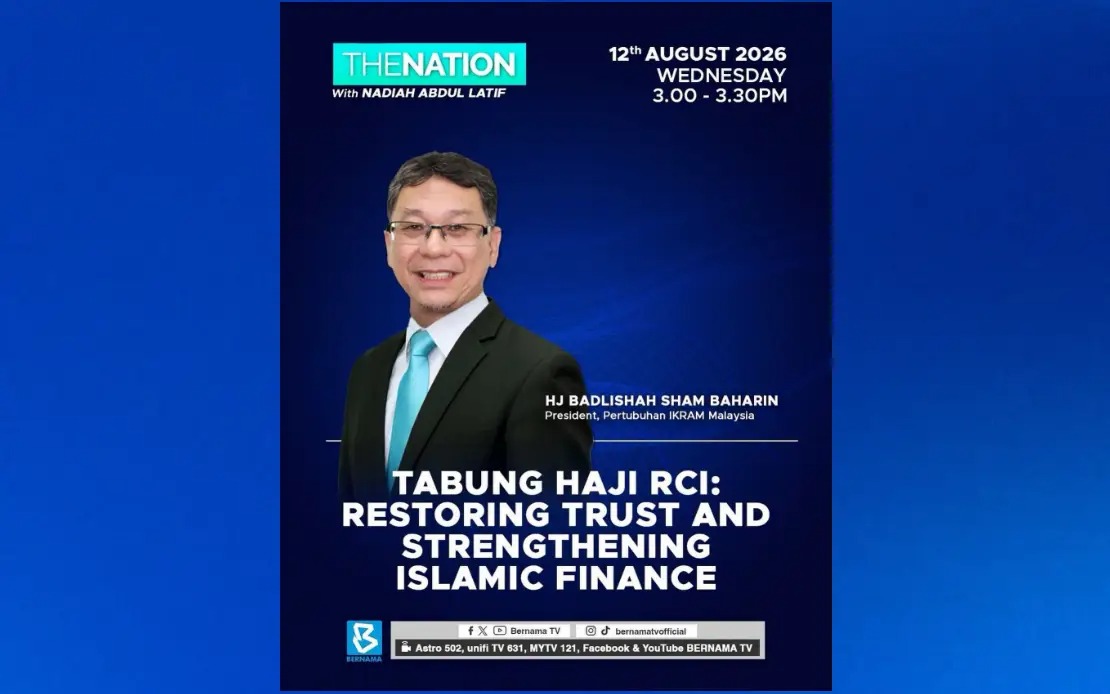
The president of Pertubuhan IKRAM Malaysia has pushed back against calls for a fresh Royal Commission of Inquiry into Tabung Haji, contending that existing investigative mechanisms are sufficient to address governance failures at the Islamic pilgrimage fund. Badlishah Sham Baharin made the statement as debate intensified over whether a new RCI should examine the fund's operations during 2021–2025, following a previous inquiry that covered 2014–2020.
In remarks made during a television discussion on restoring confidence in Islamic finance, Badlishah Sham cautioned that overuse of royal commissions diminishes their utility and standing. He argued that such high-level inquiries should remain reserved for cases of exceptional gravity rather than becoming routine investigative instruments. The Malaysian Anti-Corruption Commission, he suggested, possesses the institutional capacity and legal authority to examine irregularities without requiring yet another formal commission. What matters most, he emphasised, is ensuring that any discovered violations result in meaningful consequences.
His position reflects broader concern within the Islamic finance sector about institutional fatigue. Calls for the expanded RCI have come from elected representatives in both Barisan Nasional and Pakatan Harapan, reflecting cross-party recognition of the severity of losses sustained by the fund. However, IKRAM's leadership suggests that piling inquiry upon inquiry risks transforming governance oversight into political theatre rather than substantive reform.
The backdrop to this debate remains stark. Finance Minister II Datuk Seri Amir Hamzah Azizan disclosed that Tabung Haji absorbed nearly RM13 billion in losses through fourteen deeply problematic investments, seven of which were completely wiped out. The government itself bore RM10.2 billion of this burden through a 2018 bailout conducted via Urusharta Jamaah Sdn Bhd, while the fund itself sustained RM2.6 billion in additional impairment losses between 2018 and 2025 on investments still under management.
Among these failures, the Al-Rawda investment stands out as particularly costly. Between 2015 and 2017, Tabung Haji channelled approximately 1.4 billion Saudi riyals—roughly RM1.5 billion—to intermediaries to secure lease arrangements for four hotels across Makkah and Madinah intended to house Malaysian pilgrims. When Al-Rawda defaulted on rental payments beginning in the first quarter of 2019, the fund was forced to recognise a complete loss of RM1 billion in 2024. Such losses, affecting millions of depositors, have understandably provoked demands for accountability and prevention of recurrence.
Yet Badlishah Sham has thrown his organisation's weight behind an alternative approach: establishing a multi-agency task force to scrutinise investments carrying loss potential and to prevent similar debacles. This recommendation aligns with findings from the existing RCI, which documented substantial weaknesses in management and operations across the 2014–2020 period and generated 25 specific improvement recommendations. By late July, Tabung Haji had implemented approximately 75 per cent of these suggestions, indicating some degree of institutional responsiveness.
Critical to forestalling future disasters, Badlishah Sham stressed, is rigorous due diligence before commitments are made. Investment decisions must emerge from thorough examination at grassroots level, ensuring alignment with ethical principles and established procedural safeguards. This emphasis on prevention rather than prosecution reflects Islamic finance philosophy, which prioritises sustainable institutional integrity alongside accountability for past breaches.
The IKRAM position also carries implicit criticism of parliamentary conduct. During the special Dewan Rakyat sitting addressing the TH RCI report, some opposition members staged a walkout, which Badlishah Sham characterised as abandoning their fundamental responsibility. He noted that lawmakers represent nearly 10 million Tabung Haji depositors and must discharge their obligation to scrutinise executive action, regardless of partisan disagreement. Leaving the chamber, he suggested, amounts to abdicating this duty, particularly when members subsequently voice criticism on social media rather than engaging within parliamentary procedures.
For Malaysia's broader Islamic finance ecosystem, the Tabung Haji episode carries cautionary weight. The fund manages retirement savings for millions of Muslim Malaysians planning the Hajj pilgrimage, making its governance failures not merely a matter of institutional mismanagement but a breach of sacred trust. The scale of losses—and the government intervention required to prevent broader systemic damage—has shaken confidence in oversight mechanisms.
The tension between establishing fresh inquiries and relying on existing investigative bodies reflects a wider governance dilemma. Additional RCIs consume time and resources, potentially duplicating effort and delaying remedial action. Conversely, limiting inquiries may suggest insufficient political will to pursue accountability. IKRAM's proposal to enhance inter-agency coordination through a dedicated task force attempts to navigate this tension by maintaining investigative momentum without the ceremonial weight and public cost of a new commission.
Southeast Asian readers should note that governance failures in Islamic financial institutions carry regional implications. Malaysia's Tabung Haji serves as a model for similar pilgrimage funds across the region, and public confidence in these mechanisms depends on demonstrated competence and trustworthiness. How authorities respond to IKRAM's proposals and opposition demands will shape not only Malaysia's Islamic finance landscape but potentially influence governance standards elsewhere in Muslim-majority Southeast Asia.
The path forward appears to hinge on implementation rigour. Tabung Haji's progress toward the 75 per cent mark on RCI recommendations suggests capacity for self-correction, yet deposit-holders and their parliamentary representatives will scrutinise whether institutional reforms genuinely address underlying vulnerabilities or merely constitute cosmetic adjustment. The multi-agency task force concept, if properly resourced and empowered, could offer a more agile alternative to full-scale inquiry, permitting ongoing oversight without the extended timeframe and institutional disruption associated with another royal commission.

