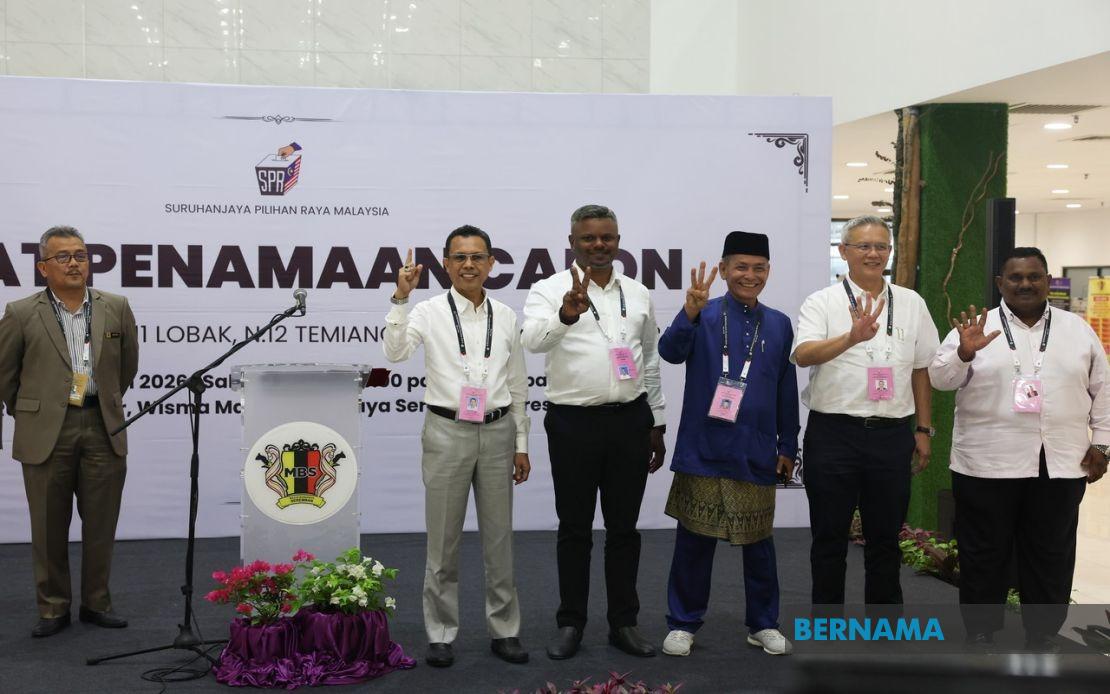
The Nilai state assembly seat has evolved into a chaotic five-way electoral contest that threatens to fragment the anti-PH vote in one of Negeri Sembilan's key urban constituencies. Incumbent J. Arul Kumar, who holds the dual positions of Nilai assemblyman and DAP National vice chairman, will defend his seat against a diverse array of challengers representing different political factions vying for influence in the state. The nomination process has conclusively closed, with the returning officer confirming all five candidates on the ballot as the race intensifies ahead of the August 1 polling date.
The candidate lineup reflects the fragmented political landscape in Negeri Sembilan ahead of the 16th state assembly election. Alongside Arul Kumar's Pakatan Harapan representation, voters will choose between Zamani Ibrahim fielded by Berjasa, Datuk Lai Chien Kong representing Barisan Nasional's traditional conservative base, Datuk V. Saravana Kumar put forward by Bersatu as part of its broader state strategy, and independent candidate Omar Mohd Isa who is running outside all party structures. This crowded field potentially complicates matters for opposition forces seeking to consolidate support against the incumbent, with multiple challengers potentially splitting the anti-PH electorate across different political vehicles and ideological positions.
Negeri Sembilan's electoral drama extends beyond Nilai, as numerous state seats have drawn competitive contests across different configurations. The Sikamat seat will see Nor Azman Mohamad, currently serving as political secretary to the Menteri Besar, carry PH's campaign against Datuk Razali Abu Samah from Perikatan Nasional and Datuk Tun Faisal Ismail Aziz representing Bersatu. The withdrawal of independent candidate Bujang Abu at the last moment narrowed Sikamat to a three-person race, though the presence of two opposition-aligned candidates still threatens to divide anti-government votes in what would otherwise appear a competitive contest.
The Lenggeng constituency presents another competitive scenario, where PH candidate Zarinna Abu Zarin will challenge incumbent Datuk Mohd Asna Amin from Barisan Nasional while Bersatu's Zool Amali Hussin aims to capture votes from both established parties. Meanwhile, the Lobak seat appears set for a binary contest between PH incumbent Chew Seh Yong and Perikatan Nasional challenger Dr P. Kumar, suggesting a more straightforward two-party battle in that particular district. The Temiang constituency involves another three-way configuration featuring PH's Ho Weng Wah, who doubles as political secretary to the Transport Minister, competing against Datuk Leaw Kok Chan from BN and Bersatu's Fazly Hamid.
Ampangan represents yet another three-cornered fight as Muhammad Nazri Kassim, who directs Yayasan Negeri Sembilan under PH's banner, faces off against Datuk Dr Mohamad Rafie Malek from Perikatan Nasional and Noor'azah Harun representing Bersatu. The recurring pattern of three-way and five-way contests across multiple seats illustrates how Bersatu's participation continues to fragment the anti-government or anti-establishment vote depending on local political dynamics, while independent candidacies add further layers of unpredictability to individual races.
The 36-member Negeri Sembilan state assembly was dissolved on June 5, setting in motion the election timeline that will culminate with polling day scheduled for August 1. Early voting has been arranged for July 28, allowing registered voters to cast ballots before the main election date. The compressed election calendar means campaigns have operated under tight timeframes, though the July 18 nomination day results provide clarity regarding which candidates will ultimately contest each seat across the state.
For Malaysian political analysts and PH strategists, the situation in Nilai exemplifies ongoing challenges the coalition faces in managing competition from multiple opposition forces simultaneously. The emergence of Bersatu as a distinct political entity, separate from PH and PN, has fundamentally altered electoral mathematics across many constituencies. Rather than traditional two-sided contests between government and opposition, Malaysian voters increasingly encounter multi-sided races where vote-splitting becomes a critical factor determining outcomes. In urban seats like Nilai, where DAP holds traditional support among Chinese and Indian communities, fragmentation of the alternative vote threatens to undermine the incumbent's re-election prospects despite his established position and party credentials.
The presence of Barisan Nasional candidates in multiple seats indicates the coalition's determination to reclaim state assembly territory lost in previous elections, though its effectiveness may depend on whether it can consolidate anti-PH voters in specific constituencies. Perikatan Nasional's participation reflects Muhyiddin-led faction's ambitions to expand influence in state-level politics beyond its federal presence and existing state governments. These competing opposition forces create scenarios where no single challenger emerges as the obvious alternative to incumbent PH representatives, potentially benefiting sitting assemblymembers despite facing more adversaries at the ballot box.
The Negeri Sembilan election assumes additional significance within Malaysia's broader political realignment, as the state has traditionally served as a PH stronghold though not immune to opposition surges. The 16th state assembly election will provide important signals regarding voter sentiment toward the PH government at the state level, the viability of Bersatu's separate political project, and whether Barisan Nasional can revive its competitiveness in Malaysian electoral contests. Results from constituencies like Nilai will help determine which political combinations and messaging strategies resonate most effectively with increasingly discerning and fragmented electorates across the peninsula.
Ultimately, the crowded Nilai contest encapsulates modern Malaysian electoral complexity, where incumbents face unprecedented competitive pressures not from a single unified opposition force but from multiple rivals representing different ideological traditions and political projects. Arul Kumar's defence of his seat will hinge on mobilising his existing support base while navigating the challenge of four competing alternatives drawing votes from overlapping demographics and policy constituencies. The outcome in Nilai and similar multi-candidate races will significantly shape the eventual composition of the Negeri Sembilan state assembly elected on August 1.

