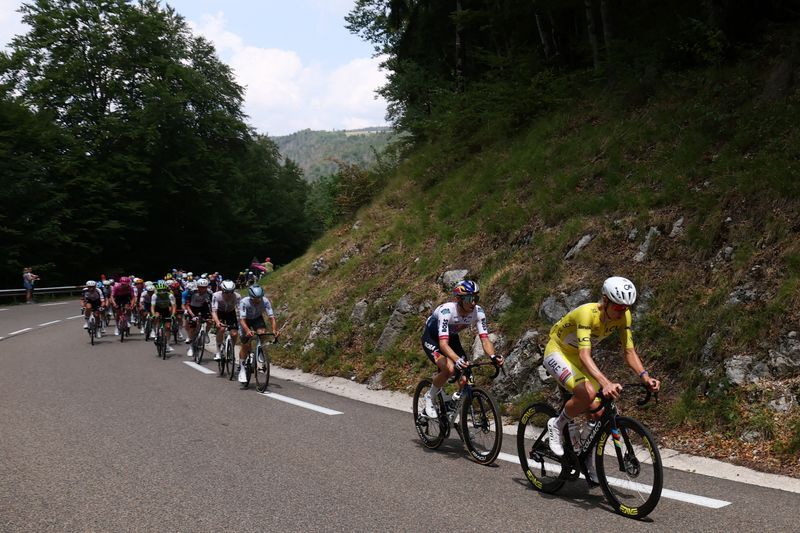
The debate surrounding pre-dawn doping controls at the Tour de France has intensified following comments from Jonathan Vaughters, the former professional cyclist who now leads the Cannondale-EF team. Vaughters weighed into the controversy by arguing that aggressive night-time testing protocols could have prevented the systematic abuse that plagued professional cycling for decades, had such measures existed during the sport's most turbulent era. His intervention has reignited discussion about balancing the health and performance of elite athletes against the imperative to maintain clean competition.
Riders competing in this year's Tour faced unexpected 2 a.m. doping checks on the eve of the 15th stage, including race leader Tadej Pogacar and second-placed Jonas Vingegaard. The unannounced nature of these tests and their timing prompted immediate backlash from competitors who argued that disrupting sleep patterns before demanding mountain stages posed serious risks to their wellbeing and safety. Vingegaard reported losing roughly forty minutes of sleep after his early-morning test, a deficit that may have contributed to a subsequent crash that left him with a broken collarbone. Pogacar managed only four hours of rest, while stage winner Remco Evenepoel went further, describing the entire practice as "inhuman" and highlighting broader concerns about athlete welfare in professional cycling.
Vaughters brings credibility to this discussion precisely because of his complicated history with doping. The American rider competed professionally through the late 1990s and early 2000s, an era synonymous with widespread performance-enhancing drug use in cycling's most prestigious events. He served as a teammate to Lance Armstrong on the U.S. Postal Service team and has since admitted to using EPO during his career. Following Armstrong's eventual downfall, Vaughters became instrumental in cycling reform, founding what is now Cannondale-EF with explicit positioning as an advocate for clean racing. His public confession and subsequent work for anti-doping compliance give his current statements particular authority, positioning him as someone genuinely invested in preventing the return of systematic cheating.
Vaughters's core argument centers on the mechanics of modern drug administration in professional cycling. Micro-dosing protocols for substances like EPO and human growth hormone have long troubled anti-doping authorities because these compounds can clear the human body within hours, making detection increasingly difficult if testing remains confined to predictable daytime schedules. Vaughters contended on social media that "2am testing is one of the very effective ways to prevent peptide, EPO, hGH, and testosterone micro dosing." He went further to suggest that had the International Cycling Union implemented such protocols during his own racing era, "we'd all have been suspended and saved the sport 25 years of drama." This statement carries the weight of personal experience, reflecting someone who understands firsthand how riders exploited predictable testing windows.
The historical context Vaughters references remains deeply relevant to professional cycling's ongoing reputation challenges. Armstrong's scandal exposed what the U.S. Anti-Doping Agency described as the most sophisticated doping program the sport had encountered, a revelation that tarnished cycling's standing globally. When USADA concluded its investigation, Armstrong was stripped of seven Tour de France titles in 2012, a punishment that vindicated suspicions held by many observers but that came only after years of institutional denial. The subsequent two decades have witnessed cycling's governing bodies attempting to rebuild credibility through enhanced testing regimes, though scepticism persists among some observers who question whether current measures sufficiently prevent abuse.
The International Testing Agency, which oversees doping controls for the Union Cycliste Internationale, has defended the controversial night-time testing protocol as necessary. The agency acknowledged that "night-time testing may be disruptive to riders' rest and recovery" but argued that effective anti-doping efforts must occasionally occur "outside daytime hours" when circumstances justify such measures. This position reflects tension between two legitimate concerns: protecting athlete health and ensuring genuine competitive fairness. The agency's statement suggests that while the disruption is regrettable, the alternative—allowing riders to evade detection through predictable testing schedules—presents greater harm to the sport's integrity.
For Malaysian and Southeast Asian cycling enthusiasts, this debate touches on broader questions about how professional sports maintain credibility while respecting athlete welfare. The region has produced accomplished cyclists capable of competing at international level, and the sustainability of professional cycling as a career depends on the sport's reputation for fairness. If micro-dosing practices allow certain athletes to gain undetectable advantages, the competitive environment becomes fundamentally corrupted, potentially discouraging younger cyclists from investing in clean competition. Conversely, if anti-doping measures become so intrusive that they compromise athlete recovery and safety, the sport risks alienating competitors and the public.
The timing of Vaughters's comments reflects ongoing tension within professional cycling over how strictly to police performance-enhancing practices. Some observers argue that cycling's history demands the most aggressive testing possible, including uncomfortable night-time protocols. Others contend that such measures have become excessive, penalizing clean athletes and infringing on their reasonable expectations for rest and privacy. This disagreement extends beyond individual races; it fundamentally shapes how cycling federations develop policy and how athletes prepare for competition.
Vaughters's personal journey from admitted doper to anti-doping advocate demonstrates that redemption and genuine commitment to reform are possible within professional sports. His decision to found a team explicitly committed to clean racing, and to maintain that commitment through competitive seasons, suggests that systematic cheating is not an inevitable feature of professional cycling if institutional will exists. However, his acknowledgment that effective prevention requires uncomfortable measures—including sleep disruption—underscores the difficult trade-offs inherent in maintaining competitive integrity.
The controversy surrounding pre-dawn testing at this year's Tour de France ultimately reflects cycling's determination not to repeat its disastrous past. While complaints from riders deserve serious consideration, Vaughters's intervention reminds the sport that the alternative to aggressive testing protocols has already been thoroughly documented. The question facing cycling authorities is not whether enforcement should feel comfortable, but whether current measures sufficiently prevent the systematic abuse that once defined the sport. For now, the International Testing Agency appears committed to prioritizing detection over comfort, betting that short-term disruption to individual athletes is worthwhile insurance against the sport-wide damage caused by undetected doping schemes. Whether that calculation proves correct will depend on whether the enhanced measures succeed in preventing the micro-dosing that Vaughters and others identify as the primary contemporary risk.

