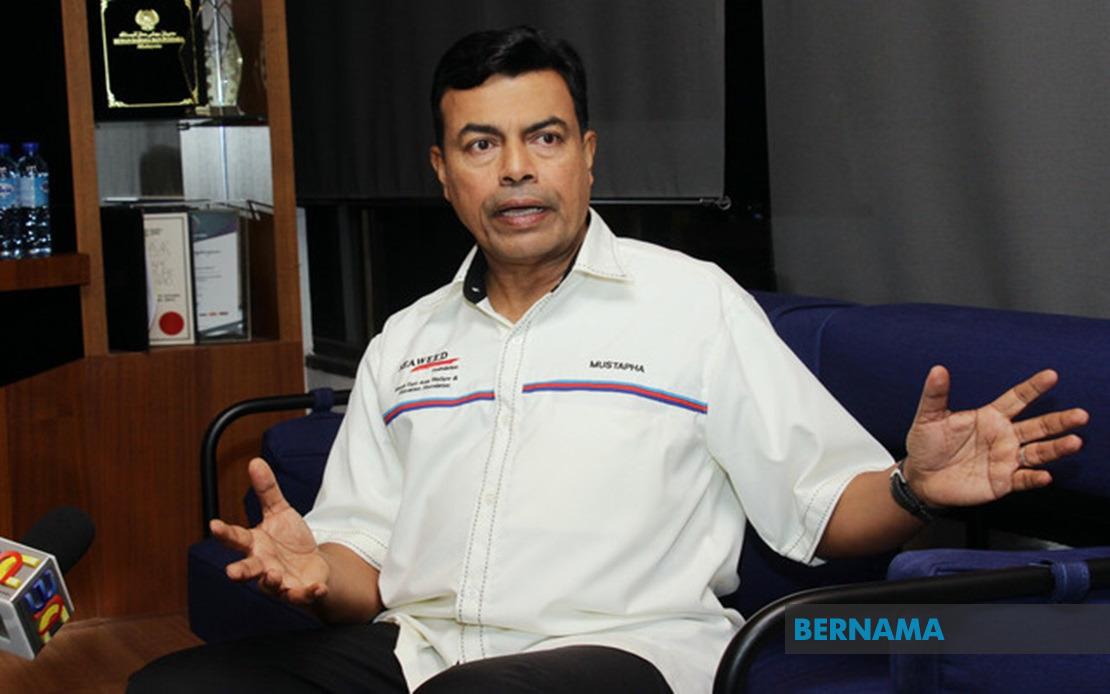
The Education Ministry faces renewed pressure to establish a specialised agency dedicated to safeguarding student welfare and managing school discipline, according to a prominent education advocacy group. Speaking in Semporna on July 9, Datuk Dr Mustapha Ahmad Marican, chairman of the South East Asia Welfare and Education Foundation (SEAWEED), outlined the case for creating such an oversight body that would relieve schools and teachers of mounting responsibility while establishing systematic protections for pupils across the nation.
The proposed agency could operate either as a ministry department or as an independent entity with its own statutory powers and mandates, according to Mustapha. The distinction matters considerably—an autonomous body would carry greater investigative authority and resources, while a ministry-embedded structure might offer more direct policy alignment and funding certainty. The SEAWEED chairman emphasised that this model is far from theoretical; comparable systems already function effectively in developed nations. The United Kingdom and Australia have implemented comprehensive legal frameworks and dedicated agencies that systematically oversee school safety protocols, intervention programmes, and accountability mechanisms. These international precedents suggest that institutional specialisation in student protection yields measurable improvements in outcomes across multiple dimensions of school welfare.
Malaysian schools currently grapple with escalating discipline concerns that extend beyond traditional classroom management. Teachers frequently find themselves caught between pedagogical responsibilities and the complex role of maintaining school safety and student well-being—a dual mandate that stretches institutional capacity and teacher professional competency. By creating a dedicated body, the ministry could establish clearer accountability lines and allow educators to focus on their core instructional mission rather than functioning as de facto safeguarding officers. This separation of functions reflects modern educational management practices increasingly adopted across Southeast Asia, where specialist welfare teams handle investigations, intervention programmes, and family engagement while teachers concentrate on curriculum delivery and academic support.
The backdrop to this proposal involves mounting alarm over specific safety threats within the school environment. Bullying cases have become increasingly severe, with incidents resulting in physical injury and psychological trauma among students. Gangsterism poses an additional layer of risk, particularly in urban schools where territorial dynamics and peer pressure intensify behavioural problems. These phenomena extend beyond simple rule-breaking; they represent systemic challenges that require coordinated, specialist responses involving multiple stakeholders including counsellors, law enforcement, family services, and educational administrators. A dedicated agency could develop standardised protocols for responding to such incidents, ensure consistent documentation and follow-up, and implement evidence-based prevention programmes across school systems.
Mustapha advocated for a research-driven approach to understanding and addressing bullying dynamics. An in-depth investigation into bullying patterns, encompassing the mental health dimensions and underlying psychological factors, would provide the evidence base for targeted interventions. Such research could identify specific vulnerability factors, document the intersection between bullying and mental health outcomes, and evaluate existing prevention strategies. Malaysian schools would benefit from locally-contextualised data rather than relying solely on international frameworks developed in different cultural and social contexts. Mental health considerations deserve particular emphasis; research increasingly demonstrates that bullying both reflects and exacerbates anxiety, depression, and other psychological conditions among young people, creating cycles of harm that extend far beyond the immediate school setting.
The SEAWEED chairman also advanced a specific operational proposal: regular bag inspections as a preventive security measure. While such measures carry implications for student privacy and civil liberties, they address a concrete safety risk. The introduction of weapons—particularly knives and sharp implements—into school environments represents a quantifiable threat that has escalated concern among educators, parents, and administrators. Structured inspection protocols, implemented transparently with clear guidelines and oversight, could serve as both a genuine deterrent and a practical safety mechanism. The challenge lies in implementing such measures equitably without creating stigmatising practices or disproportionately targeting particular student groups. A specialist agency could develop best-practice guidelines for inspection procedures that balance security imperatives with student rights and dignity.
For Malaysia, establishing a dedicated student safety agency would mark a significant institutional evolution in how schools approach welfare and discipline. Currently, responsibility disperses across multiple actors—school administrators, teachers, counsellors, school boards, and parent associations—without clear coordination mechanisms or specialist expertise. This fragmentation means responses to serious incidents often lack consistency, proper investigation, or coordinated follow-up. An integrated agency could standardise response protocols, maintain complaint registries, conduct independent investigations, and ensure that schools address safety concerns with appropriate gravity. Such centralisation of expertise and authority would likely improve response quality and outcome consistency across the school system.
The regional dimension matters as well. Southeast Asian education systems increasingly recognise that traditional approaches to discipline and welfare require modernisation as schools face evolving social pressures, digital bullying, and mental health crises among young people. Neighbouring countries have begun implementing specialist structures to manage these challenges. A Malaysian agency could learn from regional experiences while adapting international best practices to local contexts. It could also facilitate knowledge-sharing and capacity-building across ASEAN education systems, contributing to regional expertise development and establishing Malaysia as a leader in student welfare innovation.
Implementing such a proposal would require sustained political commitment and adequate funding allocation. Initial establishment would involve developing detailed operational frameworks, recruiting specialist personnel, creating data management systems, and establishing relationships with schools and partner agencies. The ministry would need to engage stakeholders—school administrators, teachers, parents, students, and civil society—in the design process to ensure the agency serves genuine needs and operates with community trust and legitimacy. Done properly, a student safety agency could transform how Malaysia protects and supports young people, turning scattered individual efforts into a coordinated, systematic approach grounded in evidence and specialist expertise.

