Johor's upcoming state election this Saturday is prompting significant logistical mobilisation to ensure voters scattered across Malaysia and beyond can participate. A civil society group called Stesen Pemantauan Rakyat has stepped in to facilitate the journey home for eligible electors by deploying six buses with a combined capacity of 240 passengers. The initiative reflects growing recognition that voter turnout depends partly on removing practical barriers to participation, particularly for citizens working or residing outside their home states.
The NGO's transport offering is strategically configured to serve two key departure points. Four buses will collect passengers from Kuala Lumpur beginning at 9 pm on Friday, while a separate pair of vehicles will operate from the Sultan Iskandar Building Customs, Immigration and Quarantine (CIQ) Complex in Johor Bahru, with departures at 9 pm on Friday and 9 am on Saturday. This dual-hub approach acknowledges that the majority of out-of-state voters are concentrated in the capital, though a notable diaspora also works across the border in Singapore. According to Yong Shui Wen, the organisation's representative, these buses will fan out across nine destinations including Tangkak, Muar, Batu Pahat, Pekan Nanas, Segamat, Labis, Kluang, Ayer Hitam and Kulai, covering a broad geographic spread across Johor's interior and southern regions.
The scale of demand underscores changing patterns of internal migration and urbanisation across Malaysia. Stesen Pemantauan Rakyat has operated this programme since 2018, and Yong noted that every available seat has been filled for the current election, indicating sustained enthusiasm among non-resident voters to cast their ballots. This consistency suggests the service addresses a genuine need and has earned credibility among Johor's diaspora. For younger voters especially, who migrate to urban centres for employment and education, such initiatives can meaningfully influence participation rates in state and local elections where they maintain voting rights.
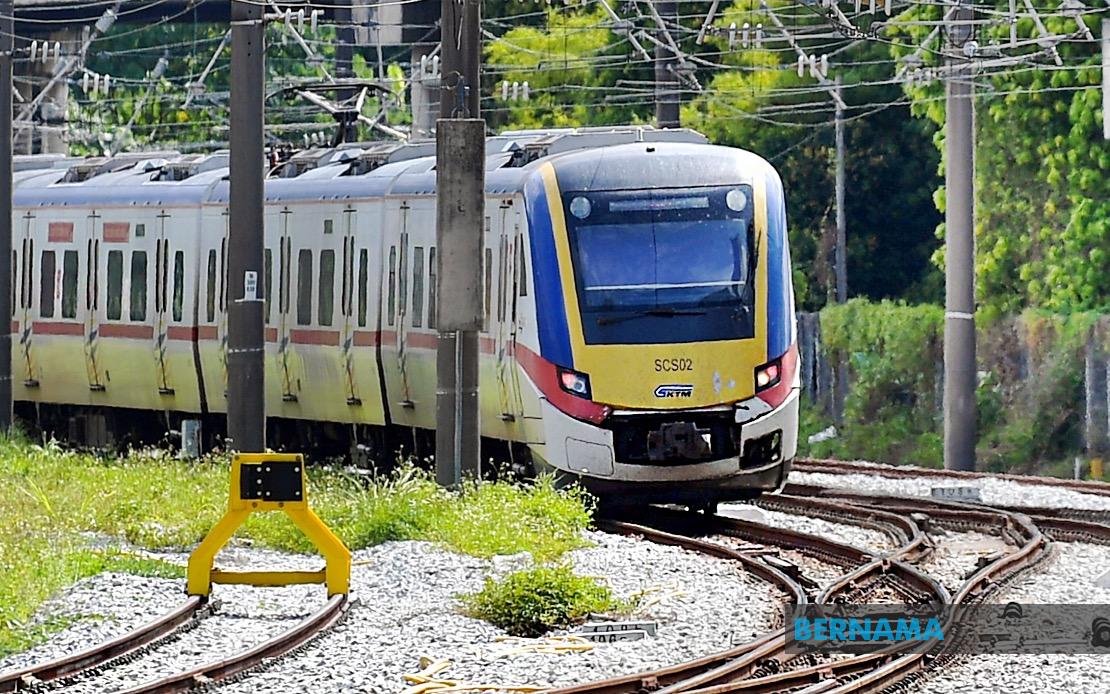
The NGO's efforts are complemented by substantial action from Keretapi Tanah Melayu Bhd (KTMB), the state railway operator. The company has essentially doubled seating capacity on its Electric Train Service (ETS) heading to southern Johor from 10 to 12 July in direct response to anticipated surge in passenger numbers. For the high-traffic KL Sentral to JB Sentral route, KTMB has added 7,560 seats, elevating total available capacity from approximately 7,560 to 15,120 seats. This represents a dramatic operational decision requiring coordination across multiple train services and crew scheduling.
The uptake on the prime KL Sentral-JB Sentral-KL Sentral corridor has been swift and substantial. As of early morning on 9 July, 12,769 seats—equivalent to 84 per cent of total capacity—had already been booked, leaving only 2,351 seats available. This near-complete sell-out suggests that election-related travel demand is unprecedented or that substantial numbers of voters who might otherwise have abstained are now making the journey specifically to participate. The figures indicate that transport availability, once secured, translates directly into voter movement.
KTMB has also expanded capacity on the secondary Gemas to JB Sentral route, increasing seats from 630 to 4,410 during the same period. Demand here is more moderate, with 2,064 seats (47 per cent) booked as of the reporting date and 2,346 seats remaining. This secondary route serves residents in central Johor and those transitioning via Gemas, a major transport hub, and may capture voters for whom the direct KL route is inconvenient. The differential uptake between the two routes reflects the geographic concentration of Johor's working-age population in the Klang Valley.
Ticket availability through the KTMB Mobile app reveals that peak-period services on Friday and Saturday are nearly exhausted, though the operator has advised passengers to monitor the application continuously as cancellations or additional services may create openings. This real-time information management is crucial for voters making last-minute decisions, as it prevents them from abandoning their travel plans prematurely. The digitalisation of ticketing, while creating congestion at peak periods, also provides transparency that earlier analogue systems could not offer.
The scale of the election itself contextualises this transport mobilisation. A total of 172 candidates are contesting 56 state assembly seats in the 16th Johor state election, with 2,727,926 registered voters eligible to cast ballots. This represents a substantial electoral exercise across a large and geographically dispersed constituency. The voter roll encompasses urban centres, rural areas, and a significant working population in neighbouring states, making transport logistics a legitimate policy concern. Unlike federal elections, which receive more routine media and government attention, state elections often struggle with lower voter participation partly because the practical costs of returning home to vote can deter those living away.
The coordination between civil society and state enterprise in facilitating voter access reflects a broader principle that electoral participation is a shared responsibility. While Stesen Pemantauan Rakyat's initiative is voluntary and donor-driven, KTMB's capacity expansion is a commercial response to demand but also implicitly acknowledges the railway's role in national democratic infrastructure. Neither entity requires legal mandate to assist voters, yet both have acted, suggesting that facilitating electoral participation enjoys broad acceptance across Malaysian institutions.
These initiatives carry implications for how Malaysia approaches voter accessibility and participation. They demonstrate that geographical dispersion and employment patterns can suppress turnout unless practical support is provided. For Southeast Asian democracies grappling with urbanisation and internal migration, the Johor election offers a case study in how targeted transport interventions can offset structural barriers to voting. Whether these measures will measurably lift overall turnout in the 16th Johor state election will be evident on Saturday evening, but their existence indicates growing recognition that democracies must work actively to include all eligible citizens.

