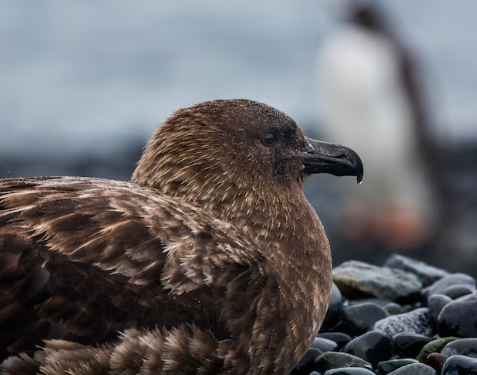
New Zealand has joined the growing list of nations grappling with H5N1 bird flu, after authorities confirmed the detection of the virus in a brown skua seabird discovered on a beach near Wellington on Wednesday, July 15. The discovery marks a significant milestone in the global spread of the highly pathogenic strain, which has now reached every inhabited continent. Biosecurity Minister Andrew Hoggard announced the finding, noting that although the country has recorded its first confirmed case, there remains no evidence of widespread mortality among wild birds or transmission between bird populations within New Zealand's borders. No infections have been detected in domestic poultry operations, providing some reassurance to the farming sector.
The detection in New Zealand comes just weeks after Australia, the final continent to remain unaffected, reported its first confirmed cases of H5 bird flu. Australia has documented 14 confirmed or presumed positive detections as of the same Wednesday, establishing a concerning pattern across the Tasman Sea. This geographic proximity and the documented movement of migratory seabirds between the two countries underscore how rapidly the virus can traverse vast oceanic distances. The strain that has wreaked havoc globally since 2021 has demonstrated an alarming ability to infect diverse populations, from wild bird communities to commercial poultry operations and even some agricultural workers, fundamentally altering how biosecurity officials approach pandemic preparedness in the agricultural sector.
New Zealand's vulnerability to the virus differs markedly from that of other developed nations, rooted in the country's unique evolutionary history. For millions of years, New Zealand's avian species evolved in near-total isolation from land-based mammalian predators, resulting in an unusually high proportion of flightless or ground-nesting birds. This isolation produced extraordinary biodiversity and species found nowhere else on Earth, yet simultaneously created populations with minimal defensive capabilities against novel threats. The introduction of European pests such as stoats, rats, and feral cats has already decimated many native bird populations, reducing some species to critically low numbers. The arrival of H5N1 threatens to deliver what could be a final blow to birds already teetering on the brink of extinction, potentially erasing species that have survived millennia.
Recognising this catastrophic risk, New Zealand's health and conservation authorities have moved swiftly to implement a vaccination programme targeting the country's most vulnerable species. Officials have begun inoculating 300 core breeding birds selected from five of New Zealand's most critically endangered species, including the flightless takahe and the kakapo, a large nocturnal parrot found nowhere else globally. This intervention represents an unprecedented effort to protect wild bird populations through vaccination, reflecting the extraordinary threat posed by H5N1 to species with populations numbering in the low hundreds or thousands. The vaccination programme operates on the principle that maintaining these core breeding populations is essential to prevent complete extinction, even if the virus spreads throughout broader wild bird communities.
Brett Gartrell, professor of wildlife health at Massey University, has articulated the profound concern gripping conservation scientists across New Zealand. Gartrell warned that the combination of H5N1's potential rapid spread and the confined population sizes of endangered species creates an extinction scenario unprecedented in modern conservation history. He stressed that New Zealand's birds possess no evolutionary experience with pandemics of this scale or severity, having never encountered a pathogenic threat requiring population-level immune responses. The vaccination programme, while essential and groundbreaking, cannot guarantee protection if the virus circulates rapidly through wild populations before immunity can be established. The window for containing viral spread while simultaneously vaccinating and protecting core breeding populations remains perilously narrow, with experts uncertain whether current biosecurity measures and vaccination timelines will prove adequate.
The government has invested considerable effort in preparedness since recognising the threat posed by H5N1's global expansion. New Zealand's agricultural sector and conservation agencies have collaboratively developed comprehensive biosecurity protocols and resilience strategies in partnership with the poultry industry, anticipating eventual incursion of the virus. These preparations have focused on preventing infection in commercial operations, which represent significant economic assets, while simultaneously developing contingency plans for wildlife management. However, the fundamental challenge remains that wild bird populations, particularly migratory species that carry the virus across continents, cannot be readily quarantined or controlled. The brown skua, a seabird known for long-distance migration between hemispheres, likely contracted the virus during its travels and represents a harbinger of additional detections in coming months.
The discovery in New Zealand carries implications extending well beyond the country's borders to the broader Pacific region, which remains largely free from established H5N1 circulation. Island nations and territories throughout Oceania now face elevated risk of virus introduction through migratory bird pathways and maritime trade. Many Pacific island nations possess limited biosecurity infrastructure and veterinary capacity, rendering them particularly vulnerable to rapid establishment of the virus if introduction occurs. Regional health organisations and agricultural bodies have begun coordinating surveillance and response strategies, recognising that the virus's arrival in one jurisdiction threatens the entire region's agricultural and ecological security. The speed at which H5N1 has circumnavigated the globe suggests that New Zealand's detection will likely be followed by cases in other Pacific locations within months rather than years.
The Australian precedent provides New Zealand with both cautionary lessons and possible strategic frameworks. Australia's experience managing 14 confirmed cases has demonstrated the challenges of tracking and containing a virus that spreads through wildlife populations while maintaining surveillance in commercial agriculture. Australian authorities have implemented culling programmes in some instances and monitoring in others, attempting to balance containment objectives with ecological considerations. New Zealand's own response appears to prioritise vaccination of critically endangered species alongside conventional biosecurity measures, suggesting a different strategic emphasis that reflects the country's particular conservation challenges. However, fundamental uncertainties persist regarding vaccine efficacy in wild populations, optimal dosing schedules, and the virus's mutation potential as it circulates through New Zealand's diverse bird fauna.
Looking forward, the convergence of H5N1's continued global circulation and New Zealand's exceptional biodiversity vulnerability creates an urgent imperative for enhanced surveillance and research capacity. Scientists and policymakers acknowledge that the current vaccination programme represents a desperate but necessary intervention to prevent irreversible losses among species that have persisted for millions of years. The financial investment in vaccinating 300 birds, while substantial per capita, reflects recognition that extinction of endemic species would constitute a cultural and scientific catastrophe. Yet resources remain finite, and decisions about which species receive vaccination priority inevitably involve triage considerations that conservation ethicists find deeply troubling. As H5N1 continues its relentless global march, New Zealand confronts a future in which the country's singular avian heritage faces its greatest peril since the arrival of European settlement.

