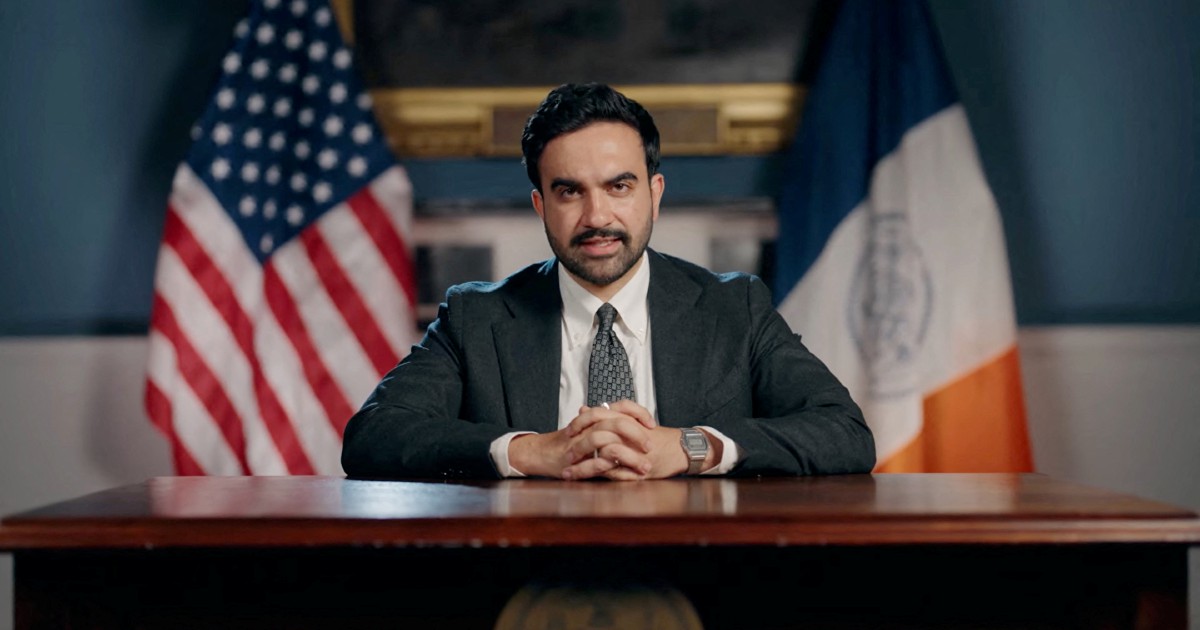
New York Mayor Zohran Mamdani has formally stated that the city administration cannot independently act on the International Criminal Court's arrest warrant for Israeli Prime Minister Benjamin Netanyahu, instead placing responsibility squarely on the shoulders of federal authorities. His remarks, made on Tuesday, came amid significant debate over whether and how American municipalities should respond to ICC enforcement actions against foreign leaders.
The clarification from Mamdani reflects a broader constitutional reality in the United States: individual cities and states operate under limited jurisdiction and lack standing to enforce international legal instruments. Federal law, treaties, and constitutional authority all flow primarily through Washington, not through local governments. This distinction became critical as legal scholars, advocates, and officials grappled with the practical implications of the ICC warrant for Netanyahu, particularly given New York City's status as a frequent destination for international dignitaries and a major hub for global diplomacy.
The ICC, based in The Hague, issued its warrant following investigations into alleged war crimes and crimes against humanity linked to Israel's military operations in Gaza. The warrant places signatory nations to the Rome Statute—which notably does not include the United States—in an awkward position. While over 120 countries are bound by the ICC's jurisdiction, America maintains a complicated relationship with the court, having never ratified the treaty that established it. This absence creates a peculiar legal landscape where American officials can acknowledge the warrant's existence without being bound by obligations to enforce it.
Mamdani's statement represents an effort to navigate this politically sensitive territory by being forthright about jurisdictional limits rather than appearing evasive. By explicitly stating that New York City—despite being one of the world's most prominent urban centers—cannot unilaterally enforce the warrant, he acknowledged the reality that only the federal government, through the State Department and potentially the Justice Department, could make determinations about how to handle such matters. His approach also deflects pressure that might otherwise accumulate at the municipal level.
The timing of the mayor's comments reflects elevated international tension surrounding the Gaza conflict and broader questions about accountability for alleged violations of international law. Netanyahu's potential visit to New York—or transit through the city as it hosts the United Nations headquarters and numerous international meetings—could theoretically trigger complications if local authorities were somehow expected to enforce the warrant. By pre-emptively clarifying the city's lack of authority, Mamdani sought to prevent confusion about who bears responsibility for such determinations.
Federal officials in Washington have largely remained circumspect on the ICC warrant, neither confirming nor denying whether they intend to take action. The Biden administration's position has emphasized respect for the ICC's independence while avoiding explicit commitments to enforce its decisions. This ambiguity serves multiple diplomatic purposes: it allows America to maintain relationships with Israel while not openly defying an international court, though critics argue it amounts to de facto non-compliance.
The broader legal question hinges on whether American laws—including the Hague Invasion Act, formally known as the American Servicemembers' Protection Act—would permit or prevent the US government from cooperating with the ICC. That legislation, passed in 2002, authorizes the president to use military force to free Americans from ICC custody, reflecting deep American skepticism toward the court. However, it does not explicitly prohibit the US from complying with warrants for non-Americans, creating another layer of ambiguity.
For Malaysian observers, the situation underscores how international justice remains fragmented and dependent on national governments' political will. Malaysia, as an ICC signatory through the Rome Statute, technically has obligations to enforce warrants issued by the court. If Netanyahu visited Malaysia, questions would theoretically arise about Malaysian authorities' responsibilities. However, Malaysia's careful diplomatic balancing—maintaining relationships across the Middle East and beyond—makes enforcement politically complicated regardless of legal obligations.
The Netanyahu warrant also illustrates how geopolitical power continues to shape international law's application. The ICC has issued numerous warrants for individuals from countries lacking political leverage, yet warrants for leaders of militarily and diplomatically powerful nations face substantial enforcement barriers. This asymmetry raises persistent questions about whether international justice can truly function impartially or whether it remains essentially an instrument available only against weaker actors.
Mamdani's public statement, while seemingly narrow in scope, carries symbolic weight. It signals that New York City will not become a stage for unilateral enforcement efforts and that proper channels must be followed. Whether federal authorities will eventually engage with the warrant remains unclear, but the question is now explicitly on record as one requiring their attention rather than local action. This clarification, though limited in immediate practical impact, shapes the legal and political framework within which subsequent developments will unfold.

