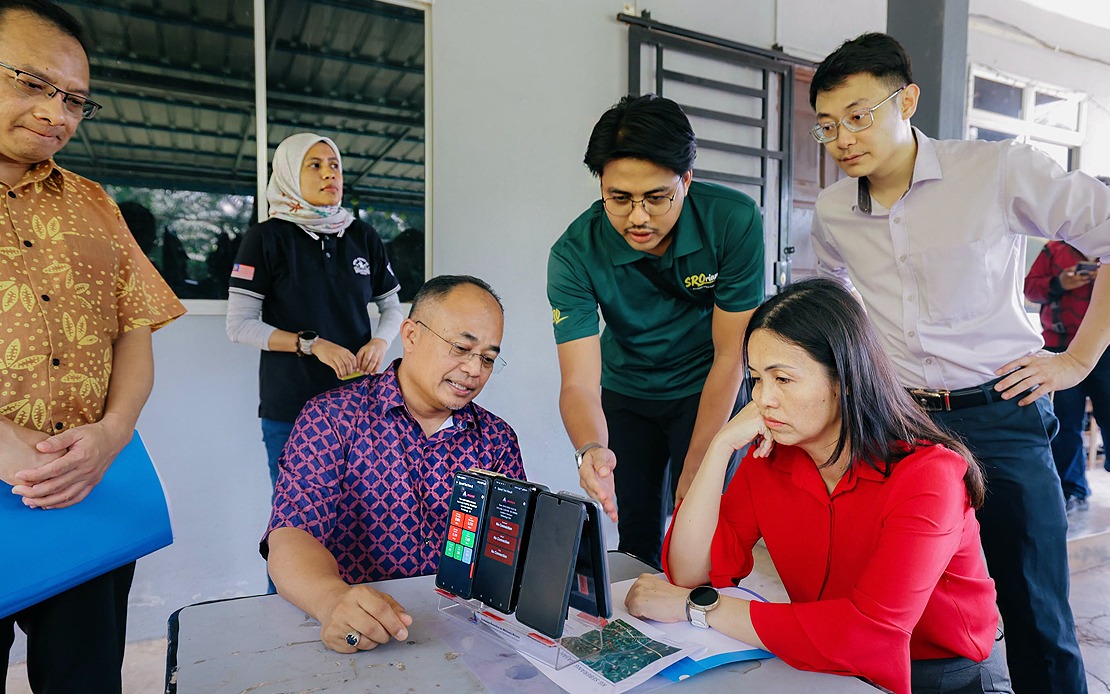
Residents of Kampung Seberang Gajah in Tangkak are set to experience marked improvements in internet connectivity following an imminent telecommunications infrastructure expansion in their community. Deputy Communications Minister Teo Nie Ching announced the development during a site visit where she assessed current service quality alongside representatives from the Malaysian Communications and Multimedia Commission (MCMC) and leading telecommunications operators.
The ongoing connectivity challenges faced by locals have persisted despite the presence of two existing telecommunications towers serving the broader region. According to Teo, these facilities have proven inadequate in delivering sufficient coverage to meet resident demand. The fundamental issue stems not from a complete absence of infrastructure but from geographical limitations and signal propagation constraints that prevent adequate service penetration across Kampung Seberang Gajah. This scenario reflects a common challenge in rural and semi-rural Malaysian communities where blanket coverage remains elusive despite nearby installations.
To resolve this long-standing concern, the MCMC has formally directed telecommunications service providers to construct an additional tower specifically positioned to address coverage gaps in the area. The strategic placement of this new facility is intended to eliminate dead zones and strengthen signal strength throughout the village. Teo explained that detailed planning for the project has already concluded, with the construction blueprint finalised and ready for implementation.
The primary constraint now limiting immediate construction is regulatory clearance from local authorities. The telecommunications company leading the project must obtain formal permit approval from relevant municipal bodies before mobilisation can commence. While this administrative step is standard procedure, it introduces a timeline element that Teo addressed directly during her visit. She explicitly called for acceleration of the approval process, emphasising that expedited action would enable residents to access improved connectivity at the earliest opportunity.
The Deputy Minister's intervention signals high-level political commitment to resolving rural digital inequality. Her direct participation in the survey demonstrated that connectivity issues in smaller communities remain on government radar despite infrastructure challenges in more populous urban areas. The presence of MCMC's Southern Region Office director Rizal Abd Malek, alongside State Affairs Sector head Bukhari Yahya and telecommunications representatives, underscored the multi-agency coordination required for such projects.
From a broader Malaysian perspective, this project exemplifies ongoing efforts to narrow the digital divide separating urban and rural populations. As commerce, education, and government services increasingly shift online, inadequate internet access translates directly into economic and social disadvantage for affected communities. The construction timeline remains unspecified, though Teo's emphasis on urgency suggests authorities recognise the pressing nature of the situation.
The telecommunications industry has been responsive to such directives, recognising both the commercial opportunity and corporate social responsibility dimension of rural coverage expansion. Service providers operating in Malaysia understand that government priorities around universal broadband access create both expectations and investment incentives. The new tower represents a concrete manifestation of those pressures translating into physical infrastructure development.
Kampung Seberang Gajah's situation also reflects structural challenges in telecommunications planning. Coverage decisions typically depend on population density and revenue potential, criteria that inherently disadvantage dispersed rural settlements. Regulatory intervention through MCMC direction represents a corrective mechanism ensuring that market forces alone do not determine access patterns. Without such intervention, communities like Kampung Seberang Gajah might indefinitely remain in connectivity shadows despite technically being within range of existing facilities.
The anticipated service improvements will likely extend beyond internet access to encompass voice quality and data reliability improvements. Modern telecommunications towers serve multiple purposes and technologies simultaneously, supporting 4G networks, emerging 5G infrastructure where deployed, and traditional voice services. Enhanced coverage therefore promises holistic communication improvements rather than isolated internet speed gains.
Implementation of this project carries implications for Malaysia's digital economy aspirations and competitiveness positioning. As the nation pursues greater integration into regional digital ecosystems and seeks to expand technology-dependent sectors, ensuring comprehensive connectivity becomes strategically important. Communities previously disconnected from reliable broadband represent untapped potential for digital entrepreneurship, remote work participation, and technology adoption.
The timeline for permit approval and subsequent construction remains unclear, though Teo's explicit directive for acceleration suggests completion within months rather than extended timescales. Local authorities typically process telecommunications infrastructure permits expeditiously when directed by federal agencies, though bureaucratic procedures and site assessment requirements introduce unavoidable delays. Residents can reasonably expect commencement of construction within the current calendar year if current trajectories persist.

