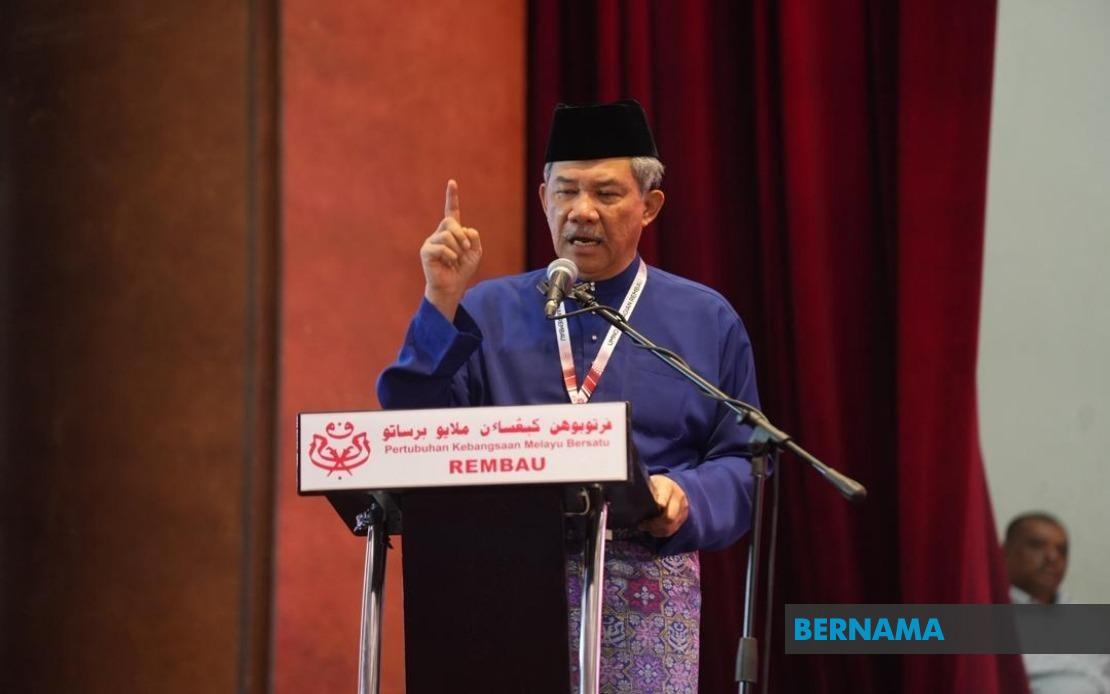
The 10 newly appointed members of the Negeri Sembilan State Executive Council are well-positioned to deliver effective governance and work closely with the Menteri Besar, according to Barisan Nasional Deputy Chairman Datuk Seri Mohamad Hasan. Speaking in Seremban on August 7, the Rantau State Assemblyman underscored his confidence in the capacity of the fresh exco lineup to discharge their responsibilities across their assigned portfolios while prioritising the interests of residents across the state.
Mohamad articulated a broader vision of what state executive council membership entails, framing the role as fundamentally communicative in nature. Rather than viewing the position solely as an administrative post, he stressed that exco members function as vital intermediaries connecting state government initiatives with ordinary citizens. This intermediary function, he explained, requires exco members to become knowledgeable advocates who can translate complex policy decisions into language and context that resonates with diverse communities. The interpretation reflects contemporary thinking about governance that emphasises two-way dialogue rather than top-down implementation.
The deputy chairman elaborated on the mechanics of this bridge-building function. On one side, exco members must ensure that government policies destined for implementation are communicated to the public with clarity and effectiveness. This communication challenge extends beyond simple announcement; it involves helping citizens understand the rationale, scope, and anticipated benefits of policies affecting their daily lives. Without such transparent communication, even well-intentioned policies risk public misunderstanding or reluctance to comply.
Equally important, Mohamad stressed, is the reverse flow of information. Exco members bear responsibility for gathering grassroots concerns, identifying emerging problems within their portfolios, soliciting suggestions from constituents, and capturing diverse public perspectives. This feedback mechanism serves as a critical input for government decision-making, allowing state administrators to refine their approaches based on real-world experiences rather than theoretical assumptions. The process of systematically collecting and elevating community voices creates a feedback loop that can enhance the relevance and effectiveness of state administration.
Mohamad emphasised that this collection of public input must be purposeful and integrated. Exco members are not merely passive recipients of complaints; they are active agents responsible for synthesising community feedback into actionable insights that can improve service delivery and policy outcomes. By consolidating issues and suggestions from their respective areas and sectors, exco members contribute to institutional learning that raises the standard of governance and ultimately enhances quality of life for residents.
A critical precondition for exco effectiveness, according to Mohamad, involves knowledge acquisition regarding the machinery of government. Each newly appointed member requires comprehensive briefings from the departments and agencies falling under their portfolio to ensure they grasp the functions, operational structure, and administrative processes they will oversee. Without this foundational understanding, exco members risk making decisions based on incomplete information or failing to recognise opportunities for improvement within their administrative remit.
Maintaining functional relationships between exco members and government departments represents another cornerstone of Mohamad's vision for effective state administration. These relationships cannot be permitted to atrophy or become adversarial; instead, they must be continuously cultivated to ensure that policy implementation proceeds without unnecessary friction or miscommunication. When exco members and departmental officials work in concert rather than at cross-purposes, state initiatives move forward more efficiently and achieve their intended outcomes more reliably.
The ceremony formally installing the 10 exco members took place on the same day at Istana Besar Seri Menanti, where the newly appointed officials took their oaths of office before the Yang Dipertuan Besar of Negeri Sembilan, Tuanku Muhriz Tuanku Munawir. This ceremonial process conferred formal legitimacy and constitutional standing upon the appointments, marking the transition from designation to active duty.
Turning to developments in neighbouring Melaka, Mohamad declined to speculate about the timing or likelihood of a state election. He indicated instead that responsibility for initiating such a process rests entirely with the Melaka Chief Minister, who would need to secure the consent of the Yang Dipertua Negeri before petitioning for dissolution of the State Legislative Assembly. This deference to established constitutional procedure underscores the importance of working through proper channels in Malaysian governance structures. The matter remains contingent upon leadership decisions in Melaka and falls outside the scope of influence from Negeri Sembilan leadership.

