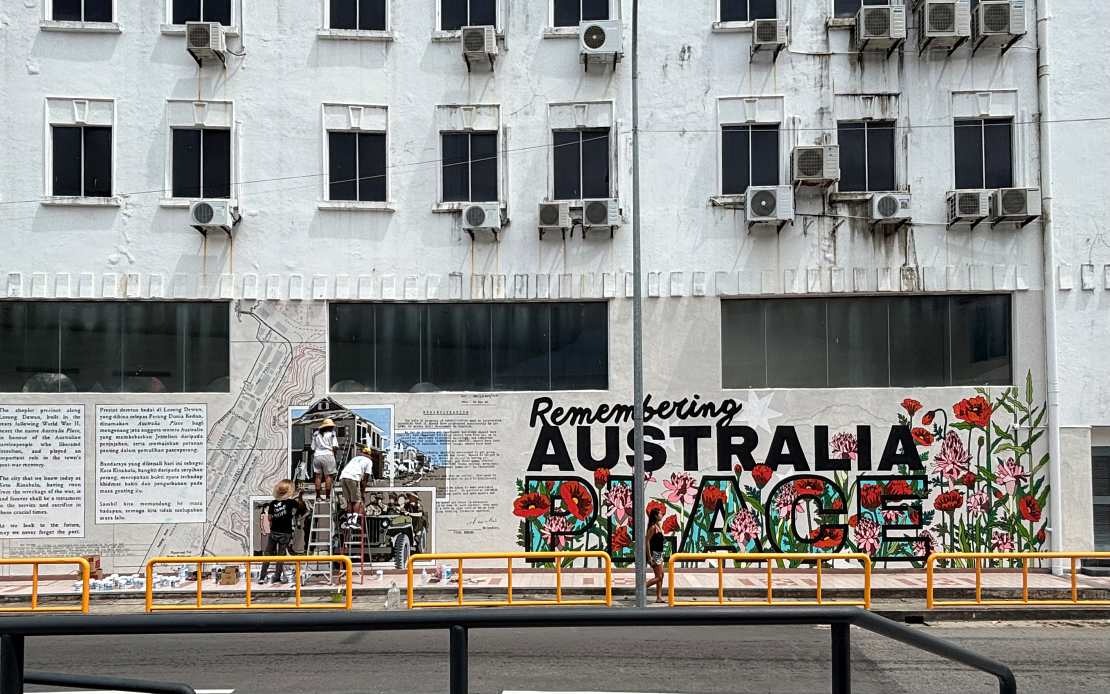
A vibrant new public mural has transformed a Kota Kinabalu landmark synonymous with Australia into a visual testament of the profound ties binding Sabah and the country across generations. The artwork, unveiled at the Wisma Intiutama building in the locality long referred to as 'Australia Place', carries the title 'Remembering Australia Place' and arrived at a particularly symbolic moment—the eve of Sandakan Day, which memorialises the shared wartime experiences that first etched Australia deeply into Sabahan consciousness.
Australian High Commissioner to Malaysia Danielle Heinecke framed the mural as far more than artistic embellishment, describing it as a crystallisation of multilayered bonds woven through decades of authentic engagement. She emphasised how the artwork encapsulates not merely historical events but the human dimension of the relationship—the countless individuals whose decisions, connections and collaborations have continuously renewed the partnership. The mural serves simultaneously as acknowledgement and promise: recognition of what has been built and affirmation of commitments extending into the future.
The creation process reflects intentional community participation rather than top-down commemoration. Pillars of Sabah, a locally rooted community arts organisation, undertook the design and execution, employing visual storytelling to communicate universal values—friendship, resilience, cooperation and human connection—that presumably transcend both geography and time. This methodological choice transforms the mural from passive monument into active conversation between artists, institutions and public, inviting reflection rather than merely demanding observation.
Jared Abdul Rahman, co-founder of Pillars of Sabah, brought personal investment to the project that extends beyond professional engagement. Born to a Sabahan father and Tasmanian mother who had themselves encountered one another through the Colombo Plan—the Cold War-era scholarship initiative that facilitated tertiary education exchanges across the Commonwealth—he embodies precisely the human bridges the mural commemorates. His participation demonstrates how institutional relationships often crystallise through individual narratives; the Australia-Malaysia connection exists not in abstract diplomatic terms but through families, educational trajectories and accumulated personal histories.
The launching ceremony itself testified to the breadth of stakeholder investment in this partnership. The event attracted parliamentarians, community leaders and alumni of Australian universities—constituencies whose presence underscores education as a primary vector through which Sabah and Australia have maintained their relationship. For decades, Australian universities have enrolled Sabahan students who subsequently returned as professionals and leaders, creating networks spanning both nations and fostering mutual understanding grounded in direct experience rather than stereotype.
Sandakan Day, commemorated on 24 August, carries particular historical weight that infuses the mural's timing with deliberate meaning. The day honours the 2,434 prisoners of war who perished during the Sandakan Death Marches in World War II, a catastrophic chapter in which Japanese forces conducted forced transfers of Allied prisoners across treacherous terrain with catastrophic human cost. Beyond the prisoners themselves, Sandakan Day acknowledges the Sabahans who jeopardised their own safety to provide assistance, shelter and support to these captives and those attempting escape. This historical foundation predates contemporary bilateral relations by nearly eight decades yet remains formative.
The incorporation of students and educators from Sekolah Menengah Kebangsaan Sanzac into the mural project carries pedagogical implications extending beyond the artwork itself. Engaging younger generations in the creation process ensures that the history underlying the Australia-Sabah relationship remains living knowledge rather than ossified textbook content. These students participate not as passive witnesses to commemoration but as active creators, embedding themselves within a tradition of remembrance and connection that they will carry forward.
For Malaysia more broadly, the mural exemplifies how bilateral relationships are sustained through consistent investment in cultural diplomacy and people-to-people engagement. While formal diplomatic channels and trade agreements provide structural frameworks, grassroots cultural initiatives—artistic projects, educational exchanges, community partnerships—constitute the connective tissue that gives relationships resilience and authenticity. The Kota Kinabalu mural represents this softer power dimension, which often operates beneath headline-generating policy announcements yet proves equally consequential for long-term partnership health.
The designation of 'Australia Place' itself carries historical resonance worthy of exploration. The informal naming suggests organic rather than imposed connection—a neighbourhood defined by the presence and influence of Australians over an extended period rather than through formal administrative designation. That this neighbourhood has now received permanent artistic acknowledgement signals recognition that informal networks and community presence constitute legitimate subjects for public commemoration alongside official state ceremonies. The mural thus democratises remembrance, suggesting that ordinary connections matter as much as extraordinary historical events.
Regional implications warrant consideration as well. Within Southeast Asia, the Australia-Sabah relationship operates as one variant of how Australia navigates its regional position and identity. Sabah's specific situation as part of Malaysian Borneo, with its distinct history and economic interests, means that expressions of Australia-Sabah partnership carry subtle implications regarding regional diversity within Malaysia. The artistic celebration of this particular bilateral connection acknowledges Sabah's distinctive character within the Malaysian federation, while simultaneously embedding it within broader Australia-Malaysia relations.
Moving forward, the mural will function as a permanent touchstone for reflection on what constitutes successful international partnership in an increasingly complex geopolitical environment. The artwork captures a moment when Australia and Malaysia can celebrate decades of consistent cooperation, institutional development and human connection without the acrimony that characterises some contemporary bilateral relationships. At a time when regional partnerships face pressures from great power competition and shifting alignments, the 'Remembering Australia Place' mural offers quiet testimony that enduring relationships require sustained investment in understanding, cultural exchange and genuine commitment to mutual benefit.

