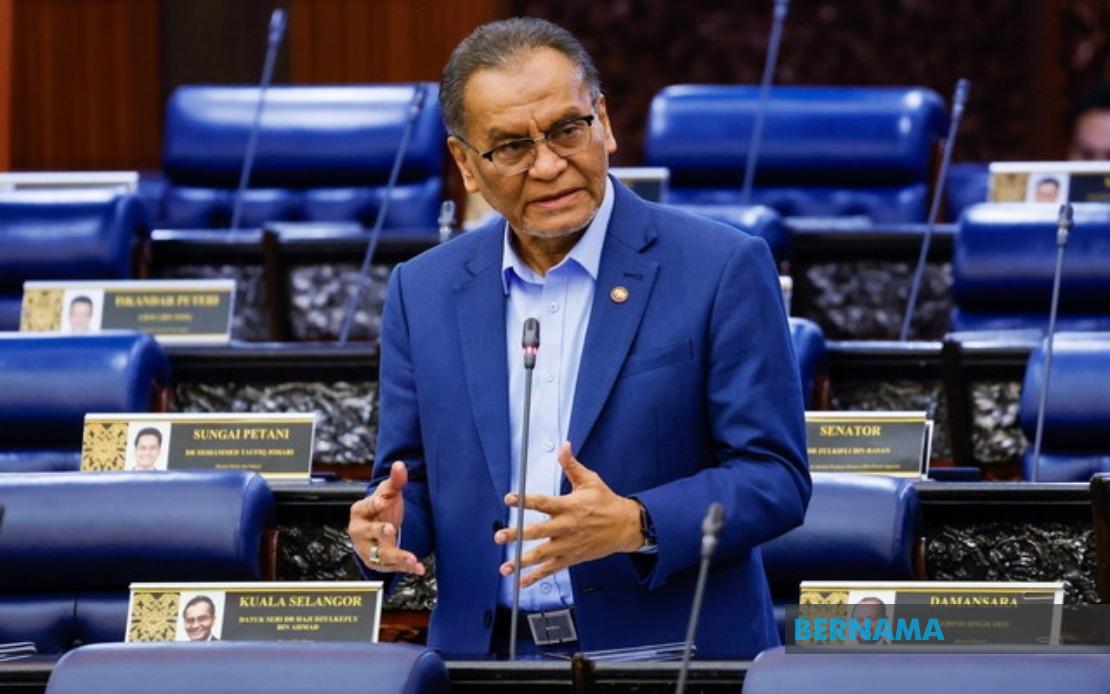
Health Minister Datuk Seri Dr Dzulkefly Ahmad has announced plans for a new hospital in Bandar Enstek, Nilai, Negeri Sembilan, marking a significant expansion of healthcare infrastructure in the Seremban district. The facility is intended to serve the area's burgeoning population while simultaneously reducing the strain on the Tuanku Ja'afar Hospital (HTJ), which has been shouldering the region's medical needs. This development reflects the government's recognition that rapid urbanisation in the northern Seremban corridor has created urgent healthcare demands that existing facilities can no longer adequately address.
The announcement emerged from the Health Ministry's reassessment of an earlier proposal to construct the Tuanku Ja'afar Hospital 2 (HTJ2) in Rasah. Rather than proceeding with the original site, the ministry engaged in detailed consultations with Negeri Sembilan Menteri Besar Datuk Seri Aminuddin Harun on June 16, culminating in a decision to shift the project's location to Bandar Enstek. The repositioning reflects a strategic realignment aimed at better serving the demographic patterns of the rapidly developing region and addressing infrastructure gaps in the northern corridor more effectively.
The state government has already identified two parcels of land, each comprising 50 acres (20 hectares), owned by the Federal Lands Commissioner in the Bandar Enstek area. The Health Ministry will conduct site inspections in the coming weeks to evaluate both locations and determine which offers the most optimal conditions for hospital development. Once a decision is reached, the ministry will submit applications for land-use conversion to the Department of the Director General of Lands and Mines, initiating the formal approval process required to proceed with the project.
Following successful land conversion approval, the ministry will immediately commence preliminary development activities. These foundational steps include comprehensive land surveying, soil investigation studies, preparation of conceptual designs, detailed project cost estimations, and a thorough Value Assessment exercise. This phased approach ensures that the hospital design accounts for local geographical and environmental conditions while maintaining cost efficiency and construction feasibility. The preparatory work typically requires several months and establishes the technical foundation for eventual construction commencement.
Beyond the new Bandar Enstek facility, the state government has committed additional resources to healthcare expansion in the broader Seremban area. Aminuddin has agreed to release 36.748 acres (approximately 14 hectares) of Federal Reserve land in Bandar Seremban for future healthcare initiatives. This land allocation encompasses space for an additional block to expand the existing Tuanku Ja'afar Hospital, as well as a Centre of Excellence (COE) dedicated to specialised medical services. This multi-pronged approach demonstrates a comprehensive strategy to strengthen Seremban's healthcare ecosystem rather than relying on a single new facility.
The infrastructure expansion represents one component of a broader healthcare development agenda. The Health Ministry is simultaneously pursuing initiatives to attract Malaysian medical professionals working internationally to return and practise domestically. Through TalentCorp, the government operates the Returning Expert Programme (REP), offering substantial incentives to encourage expatriate healthcare workers to contribute their expertise to Malaysia's health system. These incentives include income tax exemptions and excise duty relief on locally manufactured vehicle purchases, addressing financial considerations that often influence professional relocation decisions.
Data from the REP programme reveals that the highest concentration of applicant interest originates from Malaysians employed in the United Kingdom, Singapore, and Australia. Medical specialists and doctors constitute the largest applicant cohort, indicating strong demand for senior clinical expertise within Malaysia's healthcare framework. The programme's effectiveness in attracting these professionals underscores the significance of competitive incentive packages in talent repatriation strategies and reflects a deliberate effort to enhance the quality and capacity of the domestic medical workforce.
Regarding international recruitment, Malaysia maintains established frameworks for employing foreign healthcare personnel. Foreign doctors and nurses have long been permitted to practise in the country, subject to rigorous regulatory oversight by the Malaysian Medical Council and Malaysian Nursing Board. These oversight mechanisms ensure that international practitioners meet stringent professional standards and that service quality remains consistent with domestic expectations. The Health Ministry strategically appoints non-citizen medical specialists to address critical staffing gaps in specialised disciplines and geographically challenging locations.
The ministry has extended its recruitment approach to include non-citizen graduate medical officers who hold permanent resident status or are spouses of Malaysian citizens, permitting them to undertake housemanship training within ministry facilities. This pathway provides a mechanism for integrating international talent into the healthcare system while building long-term workforce capacity. However, the recruitment of foreign nurses for the Health Ministry remains under evaluation, with the ministry conducting feasibility studies in consultation with relevant government agencies and ministries to assess the implications and optimal implementation parameters for expanded international nursing recruitment.

