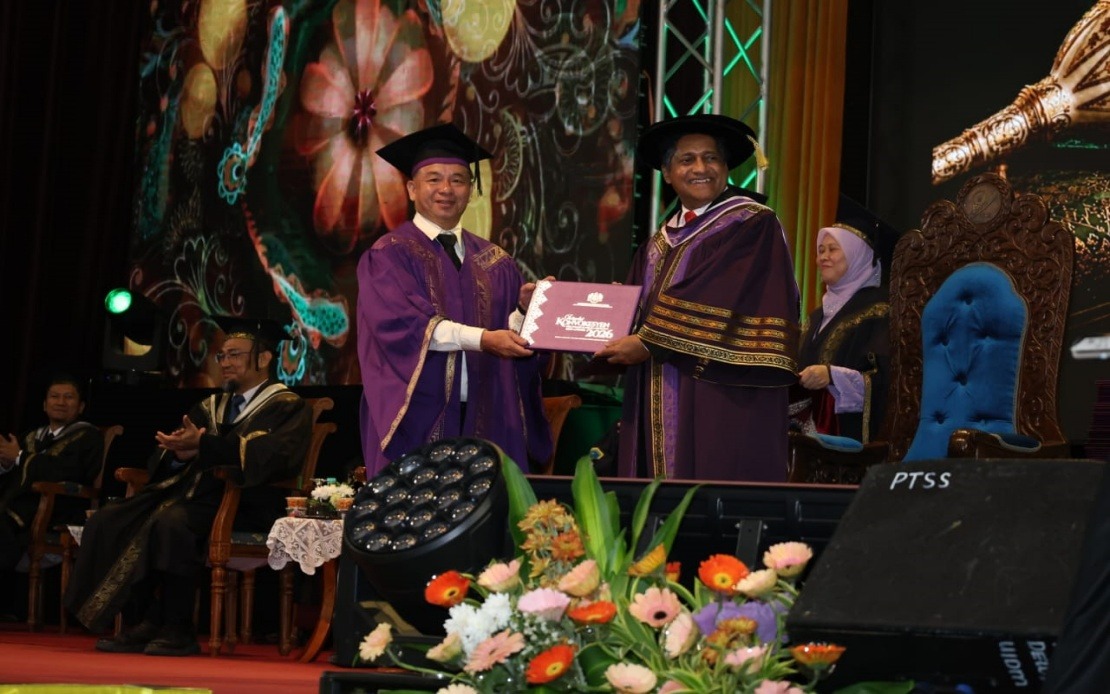
Heng Meng Lai has shattered conventional expectations about when education should happen, graduating from Seberang Perai Polytechnic at 57 years old to become the institution's oldest diploma recipient. His completion of a Diploma in Electrical and Electronic Engineering at the polytechnic's 2026 convocation ceremony represents not merely a personal milestone but a powerful statement about the accessibility and relevance of vocational education across different life stages in Malaysia.
The journey to this moment has been extraordinarily long. Heng deferred his educational aspirations for nearly half a century, constrained by circumstances that demanded he prioritise immediate survival over academic progression. His childhood was marked by hardship when his father passed away while he was only nine years old, leaving his mother to sustain seven children through work at a sewing factory. Rather than viewing these early struggles as insurmountable obstacles, Heng channelled that adversity into motivation, developing a resolute belief that formal education could transform his life trajectory even if that transformation arrived decades later than planned.
Before entering the polytechnic as a mature student, Heng built a modest career path through vocational work. He worked as a storekeeper and later advanced to a supervisory position on the production line at an electronics manufacturing facility. This practical experience in the industrial sector ultimately shaped his academic direction—the hands-on exposure to engineering systems awakened intellectual curiosity about the theoretical foundations underlying the machinery and processes he managed daily. When the opportunity to formalise this knowledge through structured learning finally materialised, he made a deliberate choice to pursue electrical and electronic engineering, grounding his studies in genuine professional interest rather than abstract credentials.
His experience as a student at Seberang Perai Polytechnic challenged conventional hierarchies within the classroom. As someone substantially older than his peers, Heng could have felt isolated or out of place among the predominantly younger cohort typical of polytechnic programmes. Instead, he experienced institutional support that validated mature-age participation. The teaching staff demonstrated consistent patience and encouragement, actively helping him navigate the adjustment to formal academic environments after decades away from structured learning. This inclusive approach proved decisive—Heng never felt marginalised despite his obvious age difference, suggesting that PSP's culture prioritises student success over demographic conformity.
The significance of Heng's achievement extends beyond the individual. His record as PSP's oldest graduate serves as institutional validation for lifelong learning pathways that Malaysia increasingly promotes as national policy. Polytechnics occupy a critical position in Southeast Asia's technical workforce development, and their willingness to enrol mature-age students expands the skilled labour pool while demonstrating that technical competency transcends age cohorts. For Malaysia specifically, where demographic ageing presents long-term economic challenges, retraining and upskilling programmes for mid-career and older workers become strategically important for sustained productivity and innovation.
Mohd Ruzi Hamzah, the polytechnic's director, positioned Heng's accomplishment as emblematic of institutional values and national aspirations. He explicitly connected the achievement to Malaysia's broader strategy of developing lifelong learning cultures that produce highly skilled human capital across all demographics. This framing matters because it transforms what might otherwise be read as an inspiring human-interest narrative into evidence that Malaysia's technical education system can accommodate diverse pathways and timelines. The director's public recognition also signals to potential mature-age applicants that polytechnics welcome their participation and provide meaningful support.
Looking forward, Heng's ambitions remain unfinished. He intends to return to the workforce armed with his newly acquired diploma, applying technical knowledge within his existing sector before pursuing a Bachelor's degree. This staged progression demonstrates sophisticated life planning—consolidating new skills through practical application before committing to additional academic investment. His intention to pursue degree-level qualifications following polytechnic graduation also reflects how technical credentials increasingly serve as foundation qualifications for further advancement rather than terminal qualifications. For Malaysian workers, this pathway illustrates how polytechnic diplomas function within broader educational ecosystems that facilitate progression toward advanced qualifications.
The broader implications for Southeast Asian societies merit consideration. Rapid technological change and industrial transformation mean that skills acquired during initial workforce entry eventually become obsolete or require updating. Singapore, Thailand, and Vietnam have similarly invested in technical education infrastructure, yet opportunities for older workers to return to formalised learning remain limited in many regional contexts. Heng's graduation suggests that Malaysian polytechnics are positioning themselves as inclusive institutions capable of serving populations across expanded age ranges. This approach potentially differentiates Malaysia's technical education sector and creates pathways for workers displaced by automation or industrial restructuring to acquire contemporary skills.
Heng's personal narrative also illuminates the intersection between poverty and education access in Malaysia. His childhood circumstances—parental loss, maternal sacrifice, economic precarity—created material constraints that prevented earlier educational participation. Yet he retained aspirational orientation and took advantage of opportunities when presented. This combination of disadvantaged background and persistence made his achievement meaningful not as triumph-over-adversity sentiment but as evidence that systemic barriers can be overcome when appropriate institutions provide genuine access. PSP's acceptance of his enrolment at 57, combined with institutional support once enrolled, converted theoretical educational rights into practical educational experience.
The polytechnic context matters specifically for Malaysia. Unlike universities, which emphasise academic credentials and theoretical knowledge, polytechnics provide vocationally directed education aligned with actual industry requirements. For Heng, this orientation meant his studies connected directly to workplace realities he already understood through experience. This alignment between practical knowledge and formal learning potentially enhances both motivation and retention, explaining why mature-age students sometimes perform robustly in polytechnic programmes despite time away from formal education. The results-oriented pedagogy of technical education may suit experienced workers better than disciplines requiring extensive theoretical prerequisites.

