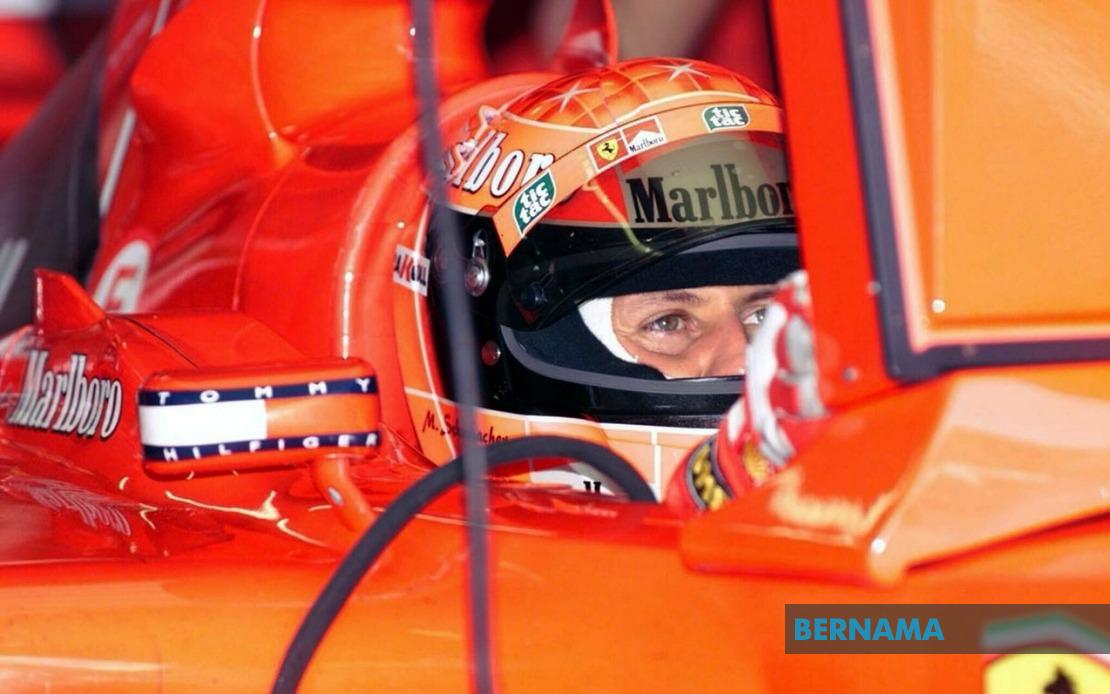
Netflix has announced plans to premiere a documentary examining the life and career of Michael Schumacher, the legendary German Formula One driver, on October 2. The streaming platform's decision to focus on Schumacher comes thirty years after one of sport's most turbulent and defining seasons, offering contemporary audiences a detailed retrospective of events that fundamentally shaped modern motorsport history.
The production represents a significant collaboration with Schumacher's family, particularly his wife Corinna, who has granted unprecedented access to personal perspectives and memories. This family involvement signals a deliberate move toward presenting an intimate portrait rather than a purely journalistic account, promising viewers insights into how the championship and its surrounding controversies affected those closest to the seven-time world champion. The documentary's decision to centre on the 1994 season rather than Schumacher's entire career underscores the historical weight and narrative complexity of that particular year in Formula One.
That 1994 campaign represents perhaps the most contentious championship in F1 history, serving as the backdrop for Schumacher's first world title at just 25 years old. His Benetton team faced persistent allegations of technical irregularities, with critics arguing that their car provided an unfair competitive advantage. These claims have never been conclusively proven or entirely dismissed, continuing to fuel debate among motorsport enthusiasts and analysts decades later. The documentary appears poised to examine these allegations through contemporary sources and retrospective analysis, providing context that may help viewers understand the genuine technical and sporting questions that surrounded the team's dominance.
Beyond the sporting controversy, the 1994 season remains seared into F1 collective memory because of its tragedies. The championship was darkened by multiple fatal accidents, most notably the deaths of Roland Ratzenberger and Ayrton Senna, the three-time world champion whose loss profoundly affected the global motorsport community. Schumacher's triumph thus occurred amid genuine grief within the sport, a reality that shapes how the season is remembered and provides the documentary with substantial emotional and historical weight. For Southeast Asian audiences with growing interest in F1, understanding this context enriches appreciation of the era.
The documentary draws upon testimony from an impressive array of figures integral to that pivotal season. Flavio Briatore, who served as Benetton's team principal during Schumacher's breakthrough year, provides insider perspective on the team's operations and strategic decisions. Bernie Ecclestone, the commercial architect of modern Formula One, offers his observations on how the season unfolded at the highest levels of sport management. David Coulthard, a contemporary driver who competed against Schumacher, contributes a rival's perspective, while Willi Weber, Schumacher's manager at the time, shares insights into the driver's mindset and career trajectory during this transformative period.
Another central theme the documentary addresses is the emergence of what became known as "Schumi-mania" in Germany. Schumacher's victory sparked unprecedented enthusiasm for motorsport within his home country, transforming him into a national sporting icon whose appeal transcended traditional F1 audiences. This phenomenon established a template for how individual drivers could capture national imagination and commercial potential, lessons that subsequent generations of drivers and sports marketers have built upon. For Malaysia and Southeast Asia, where interest in F1 has grown substantially with regional driver participation and the establishment of the Malaysian Grand Prix, this historical example offers relevant context for understanding how drivers become cultural figures.
The championship climax came at the Adelaide Grand Prix in Australia during the season finale, where Schumacher defeated Britain's Damon Hill by a single point in a collision that many observers characterized as deliberate. This controversial conclusion crystallized the season's contested nature and remains one of motorsport's most debated moments. The incident exemplified how Schumacher's approach to competition, combining extraordinary raw talent with psychological toughness and willingness to operate at racing's physical limits, would define his subsequent career. Netflix's documentary will presumably examine this pivotal moment and its implications for understanding Schumacher's character and competitive philosophy.
Schumacher's documented career achievements—including a record seven world championships eventually matched by Lewis Hamilton—represent an unparalleled legacy in Formula One history. However, his personal journey took a devastating turn in 2013 when a skiing accident left him with severe head injuries. The now 57-year-old has remained largely withdrawn from public life since that incident, with limited appearances and restricted family privacy maintained carefully by those around him. This tragedy adds profound poignancy to retrospectives of his career and success, reminding audiences that sporting achievement, however magnificent, exists within the larger fragility of human existence.
For Malaysian viewers and Southeast Asian motorsport enthusiasts, this documentary provides an opportunity to examine a formative historical moment in Formula One that predates but profoundly influences the sport as currently experienced. The 1994 season established patterns of technological innovation, competitive intensity, and commercial development that have evolved into the contemporary F1 landscape. Understanding Schumacher's emergence and the controversial circumstances surrounding it illuminates how modern motorsport has developed and why certain debates about fairness, technology, and competitive ethics continue resonating within the sport today.

