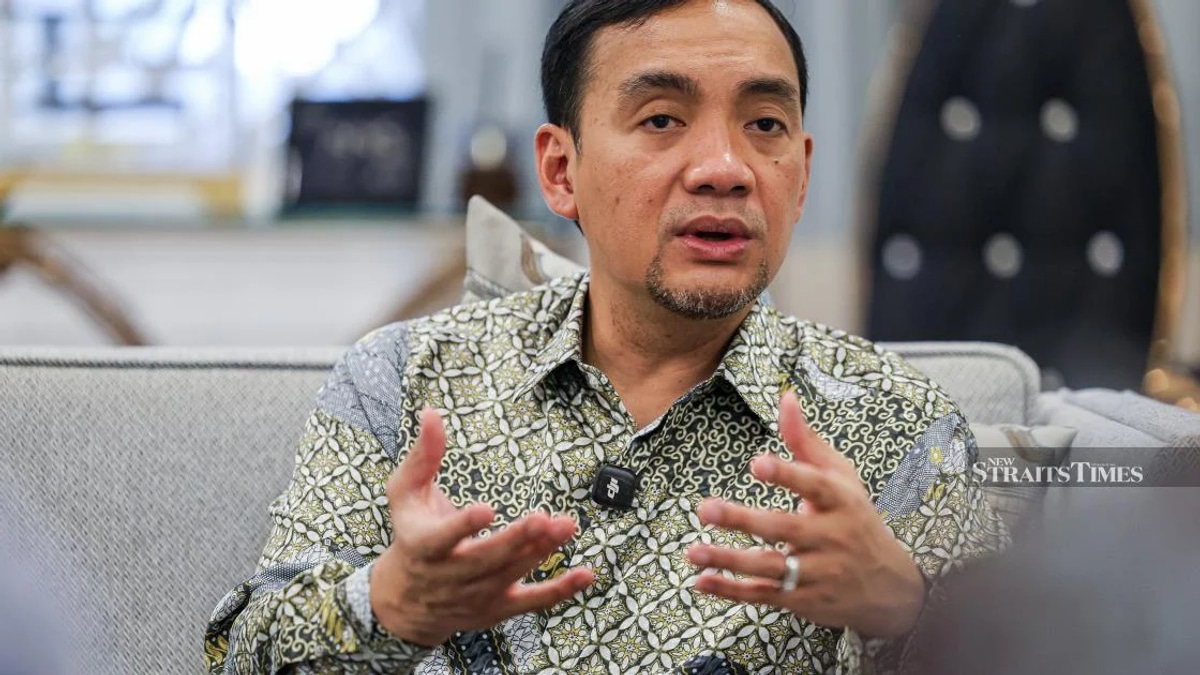
Nepal's fledgling administration has embarked on a careful diplomatic balancing act, seeking technological partnership with China while preserving crucial ties with India as it attempts to reverse years of economic stagnation and political dysfunction. Foreign Minister Shishir Khanal, on his inaugural international visit to Beijing, outlined an ambitious vision for the Himalayan nation: leveraging both Asian giants to accelerate growth, create employment, and address a chronic trade imbalance that has constrained development for decades. The timing reflects urgency within Nepal's leadership to deliver tangible improvements after the Rastriya Swatantra Party's landslide victory in March elections that followed violent anti-government demonstrations the previous year.
The March parliamentary elections represented a decisive popular endorsement of change, with voters granting the Rastriya Swatantra Party 182 of 275 seats on a platform emphasising economic revival, institutional reform, and governmental accountability. That electoral mandate emerged from months of Gen Z-driven street mobilisations in 2023 that resulted in 76 deaths and fundamentally fractured confidence in Nepal's political establishment. The new government, helmed by Prime Minister Balen Shah—a 36-year-old former entertainer—carries explicit responsibility to translate populist promises into concrete policy outcomes. For a nation accustomed to governmental chaos, with 32 administrations cycling through power over the preceding 35 years, stability itself has become both commodity and prerequisite for attracting external capital.
During his Beijing engagement, Khanal emphasised Nepal's readiness to absorb Chinese investment across multiple economic domains. Discussions with senior officials including Foreign Minister Wang Yi covered agriculture modernisation, healthcare infrastructure, tourism development, and scientific research initiatives. These sectors reflect Nepal's acknowledged comparative advantages—its agricultural heritage, natural attractions, and position along major continental trade corridors. Yet beneath this sectoral agenda lies a more fundamental concern: Nepal currently possesses access to China's vast $20 trillion marketplace through preferential tariff arrangements covering more than 8,000 commodities, yet Nepalese traders have failed to substantially exploit these advantages. Khanal attributed this underperformance to the endemic political instability that deterred business planning and investment decisions requiring multi-year horizons.
The trade deficit with China exemplifies Nepal's broader economic vulnerability. Despite nominal duty-free access, structural factors—poor infrastructure, unreliable power supply, regulatory uncertainty, and shallow domestic capital markets—have prevented Nepali exporters from meaningfully penetrating Chinese demand. Khanal's visit therefore carried implicit recognition that tariff reduction alone proves insufficient; Nepal requires complementary investments in productive capacity, logistics networks, and technological capabilities. This framing positions Beijing not merely as a preferential buyer but as an essential development partner capable of catalysing transformation through capital infusion and technical expertise.
Simultaneously, Nepal's government has signalled that regional engagement will not become synonymous with Beijing orientation. Khanal pointedly noted that India represents Nepal's preferred destination for energy exports, particularly hydroelectric power where Nepal possesses substantial underdeveloped potential. This differentiation—positioning China as the tourism and technology source while designating India as the energy market—suggests sophisticated awareness that Nepal's prosperity depends on leveraging each neighbour's distinctive strengths. The strategic implication resonates through South Asia: smaller nations increasingly pursue hedging strategies, extracting maximum benefit from great power competition rather than aligning exclusively with any single bloc.
Internet connectivity emerged as an unexpected dimension of great power competition in Nepal's policy calculus. The government is simultaneously pursuing discussions with Elon Musk's Starlink satellite system and China's Huawei regarding broadband infrastructure. Khanal acknowledged that Beijing had raised no objections to Starlink deployment, a remarkable statement given China's public critiques of the American system at international forums. This apparent permissiveness likely reflects calculation: Beijing may prefer that Nepal appear open to multiple technological providers rather than risk appearing to exclude Western alternatives and thereby strengthening anti-China sentiment among Nepal's Gen Z cohort, precisely the demographic that toppled the previous government. The legal and regulatory adjustments required for either system's deployment remain undefined, suggesting that actual implementation remains distant.
Analysts observing Nepal's diplomatic choreography perceive inherent tensions within the new government's stated objectives. Eric Olander of the China-Global South Project noted that Beijing likely experienced genuine surprise at the March election outcome, which elevated to power a coalition presenting itself as distinct from established elite networks that had cultivated closer China ties. Popular movements that displace incumbent governments invariably unsettle Beijing, which prizes stability and predictability over the dynamism that electoral competition generates. The prospect that Nepal's youthful leadership might pursue policies that inadvertently challenge Chinese interests—whether through closer Western engagement, adoption of democratic norms that complicate Beijing's diplomatic preferences, or alignment with Indian regional initiatives—presumably prompted Wang Yi's intensive courting of his Nepali counterpart.
China's persistent infrastructure investments across Nepal, supposedly anchored within the Belt and Road Initiative, have encountered persistent obstacles. Financing disagreements, execution delays, and mounting concerns about debt sustainability have repeatedly derailed projects earmarked for hydroelectric generation, highway construction, and port connectivity. These implementation challenges underscore that capital commitment alone cannot overcome structural impediments rooted in Nepal's governance capacity, technical expertise shortages, and geographical constraints. The new government's priority of economic growth cannot therefore rely exclusively on Beijing; effective utilisation of Chinese capital depends on parallel institutional strengthening and human capital development requiring sustained commitment across electoral cycles.
The diplomatic momentum generated by Khanal's visit and subsequent engagement across regional capitals reflects Nepal's leaders' conviction that the moment demands aggressive external positioning. India's continued dominance in Nepali trade and investment, coupled with American interest signalled through multiple high-level visits since April, creates competitive dynamics that Beijing wishes to navigate successfully. Yet Nepal's actual capacity to absorb foreign investment and translate it into sustainable growth depends less on diplomatic finesse than on executing unglamorous institutional reforms: strengthening contract enforcement, establishing transparent procurement procedures, investing in technical education, and building reliable energy infrastructure. These prerequisites transcend great power competition and touch upon the fundamental governance challenges that generated last year's popular uprising.
For Malaysian and broader Southeast Asian observers, Nepal's situation illuminates persistent dilemmas confronting smaller economies amid great power strategic competition. The new Nepali government's attempt to benefit simultaneously from Chinese investment, Indian trade relationships, and Western technological access mirrors dynamics visible across the region. Success requires not merely diplomatic dexterity but credible institutional reform that convinces investors of policy reliability and contract sanctity. Nepal's youthful political cohort carries mandate to demonstrate that generational change yields substantive improvements in governance and economic performance. Whether the Rastriya Swatantra Party can translate electoral legitimacy into delivery on growth promises will significantly influence regional assessments regarding whether popular movements can successfully recalibrate relationships with great powers in ways that enhance rather than complicate development trajectories.