Nepal's former finance minister Bishnu Prasad Paudel was taken into police custody late Monday following allegations of money laundering, according to statements from the national police force. The arrest underscores an intensifying effort by the country's younger-generation administration to pursue financial crimes linked to past governments.
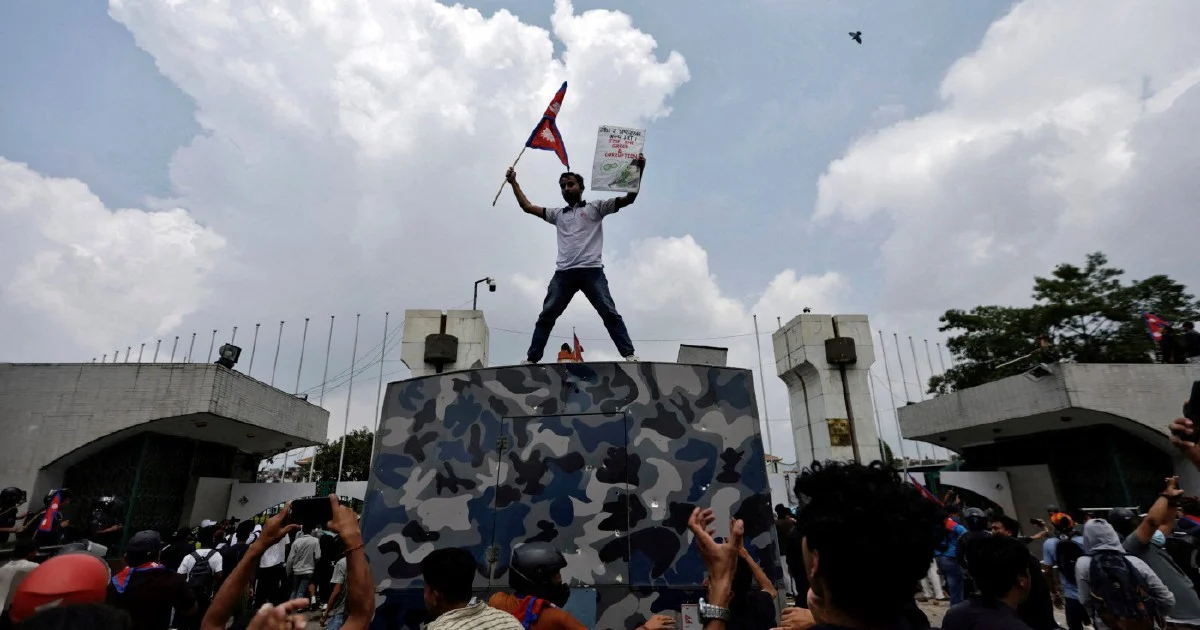
The detention of Paudel reflects a broader investigative agenda that has gained momentum since Nepal's Gen Z-backed government came to power. This cohort of leaders, representing a generational shift in South Asian politics, has positioned itself as distinct from established power structures and committed to dismantling what it characterises as systematic corruption entrenched in previous regimes. The crackdown extends beyond high-profile figures, signalling an attempt to transform public accountability mechanisms across the bureaucracy.
Money laundering investigations in Nepal typically involve tracing illicit financial flows that have historically plagued the Himalayan nation. Weak regulatory frameworks and porous borders have historically allowed criminal networks and corrupt officials to move proceeds across the region. For Malaysian observers, the case highlights regional patterns of financial crime that transcend borders and underscore the importance of coordinated anti-corruption efforts across Southeast and South Asia.
Paudel's role in Nepal's finance ministry positioned him at the centre of major budgetary decisions and fiscal policy during his tenure. The specific allegations against him remain under investigation, but his arrest signals that even former senior government officials are not shielded from scrutiny under the current political dispensation. This represents a departure from past practice in Nepal, where high-ranking figures often escaped formal accountability through political protection and patronage networks.
The government's enforcement drive comes amid regional pressure to strengthen anti-corruption measures. International organisations and donor countries have repeatedly urged South Asian governments to improve governance standards and financial transparency. Nepal's actions may reflect both domestic political imperatives and external expectations for better institutional conduct. For Malaysia, which has its own challenging history with corruption and is simultaneously working to strengthen oversight institutions, Nepal's trajectory offers both cautionary lessons and potential models for sustained reform.
Generation Z leadership in Nepal brings distinct values shaped by digital connectivity and global awareness of governance failures. Unlike earlier cohorts shaped by Cold War ideologies or post-conflict politics, younger leaders have framed anti-corruption not merely as moral imperative but as essential to economic development and regional stability. This framing resonates across South and Southeast Asia, where youth movements have increasingly demanded governmental accountability as prerequisite for inclusive growth.
The investigation into Paudel's financial dealings likely encompasses bank transactions, property acquisitions, and cross-border fund movements. Establishing money laundering charges requires documenting how illicitly derived funds were concealed or their origins obscured through legitimate financial channels. Nepal's law enforcement agencies increasingly employ financial forensics and international cooperation mechanisms to reconstruct suspicious transaction patterns, particularly when assets have been moved through regional hubs.
Nepal's banking sector has faced repeated criticism for inadequate customer due diligence and insufficient reporting of suspicious activities. The country sits along major trafficking corridors and serves as transit zone for regional crime networks. Strengthening financial sector oversight thus carries implications beyond individual prosecutions, potentially reshaping institutional practices across Nepali banks and remittance services. Malaysian financial regulators, similarly engaged in combating money laundering, can observe how Nepal's enforcement approach affects institutional behaviour across the banking system.
The timing of Paudel's arrest, following announcement of intensified investigations into previous administrations, suggests coordinated strategic targeting. Rather than reactive prosecution of individual cases, Nepal's approach appears designed to demonstrate systematic commitment to holding former leaders accountable. This prosecutorial narrative seeks to contrast the current government with predecessors, establishing legitimacy through visible anti-corruption action. However, critics within Nepal have questioned whether selective prosecution reflects genuine reform commitment or strategic political manoeuvring against opponents.
International cooperation will likely prove crucial as investigations proceed. Paudel's assets may extend beyond Nepal's borders, requiring coordination with financial intelligence units in India, China, and possibly Southeast Asian jurisdictions including Malaysia. Regional money laundering networks often exploit differences in regulatory frameworks and mutual legal assistance challenges. Successful prosecution may therefore depend on Nepal's ability to engage effectively with neighbouring countries' financial authorities and share evidence across borders.
For Malaysian policymakers observing Nepal's anti-corruption campaign, several implications emerge. First, generational transitions in political leadership appear to be rekindling accountability mechanisms that elite networks had successfully constrained. Second, sustained public pressure from educated younger cohorts creates political space for previously marginalised anti-corruption initiatives. Third, even symbolic prosecutions of former officials can reshape institutional behaviour, signalling that senior positions no longer guarantee impunity.
The Paudel case will be closely monitored across South Asia as a test of whether Nepal's government can sustain anti-corruption momentum beyond initial high-profile arrests. Establishing sustainable rule-of-law frameworks requires not merely prosecuting individuals but transforming institutional cultures and checking executive power. How Nepal's justice system handles this investigation will reveal whether generational change translates into institutional reform or represents another chapter in cycles of accusation and counter-accusation that have historically characterised South Asian governance.