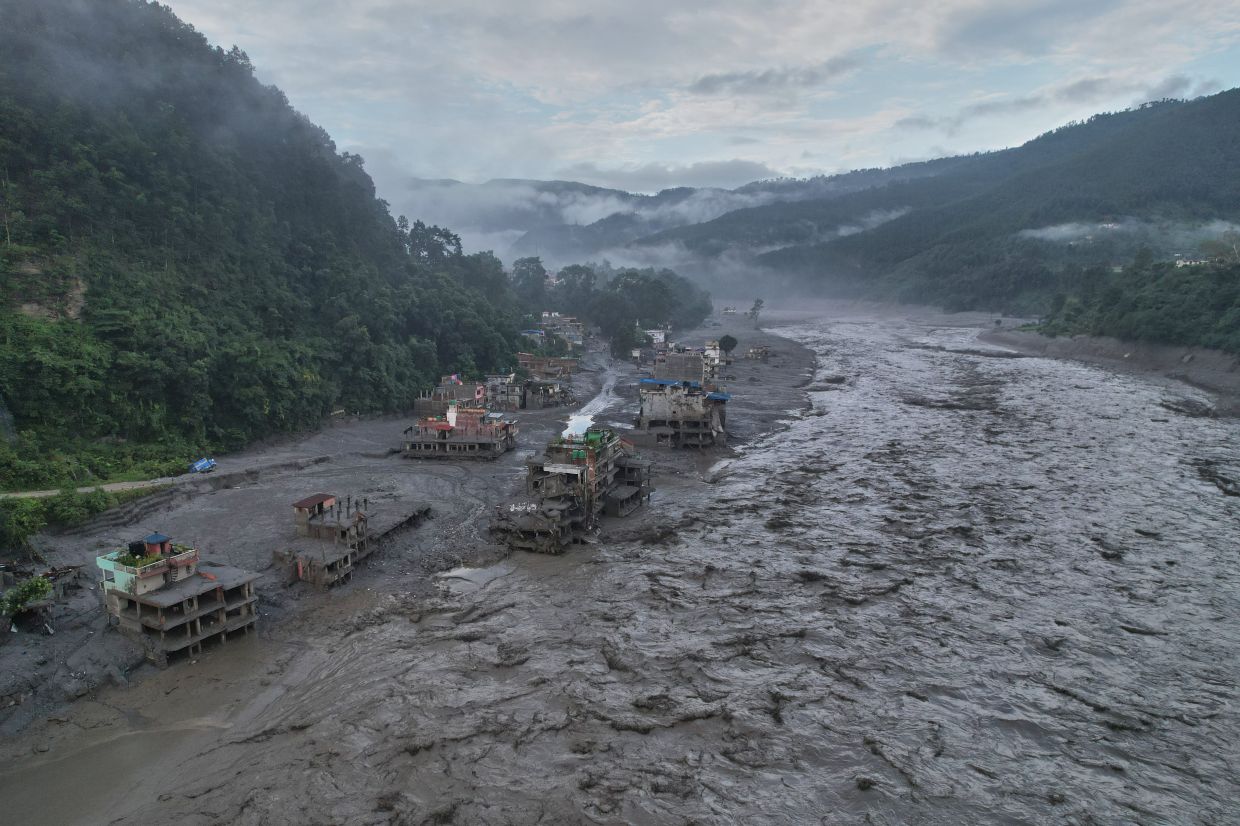
The scale of Nepal's recent natural disaster has thrown into sharp relief a troubling vulnerability in the country's ability to anticipate and respond to hazards originating in the high mountain regions. When a glacial collapse triggered a cascading disaster on August 26, residents in affected valleys received barely minutes of warning before torrents of ice, mud, rock and water engulfed entire settlements. This catastrophically short reaction window, which claimed at least 800 lives and left more than 3,000 people unaccounted for, underscores a fundamental weakness in the nation's disaster preparedness infrastructure—one that extends well beyond Nepal's borders and implicates regional cooperation mechanisms with neighbouring China.
Dharam Raj Uprety, who leads Nepal's National Disaster Risk Reduction and Management Authority, articulated the core problem with striking bluntness: the country simply lacks adequate weather monitoring stations across its high-altitude terrain. This absence is not a matter of negligence but reflects the formidable practical and financial obstacles inherent in establishing and maintaining observation equipment at extreme elevations. The real complexity, however, lies in what Uprety identified as the absence of effective transboundary data-sharing frameworks with China. Without mechanisms to exchange real-time meteorological and climate information across the frontier, Nepal operates with profound knowledge gaps about conditions in the Tibetan Plateau region where many hazards originate before cascading downward into Nepali valleys. Uprety characterised this data isolation as one of the authority's most pressing challenges, one that directly jeopardised lives when the August disaster struck.
The immediate trigger for the catastrophe was a bedrock collapse beneath a glacier, according to satellite analysis, which unleashed a apocalyptic chain reaction through a populated valley. Videos captured the terrifying moment residents attempted to outrun walls of debris-laden water that obliterated buildings, severed bridges and power lines, and swept away vegetation, boulders and vehicles. The sheer velocity and destructive power of the surge gave people almost no opportunity to reach higher ground or shelter. Preliminary damage assessments suggest reconstruction costs may exceed US$5 billion, a figure that would require a recovery timeline comparable to the gruelling seven-to-eight year process that followed Nepal's 2015 earthquake, according to Binod Chaudhary, the country's sole billionaire and a significant industrial stakeholder.
While scientists have cautioned against definitively attributing this specific glacial collapse to climate change, the broader context is unambiguous: warming temperatures across the Himalayan region are destabilising frozen slopes and glaciers at an accelerating pace. Elevated temperatures weaken permafrost layers that essentially cement high-altitude mountainsides together, reducing their structural integrity. This warming-driven degradation is occurring faster than Nepal's institutions can construct and deploy the monitoring systems necessary to detect emerging hazards. The asymmetry between the pace of environmental change and the speed of institutional adaptation represents a growing existential challenge for mountain communities across the region.
China's response to the disaster has included high-level acknowledgement of the problem. President Xi Jinping called for accelerated surveying of glaciers and glacial lakes across the Tibetan Plateau specifically to prevent future catastrophes, while the Chinese Communist Party issued directives on Friday, August 28, ordering strengthened monitoring and early-warning systems. These statements reflect Beijing's recognition that disasters originating in its own territory can cascade across borders with devastating consequences for neighbouring populations. However, the practical translation of such directives into meaningful operational cooperation remains unclear. A statement issued by the Chinese Embassy in Kathmandu asserted that China has endeavoured to conduct monitoring and analysis within technological limits and has shared important information with Nepal in timely fashion, yet notably did not specify whether China had provided warning about the specific August 26 event.
The acknowledgement from China's diplomatic mission that the two nations maintain close communication on transboundary disaster management is noteworthy but raises an uncomfortable question: if such communication channels genuinely exist and function effectively, why did Uprety identify the absence of transboundary data-sharing mechanisms as a critical vulnerability? This apparent contradiction suggests that while formal diplomatic channels for disaster management dialogue may exist, they have not translated into robust, real-time systems for sharing the granular meteorological and glaciological data necessary for early warning. The infrastructure for processing, interpreting and acting on cross-border information appears inadequate to the technical demands posed by mountain hazards.
The particular challenge of establishing weather stations in extreme alpine environments cannot be understated. Beyond the astronomical costs of installation and maintenance, the hostile conditions present ongoing operational difficulties. Equipment must withstand extreme cold, thin atmospheres, potential avalanche risk and complete inaccessibility during winter months. Few institutions possess the technical expertise, sustained funding and logistical capacity to operate such networks. Yet without this distributed monitoring across the high mountains, authorities operate largely blind to the early indicators of danger. Downstream infrastructure can be monitored more readily, but by then cascading disasters have already been unleashed. Uprety acknowledged that Nepal's existing monitoring capacity, concentrated at lower elevations, leaves large stretches of high mountain territory essentially unobserved.
The implications of this monitoring gap extend well beyond immediate life safety, though that remains paramount. Tourism represents a crucial foreign exchange earner and employer for Nepal's highland economy. Major disasters inflict severe damage on the sector through lost infrastructure, disrupted access routes and damaged reputation. More sophisticated early-warning systems could reduce both mortality and economic disruption by enabling timely evacuation and infrastructure protection measures. The reconstruction investments required following such catastrophes also strain limited national resources that might otherwise fund development priorities.
Uprety has signalled that improving early-warning architecture is now a priority for Nepal's disaster management authority. His team has prepared a strategic roadmap intended for imminent endorsement, with emphasis on extending warning lead times so communities can take protective action. However, the scope of the challenge demands more than domestic institutional reform. Unless Nepal and China establish systematic mechanisms for sharing real-time climate, weather and glaciological data across their shared frontier, the fundamental vulnerability will persist. Uprety's pointed observation—that unless nations stop imposing barriers to the sharing of climate information, disasters originating in remote mountains will remain difficult to anticipate—contains an implicit rebuke to the current state of regional cooperation and a clear indication that technical progress requires political will.

