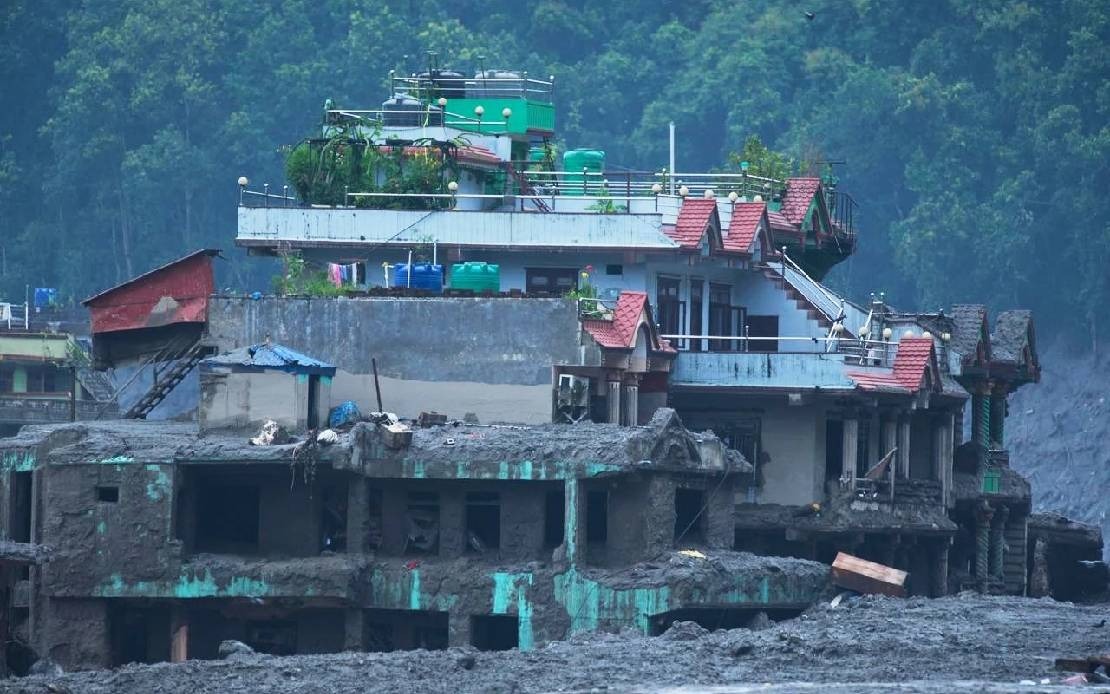
Nepal has launched an international appeal for specialized technical assistance and substantial financial support in the aftermath of a catastrophic flood triggered by a glacier collapse on Wednesday that carved a path of destruction through the Himalayan nation's border regions. The impoverished country of 30 million residents faces an estimated reconstruction bill of between US$4 billion and US$5 billion, according to Finance Minister Swarnim Wagle, though he cautioned that damage assessments are still ongoing and the final figure may shift as surveys progress.
The scale of the disaster became clearer as authorities grappled with identifying victims and locating the missing. The initial torrent of rock, ice, mud and debris claimed at least 626 lives in Nepal and seven in China's Tibet region, with nearly 3,000 people still unaccounted for—roughly 2,426 in Nepal and at least 554 in Tibet's Gyirong County. Among the missing are at least 540 foreigners, predominantly Hindu pilgrims from India who were undertaking religious journeys through the mountain passes when the flood struck with terrifying speed.
Search and rescue efforts have faced significant obstacles from weather conditions that continue to hamper operations across the affected regions. On Saturday, Nepal temporarily halted rescue activities as heavy rain and dense fog made it impossible to conduct systematic searches through the debris-strewn terrain. Narendra Pariyar, the highest-ranking administrative official for the severely impacted Rasuwa district, explained that operations have shifted focus toward organizing land-based transportation to evacuate rescued pilgrims to Kathmandu, the capital, rather than continuing searches under dangerous meteorological conditions.
The logistical and technical challenges confronting Nepali authorities extend far beyond conventional rescue operations. Foreign Minister Shisir Khanal articulated a nuanced assessment of where international support is most urgently required, noting that while Nepal possesses adequate domestic capacity for traditional search and rescue work, the nation lacks specialized expertise in several critical areas. These include extracting people trapped in collapsed tunnels, restoring communication and transportation infrastructure across regions where bridges have been obliterated, conducting forensic body identification, performing DNA analysis, and maintaining proper storage facilities for deceased victims over extended periods.
The identification of remains has emerged as a particularly acute challenge in the disaster's immediate aftermath. Of 49 bodies transported to Maharajgunj Medical Campus in Kathmandu, only seven had been identified by Saturday, with families of missing persons gathering at the hospital to examine photographs of corpses displayed on gates and boundary walls. Authorities have warned that because the catastrophic event occurred three days prior, many bodies are now beyond visual recognition due to advanced decomposition. The Chitwan district administration has implemented a protocol of collecting DNA samples before burial, with bodies to be interred in designated open spaces after necessary legal procedures to mitigate health hazards and prevent disease outbreaks.
A secondary hazard has complicated recovery efforts throughout the weekend, as a vast lake formed by the initial flood surge across the Nepal-China border threatened to overflow into Nepal's Lhende Khola and Trishuli rivers. This prospect prompted authorities to suspend rescue activities on Friday when overflow risks seemed acute. By Saturday, Chinese authorities reported that the immediate crisis had diminished, with satellite imagery indicating that water was flowing gradually through the reservoir rather than breaching its boundaries catastrophically. Nevertheless, officials have warned that flood dangers will persist until two upstream lakes that Nepal continues to monitor have completely drained, keeping rescue teams on high alert.
India has responded swiftly to its neighbour's crisis, dispatching three flights carrying approximately 60 tonnes of relief supplies including blankets, medicines, food items and water purification tablets to Nepal. Beyond immediate humanitarian aid, New Delhi has committed to deploying specialized rescue teams trained in tunnel extraction operations and medical personnel equipped to handle mass casualty scenarios. India's disaster response force, along with prefabricated bridge systems and technical teams capable of restoring transportation connectivity, represent a significant contribution to Nepal's recovery efforts. These offers underscore the regional security architecture whereby neighbouring nations provide mutual assistance during catastrophic events affecting their border populations.
China has also signalled readiness to contribute to recovery efforts, calling for emergency international aid to disaster-affected regions and cooperation on cross-border rescue operations, though Beijing has not detailed specific assistance being dispatched to Nepal. The bilateral dimension of this disaster is particularly sensitive given that Chinese territory in Tibet has also suffered substantial casualties and is currently searching for more than 500 missing persons on the Chinese side of the border.
The financial reconstruction challenge confronting Nepal cannot be overstated, particularly given the nation's already fragile economic circumstances and limited fiscal capacity. Finance Minister Wagle's preliminary estimate of US$4 billion to US$5 billion reflects damage to physical infrastructure including buildings, bridges, hydroelectric installations and transportation networks across multiple districts. This figure represents a substantial burden for one of South Asia's least developed nations and will likely necessitate concessional lending from international development institutions and bilateral donor support. The reconstruction process will test Nepal's institutional capacity and international relationships as the country navigates competing priorities between emergency relief, infrastructure restoration and long-term economic recovery.

