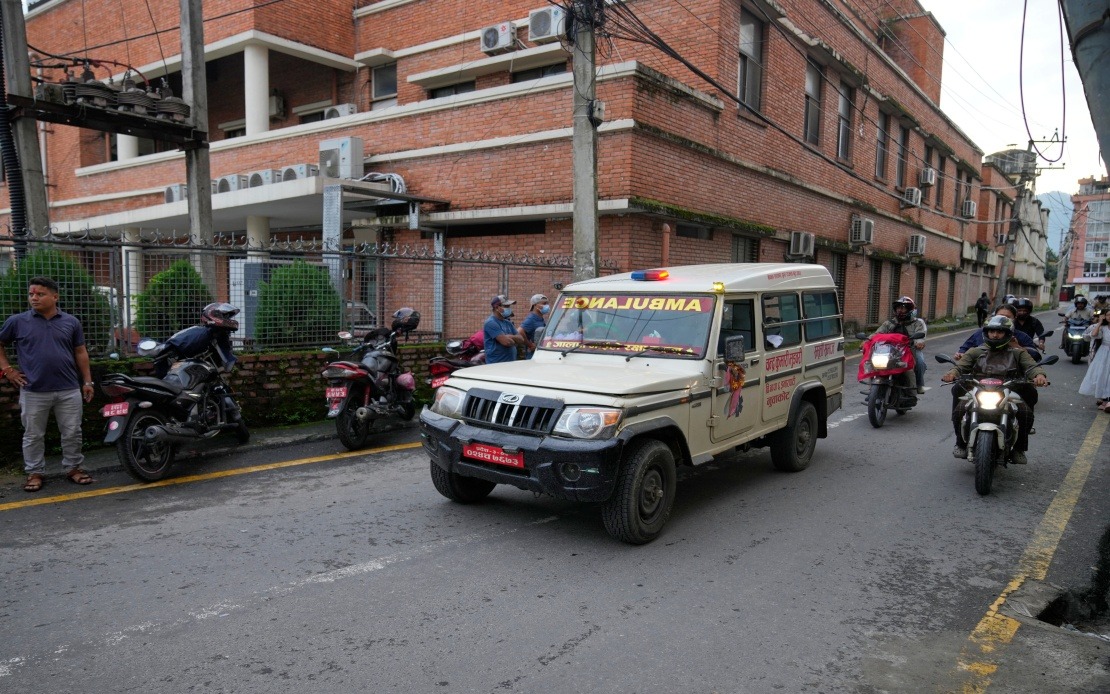
Nepal's rescue operations have pulled 121 international travellers to safety from areas devastated by sudden, catastrophic flooding triggered by the collapse of a Himalayan glacier. The rescued contingent, tallied by Nepal's tourism authority as of Friday evening, underscores both the scale of the calamity and the urgency of ongoing evacuation efforts. Among those brought to shelter were 85 Indian nationals, 16 Chinese citizens, nine South Koreans, and smaller groups from the United States, Russia, Italy, Belgium, Bulgaria, Portugal, Spain, and Switzerland. Nevertheless, hundreds of foreign visitors and nationals remain unaccounted for, intensifying concerns about their fate as rescue teams race against deteriorating conditions in downstream zones.
The catastrophe unfolded when the Bhote Koshi and Trishuli rivers burst their banks following the Wednesday glacial collapse in the Himalayas. Official records now place the death toll at approximately 550 individuals across both Nepal and Chinese territory, though authorities acknowledge the figure may climb as recovery operations continue. The sheer magnitude of fatalities has created unprecedented logistical challenges for Nepalese emergency services. Hospital facilities in major cities including Chitwan and Pokhara have been overwhelmed, forcing administrators to grapple with the grim reality of insufficient morgue capacity and body storage infrastructure.
For Malaysian observers, the incident carries particular significance given the region's connectivity to Southeast Asia through tourism and trade networks. Many travellers from the region frequent Nepal's trekking routes and pilgrimage sites, making the flood's impact immediately relevant to local communities. The disaster highlights the environmental vulnerabilities facing the Himalayan region and the cascading consequences that extreme weather events can trigger across international borders. The involvement of Chinese territory, where approximately 400 Indian nationals were confirmed safe, also demonstrates how natural disasters in this geographically complex zone span multiple jurisdictions and complicate rescue coordination.
Indian authorities have mobilised comprehensive support mechanisms to assist their nationals caught in the tragedy. The Ministry of External Affairs reported that 320 Indian citizens remain missing, though the actual figure may be higher when accounting for Indian-origin individuals holding passports from other nations. Search teams located 63 workers employed on the Trishuli hydropower project safe, while rescue operations successfully transported 21 additional Indian nationals to their home country. However, approximately 100 individuals of Indian descent with foreign citizenship passports have vanished, many believed to have embarked on a Kailash Mansarovar pilgrimage in the Xizang region of China before the disaster struck. This demographic dimension adds layers of complexity to identification and notification procedures.
Delhi has responded swiftly with material assistance, dispatching two shipments of humanitarian relief totalling 47.5 tonnes to Nepal, with additional supplies aboard a third aircraft scheduled for Friday departure. This rapid mobilisation reflects India's role as a neighbouring power and the deep institutional connections between the two nations. The gesture underscores regional solidarity in moments of catastrophe, a principle that Southeast Asian nations regularly invoke when supporting one another through natural disasters. Pakistan, too, has signalled its commitment by offering emergency relief packages, with Prime Minister Shehbaz Sharif personally telephoning his Nepalese counterpart to express condolences and pledge support.
Nepalese governmental institutions have initiated their own accountability mechanisms in response to the crisis. Prime Minister Balendra Shah convened an emergency Cabinet session Friday to assess flood aftermath and coordinate response strategies. In a gesture of personal sacrifice, Shah and his ministerial colleagues pledged one month's salary contributions to the Prime Minister's Natural Disaster Relief Fund, intended to bankroll flood-relief operations. This symbolic commitment, while modest in absolute terms, reflects the depth of official concern and desire to mobilise domestic resources toward recovery.
Search and rescue operations remain concentrated in multiple downstream areas where the raging floodwaters deposited debris, displaced persons, and unfortunately, casualties. Teams continue systematic searches despite challenging terrain, unpredictable water conditions, and logistical obstacles. The identification of victims presents another formidable challenge; authorities must cross-reference recovered bodies against missing persons databases while managing cases where identification becomes impossible due to the violence of the floodwaters. The disposal and dignified treatment of remains, a culturally sensitive matter in this Hindu-majority nation, adds further complexity to emergency management.
The hydropower sector has featured prominently in casualty narratives, with workers on the Trishuli hydropower project among those initially feared dead. The location of such infrastructure projects in flood-prone mountainous terrain now invites broader questions about development planning and disaster preparedness in geologically active regions. For Malaysia and other Southeast Asian nations pursuing comparable hydroelectric ambitions in challenging topography, the Nepalese experience offers sobering lessons about infrastructure vulnerability to extreme hydrological events.
The disaster's ripple effects will extend well beyond the immediate humanitarian response phase. Economic implications include infrastructure damage, disrupted trade routes, and tourism sector disruption. Nepal's economy carries significant dependence on international tourism, particularly trekking expeditions and spiritual pilgrimages, making the sector's recovery timeline crucial for broader economic stabilisation. The flood has shattered confidence among foreign travellers at a critical juncture, potentially suppressing tourism arrivals for extended periods. Southeast Asian tour operators and travel agencies with Nepal itineraries face immediate cancellations and reputational challenges.

