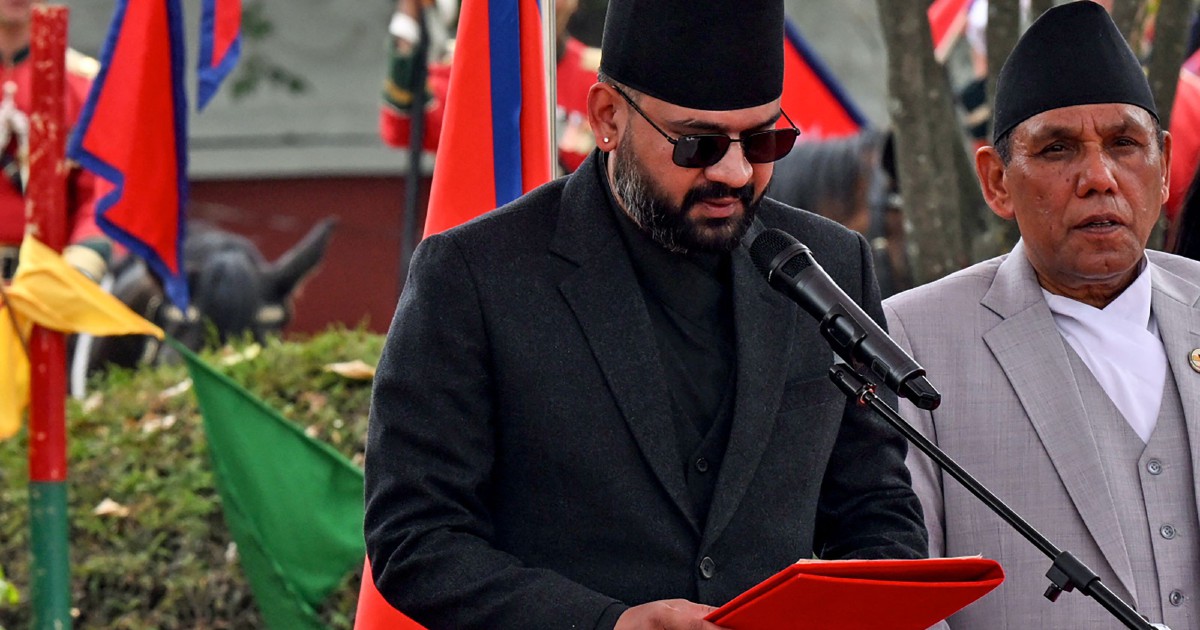
Nepal's parliament has approved a medical exception allowing Prime Minister Balendra Shah to retain his trademark dark sunglasses while conducting business in the legislature, an official confirmed on Tuesday. The decision reverses preliminary guidance from the parliament speaker, who had raised procedural concerns about the eyewear in the chamber.
The parliamentary ruling centres on accommodating health requirements rather than making a mere fashion concession. Medical documentation presented to parliament officials indicated that Shah's continued use of the sunglasses serves therapeutic purposes, not aesthetic preference. This distinction proved decisive in the institution's deliberations over maintaining decorum standards whilst addressing the prime minister's documented health needs.
Previously, the parliament speaker had signalled disapproval of wearing sunglasses within the legislative chamber, citing conventional parliamentary conduct. Such dress codes exist across most legislatures worldwide, including in Westminster-tradition parliaments like Malaysia's own Dewan Rakyat, where observers must maintain formal appearance standards. The speaker's initial position reflected these longstanding institutional expectations about appropriate attire during official parliamentary proceedings.
However, the subsequent medical clarification prompted a reconsideration of policy application. Officials conducting the review determined that health-related accommodations warranted an exception to standard parliamentary dress requirements. This approach mirrors practices in other legislatures globally, where documented medical needs frequently supersede conventional appearance protocols, though such exceptions remain relatively uncommon and typically require formal justification.
The episode illustrates broader questions about balancing institutional traditions with individual circumstances in modern parliamentary systems. Southeast Asian legislatures, including Malaysia's parliament, have occasionally grappled with similar issues regarding accessibility accommodations and health-related concessions within formal chambers. The principle that documented medical requirements can justify departures from standard practice has gained increasing recognition across regional legislatures.
Sha's sunglasses have become recognisable throughout Nepalese politics and public discourse. Beyond their functional purpose, they have acquired prominence as a distinctive element of his public profile. Parliamentary dynamics in Nepal, like those in Malaysia and other South Asian democracies, inevitably interweave personal elements with procedural considerations, particularly when national leadership is involved.
The decision underscores how contemporary parliamentary governance must accommodate evolving understandings of accessibility and medical necessity. Rigid adherence to dress codes can inadvertently create barriers for elected officials with particular health considerations. By permitting this exception, Nepal's parliament recognised that procedural formality need not conflict with reasonable health accommodations, establishing a precedent that other legislatures contemplating similar situations may reference.
For Malaysian observers, the Nepalese outcome presents instructive perspective on how neighbouring parliaments navigate such matters. Malaysia's Dewan Rakyat maintains relatively formal dress protocols, though specific medical exceptions would likely receive similar sympathetic consideration from parliamentary authorities if formally documented and officially requested. The principle that health needs warrant consideration alongside institutional traditions appears increasingly accepted across the region.
The controversy also reflected broader political dynamics within Nepal's parliament. Public attention to such matters can amplify their significance beyond the immediate procedural question. Shah's political position, parliamentary composition, and existing relationships amongst legislators likely influenced both the initial objection and subsequent reversal, patterns evident in parliamentary decision-making across South and Southeast Asia.
This resolution demonstrates that modern parliaments can maintain institutional dignity whilst proving responsive to legitimate individual circumstances. As regional legislatures become more attentive to accessibility standards and health accommodations, similar issues will likely recur. Nepal's precedent—requiring medical substantiation but permitting exceptions—offers a practical framework balancing these competing considerations.
The decision carries symbolic weight beyond its immediate practical implications. It signals parliament's recognition that contemporary institutional practice must accommodate realities of individual health that previous generations of legislators rarely confronted. This adaptive approach reflects how democratic institutions evolve to serve their members more effectively whilst preserving fundamental traditions of parliamentary conduct.

