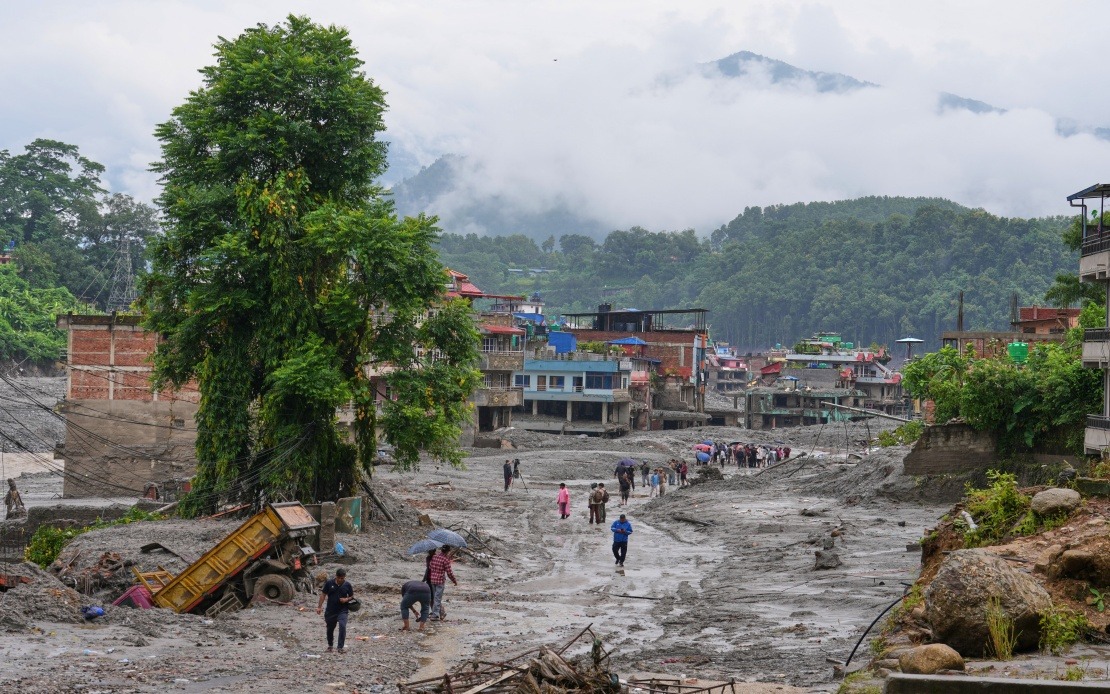
A devastating mudslide across Nepal has left 675 people dead and nearly 2,500 unaccounted for, according to the country's National Disaster Risk Reduction and Management Authority. The grim death toll was confirmed late Saturday evening as rescue operations continued across multiple districts, with authorities warning that missing person numbers could rise as search teams access more remote areas.
The scale of the humanitarian crisis extends beyond national borders, with the tourism sector severely affected by the natural disaster. Nepal's Department of Tourism reported that 753 tourists had lost all contact with the outside world as of Saturday afternoon, comprising a significant international dimension to the crisis. Among this figure, 589 are foreign nationals—a development that has prompted diplomatic communication between Nepal and affected countries regarding evacuation and welfare efforts for their citizens stranded in the disaster zone.
The mudslide impacted three districts most severely: Rasuwa, Nuwakot, and Dhading. These mountainous regions, popular with trekkers and adventure tourists seeking access to Nepal's renowned Himalayan trails, bore the brunt of the environmental catastrophe. The districts' topography and monsoon season vulnerability have historically made them susceptible to landslides, yet the scale of this particular disaster appears to have exceeded preparedness measures in place.
Local authorities have mobilized relief operations with unusual urgency. The Kathmandu District Administrative Office issued an emergency appeal on Saturday morning to businesses, civic organisations, and private individuals in the capital, calling for donations of emergency supplies and essentials. This coordinated logistics push aims to channel resources to survivors sheltering in temporary facilities across the three affected districts, where infrastructure damage has severely hampered normal supply chains.
The international tourist contingency within the missing persons represents a secondary crisis for Nepal's economy and global reputation. The tourism sector represents a critical foreign exchange earner for the nation, and major incidents affecting foreign visitors typically trigger consular investigations and potential negative publicity in source markets. Governments from countries where the 589 missing tourists originate are likely to activate their disaster response protocols, coordinating with Nepali authorities to locate and evacuate their citizens.
Nepal's mountainous terrain compounds rescue and recovery challenges substantially. Access to remote villages affected by the mudslides often depends on foot tracks or helicopter transport, particularly during monsoon season when weather patterns remain unstable and landslide risk persists. Rescue teams must therefore balance urgency with the practical reality that additional environmental hazards could endanger search-and-rescue personnel themselves.
The monsoon season, which extends through September, brings elevated risks of successive mudslides in saturated terrain. Meteorological forecasts and geological assessment will prove crucial in determining whether rescue teams can safely expand their operations or must adopt more cautious approaches. This seasonal factor underscores why missing person numbers carry particular urgency—the window for locating survivors diminishes rapidly when environmental conditions favour additional landslides.
For Malaysia and other Southeast Asian nations, Nepal's disaster carries several implications. Regional disaster management protocols often involve mutual assistance frameworks, and Malaysian humanitarian organisations have historically mobilised relief efforts following major natural disasters in the subcontinent. Additionally, Malaysian tourists and expatriates may be among those affected, necessitating coordination between the Foreign Ministry and relevant Nepali authorities regarding their status and welfare.
The humanitarian response from Kathmandu reveals how metropolitan centres near disaster zones become logistics hubs despite not being directly impacted by the mudslides themselves. By appealing to institutions and enterprises in the capital, authorities leverage urban resources and organisational capacity to support distant rural regions. This reflects standard disaster management doctrine but also highlights Nepal's structural challenge of ensuring equitable disaster preparedness across mountainous terrain where development disparities run deep.
As rescue operations enter their crucial initial phase, attention will soon shift toward longer-term recovery, victim identification, and root-cause analysis. Whether the mudslides resulted from exceptional meteorological events or whether inadequate land-use planning contributed to casualties will shape policy discussions in Kathmandu. Similarly, tourism operators and international travel insurers will examine whether Nepal's disaster warning systems and evacuation procedures met accepted international standards.

