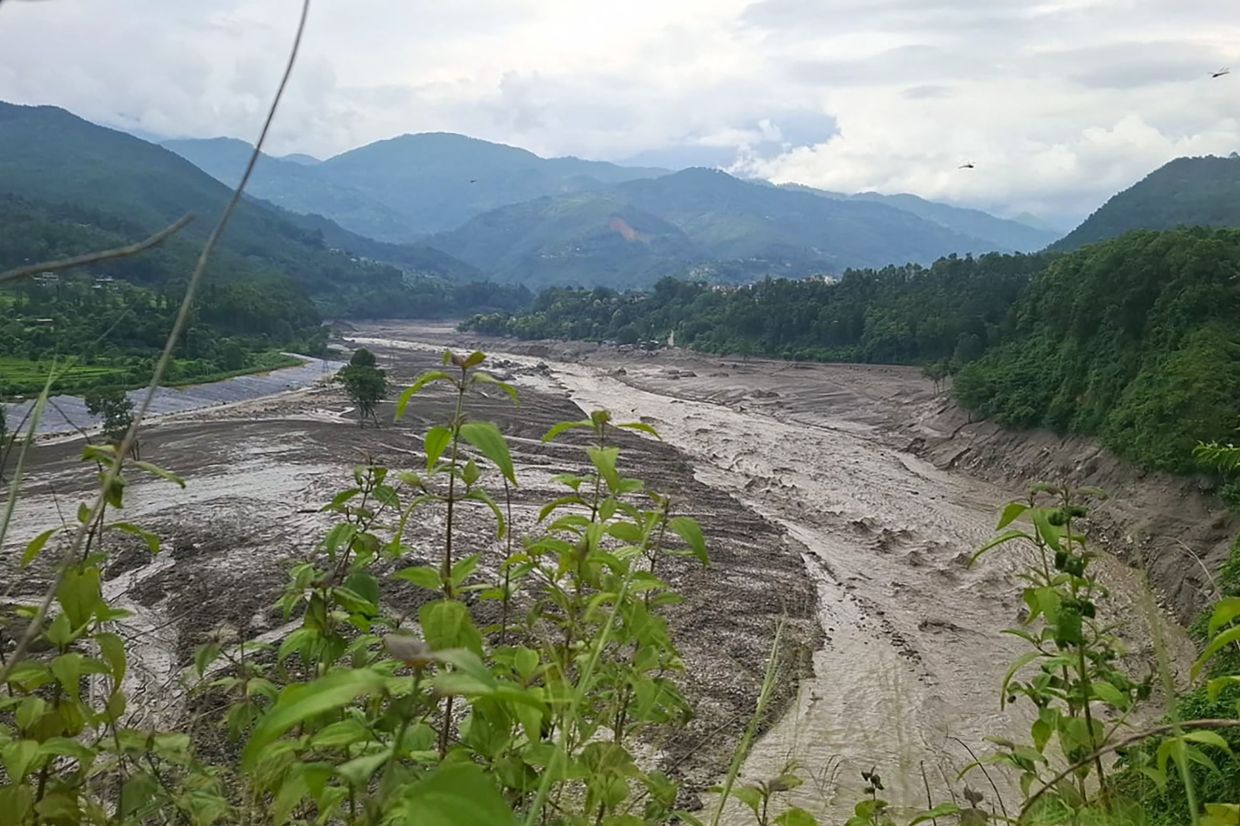
A devastating torrent swept through Nepal's mountain valleys on Wednesday morning, claiming at least 22 lives and leaving hundreds of tourists, migrant workers and local residents unaccounted for. The catastrophe unfolded around 9am when the Bhotekoshi River burst its banks following a massive avalanche from a high-altitude glacier, an event that climate researchers say illustrates the accelerating hazards posed by rapid warming across the Himalayan region. The flooding destroyed villages, severed road networks and damaged critical energy infrastructure, while officials from neighbouring India and China mobilised large-scale rescue operations across the border areas.
The scope of the disaster extended far beyond Nepal's borders, with officials reporting 384 tourists missing, a substantial portion of them from India, the United States, Britain and Malaysia. For Malaysian readers, the situation carries particular urgency: Malaysia's Foreign Ministry confirmed that 11 Malaysians were believed to be in the Rasuwa district when the floods struck, with travel agencies having lost all contact with the group. The missing Malaysians were likely part of larger tour groups heading toward Mount Kailash in Tibet, a major pilgrimage destination that attracts significant numbers of Hindu devotees annually, many of them from Malaysia and the Indian diaspora across Southeast Asia.
The worst destruction concentrated in the Nuwakot district and surrounding areas, where dozens of multi-storey buildings, commercial vehicles and vans vanished beneath thick mud and debris. Entire communities found themselves isolated as the surging waters destroyed roads and washed away vital transportation links. Authorities immediately issued warnings to residents across multiple districts, urging people to maintain distance from the Bhotekoshi, Trishuli and Narayani rivers as secondary flooding remained a serious threat throughout the day.
Nepal's government spokesperson Sasmit Pokharel indicated that the country's response capacity was being stretched, with officials appealing directly to India and China for external assistance in search and rescue operations. This represents a critical moment of regional cooperation, as the disaster occurred in a border area where multiple nations have operational interests. India's Prime Minister Narendra Modi responded rapidly, telephoning Nepal's Prime Minister Balendra Shah to pledge humanitarian support, while Chinese President Xi Jinping directed authorities to intensify search efforts on the Tibetan side and evacuate residents from high-risk zones.
The immediate trigger for Wednesday's flooding was unprecedented even by the standards of this volatile region. Climate researchers at the Kathmandu-based International Centre for Integrated Mountain Development determined that an ice-rock avalanche from a glacier on the Nepal side had blocked the Lhende Khola River, a tributary of the Bhotekoshi. The blockage created a temporary dam until the accumulated water burst through with tremendous force, creating what specialists describe as a glacial lake outburst flood. Saswata Sanyal, a disaster risk reduction specialist with the research group, noted the troubling pattern: the Lhende Khola had experienced severe flooding just fourteen months earlier in August 2023, when similar conditions caused nine deaths and damaged the critical bridge connecting Nepal and China.
The frequency of such events directly correlates with climate change accelerating across the Himalayan region at a rate faster than the global average. Recent research completed this year by Kathmandu-based scientists revealed an alarming trend: glaciers throughout the Hindu Kush Himalaya range have nearly doubled their ice loss rate since 2000, a trajectory driven by rising atmospheric temperatures and altered precipitation patterns. For Malaysia and the broader Southeast Asian region, this matters because millions of people downstream across the Ganges, Brahmaputra and other major river systems depend on water flows regulated by Himalayan glaciers. Destabilisation of these ancient ice masses represents a long-term threat to water security and agricultural productivity across South Asia and into Southeast Asia.
The vulnerability of the Himalayan zone extends beyond glacial hazards. The entire mountain ecosystem—spanning Nepal, India, Bhutan and adjacent regions—faces heightened risks from heavy rainfall, landslides and flash flooding due to the combination of steep terrain, warming temperatures and changing weather patterns. Extreme weather events that were once considered anomalies now occur with increasing regularity. Heat waves have become more intense and prolonged, while individual rainfall events deliver unprecedented volumes of water in compressed timeframes. Simultaneously, the accelerating melt of permanent ice and snow fields during warmer months destabilises slopes and feeds massive runoff events.
The South Korean dimension to this crisis adds another layer to the international response. Workers employed by South Korean companies constructing a hydropower facility in Nepal were among those reported missing, highlighting how development projects in remote mountain areas concentrate labour forces in zones of genuine physical danger. The hydropower sector itself faces mounting pressure from climate-related hazards—equipment, infrastructure and construction sites positioned along rivers increasingly face threats from unprecedented flooding events.
For Malaysian and regional observers, the unfolding tragedy in Nepal underscores how climate change transforms geographical and political relationships. What happens in the Himalayan high country ripples outward through transnational migration networks, tourism flows, development partnerships and water systems. The 11 missing Malaysians represent not merely an isolated humanitarian concern but a data point in a much larger pattern of vulnerability that climate scientists have been documenting for years. As Saswata Sanyal observed, early warning systems and advance adaptation measures represent humanity's first and most critical line of defence in a warming Himalayan environment.
The immediate response from India and China suggests a recognition that climate-driven disasters transcend political boundaries and require coordinated cross-border action. Yet the underlying challenge—halting and reversing the physical processes transforming the Himalayan cryosphere—extends far beyond any single nation's capacity to address. The disaster of August 2024 represents a preview of stresses that will reshape migration patterns, tourism industries, development economics and geopolitics across Asia in the decades ahead.

