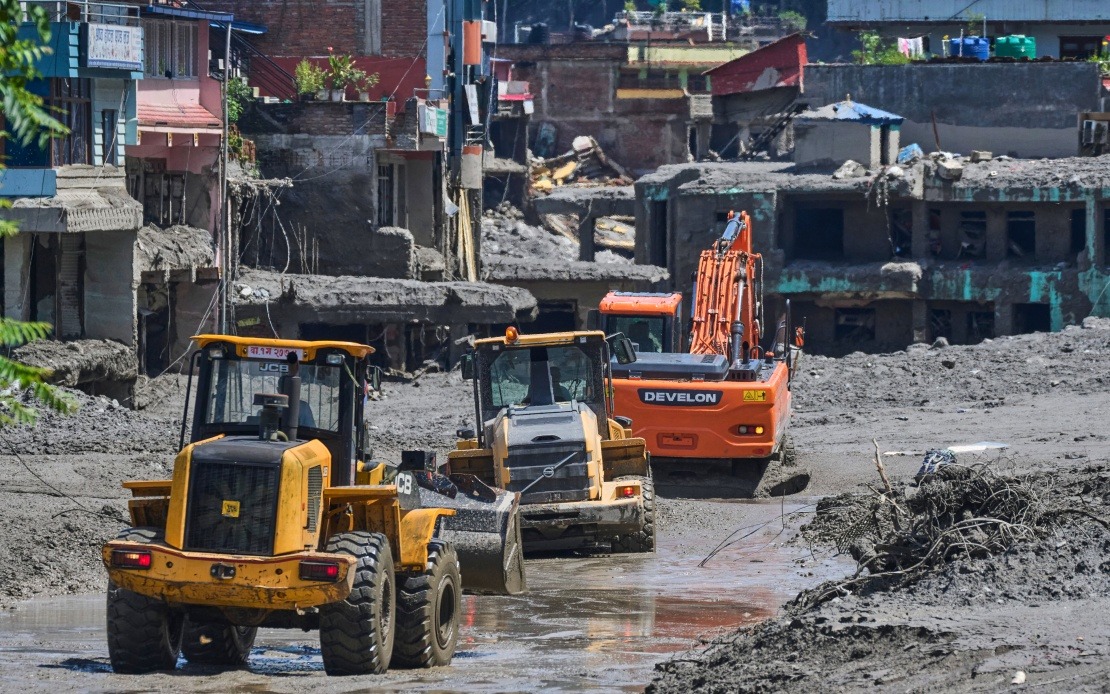
Nepal's government has mobilised its full capacity in response to a devastating flood that struck the Bhote Koshi River on Wednesday, with authorities now coordinating extensive search and rescue operations across affected territories. According to the Embassy of Nepal in Kuala Lumpur, the disaster has inflicted severe humanitarian and infrastructural damage across multiple regions, signalling one of the country's more serious natural calamities in recent months. The scale of the emergency has prompted the highest levels of government coordination, with immediate action focused on locating survivors and providing urgent assistance to displaced populations.
The flooding has hit four districts with particular intensity: Rasuwa, Nuwakot, Dhading and Gorkha. Each region has experienced substantial loss of life alongside widespread destruction of homes, agricultural land, roads and other critical infrastructure. Initial assessments indicate the damage is extensive and will require sustained recovery efforts over many months. The mountainous terrain of these districts complicates rescue operations, as teams must navigate challenging geography whilst racing against time to reach isolated communities cut off by floodwaters.
The Office of the Prime Minister and Council of Ministers has publicly emphasised that response operations constitute the nation's immediate priority, with security agencies and relevant ministries coordinating their efforts on the ground. Search teams continue efforts to locate missing persons, whilst simultaneously gathering data on the full scale of human casualties and property destruction. This dual mandate of rescue and assessment reflects the urgent dual challenge facing disaster responders: saving lives in the immediate term whilst collecting information necessary for effective medium and long-term recovery planning.
Recognising the magnitude of the crisis and the substantial financial requirements for rehabilitation, Nepal's top leadership has launched a targeted appeal for domestic and international financial support. The Prime Minister's office has specifically called upon individuals, corporations, philanthropic organisations and private citizens to contribute monetary assistance. This appeal targets both immediate relief needs—such as emergency shelter, food and medical care for survivors—and longer-term rehabilitation efforts that will extend well beyond the initial crisis phase.
For members of Nepal's diaspora community in Malaysia, the Embassy has extended a direct plea for contributions to support fellow Nepalis affected by the catastrophe. Diaspora communities frequently play crucial roles in disaster relief efforts, mobilising quickly to channel resources back to home regions where formal international aid mechanisms may take longer to deploy. Nepali associations, business networks and cultural organisations within Malaysia have been specifically encouraged to coordinate relief efforts and facilitate financial transfers to affected communities.
To streamline contributions, the Nepali government has established dedicated banking channels for disaster relief funds. Two primary institutions—Rastriya Banijya Bank and Nepal Bank Limited—have been designated as official repositories for donations. Multiple account numbers have been allocated across both institutions to ensure flexibility and capacity for processing the anticipated volume of incoming contributions. The Prime Minister's Disaster Relief Fund and the Prime Minister's Relief Fund serve as the two main mechanisms through which donations will be pooled and subsequently deployed for relief and reconstruction activities.
The specific account numbers published by the embassy—including accounts 1130100003762001 and 1130100000006006 at Rastriya Banijya Bank, alongside 00211600510039000003 and 00200100510039000001 at Nepal Bank Limited—provide clear pathways for both domestic and international transfers. By publishing multiple account options, the government seeks to minimise barriers to donation, recognising that different donors may have established relationships with specific banks or preferences for particular transfer mechanisms. The embassy has further facilitated this process by publishing QR codes alongside each account number, enabling rapid digital transfers via mobile banking platforms.
The flooding of the Bhote Koshi River carries particular significance for the region given the waterway's importance for communities in northern Nepal. This river system supports thousands of residents across several districts and impacts agricultural productivity, water supply, and local commerce. The scale of disruption suggests that normalisation will require not merely rebuilding destroyed physical infrastructure but also restoring critical water management and livelihood systems upon which communities depend.
For Malaysia's significant Nepali population—comprising both long-term residents and temporary workers—the disaster represents a personal crisis affecting families and friends in their home country. The Embassy's coordinated messaging has reflected both official government concern and practical recognition that Malaysians with ties to Nepal represent an immediate potential source of relief funding. The emphasis on contributions through formal banking channels rather than informal money transfer systems also reflects efforts to ensure transparency and effective deployment of funds.
The response being mounted by Nepal's authorities demonstrates the government's commitment to treating this as a national emergency requiring comprehensive coordination. By simultaneously pursuing rescue operations, conducting damage assessments, and mobilising financial resources, Nepal aims to move as efficiently as possible from immediate crisis response into stabilisation and eventual reconstruction. The international attention drawn by this disaster, and the coordinated appeals being made through diplomatic channels, underscores both the scale of the challenge and the government's determination to marshal every available resource in support of affected communities.

