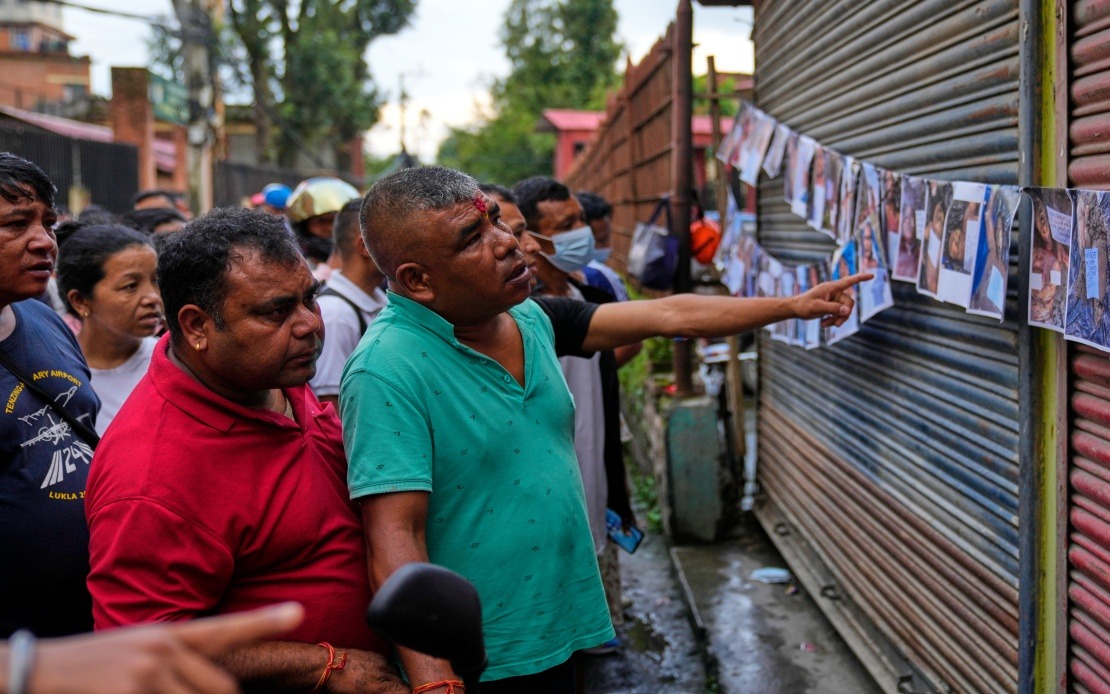
The search for survivors and victims from Nepal's devastating floods has entered its third day, with rescue operations still underway across the Rasuwa district as the confirmed death toll climbs past 500. The scale of the humanitarian crisis deepened significantly on Thursday when Nepal's tourism authorities released a comprehensive list of 537 foreign nationals from more than 30 countries whose whereabouts remain unknown following the Wednesday morning catastrophe. For Malaysia, the situation has become increasingly urgent: of 57 citizens known to be in the affected areas, authorities have managed to locate just two by Friday afternoon, leaving 55 individuals still classified as untraceable and their families in an anguishing state of uncertainty.
The disaster unfolded when the Bhote Koshi and Trishuli rivers swelled catastrophically following a sudden glacial collapse high in the Himalayas. The resulting surge swept through Nepal's northern border region with such force and speed that entire communities had minimal warning. Infrastructure crumbled in the path of the torrential flow—roads were washed away, bridges collapsed, and buildings were swept downstream like debris. The deluge that ravaged Rasuwa district eventually merged with the larger Trishuli River system, multiplying the damage across downstream areas and completely isolating several communities from external assistance and communication networks. Local media accounts describe scenes of widespread devastation, with the floodwaters carrying vehicles, livestock, and wreckage across vast distances.
The identification and casualty tallying effort presents a mounting challenge for Nepalese authorities. Bodies and human remains continue to be recovered in districts situated far downstream from the initial impact zone in Rasuwa, complicating efforts to establish a definitive death count and identify victims. The country's morgue facilities have been overwhelmed by the volume of remains requiring processing, with storage capacity severely strained in multiple districts. This backlog has created additional strain on families desperately seeking information about missing relatives and on officials attempting to provide accurate casualty figures to the international community.
Regarding the Malaysian nationals, the Foreign Ministry's Deputy Secretary-General for Bilateral Affairs, Datuk Syed Mohamad Hasrin Tengku Hussin, emphasized that current figures remain subject to further verification as information continues to flow from Nepalese authorities and associated agencies. The original list released by Nepal's Department of Tourism, operating under the Ministry of Culture, Tourism, and Civil Aviation, included detailed information on the missing foreigners: names, nationalities, ages, and the names of the travel agencies that had organised their trips. This structured documentation has provided Malaysian officials with a critical reference point for systematic cross-checking and verification efforts. The fact that only two Malaysians have been confirmed as located suggests the communication and logistics challenges facing rescue teams operating in areas where infrastructure has been severely damaged.
To date, Nepalese authorities report that 121 foreign nationals have been pulled from the flood zone and brought to safety. However, this positive development carries a sobering qualification: none of the rescued foreigners have been identified as Malaysian nationals. This circumstance underscores the particular vulnerability of Malaysian tourists who may have been in more remote or higher-risk locations when the disaster struck, or who may still be stranded in inaccessible areas awaiting rescue. The lack of Malaysian names among the rescue lists means that the focus of search operations must now intensify on locations where these citizens are most likely to be found.
Malaysia's government has not remained passive in the face of this crisis. Prime Minister Datuk Seri Anwar Ibrahim has indicated that Malaysian assistance to Nepal could take multiple forms, ranging from financial contributions to the deployment of specialist personnel. Most significantly, the government is considering mobilising the Malaysian Special Search and Rescue Team (SMART), a highly trained unit capable of operating in challenging terrain and disaster environments. The National Security Council has been in continuous communication with the Nepalese government to coordinate the most appropriate and effective form of assistance. Such decisions require careful coordination to avoid duplication of efforts and to ensure that deployed resources can integrate effectively with existing relief operations.
The Foreign Ministry continues its own parallel tracking efforts, attempting to establish contact with and verify the status of Malaysians believed to be in the affected region. This dual-track approach—combining information from Nepalese authorities with independent verification by Malaysian officials—represents a standard protocol for managing large-scale missing persons cases. However, the fluid nature of disaster zones, where communications infrastructure may be disrupted and displaced persons scattered across wide areas, means that information gaps and delays in confirmation are likely to persist for some time.
For Malaysian travellers and the tourism industry, this disaster serves as a stark reminder of the inherent risks associated with mountainous and geologically active regions. The Himalayan zone, while spectacularly beautiful, is subject to natural hazards including glacial instability, avalanches, and mountain flooding. The fact that multiple travel agencies were operating in the area at the time of the disaster indicates that this region has become an increasingly popular destination for Malaysian adventure tourists. Tour operators will likely face scrutiny regarding their risk assessment protocols and emergency preparedness measures in coming weeks.
The timing of this crisis also highlights vulnerabilities in regional disaster response and communication systems. The initial hours after such catastrophes are often critical for locating survivors, yet geographic remoteness and infrastructure damage severely constrain rescue operations. International cooperation becomes essential, and the involvement of multiple nationalities in the missing persons lists underscores how natural disasters transcend borders and demand coordinated multilateral responses. Malaysia's proactive engagement with Nepalese authorities sets an example of diplomatic coordination during humanitarian emergencies.
For the affected families in Malaysia, the coming days will likely remain agonizing as the verification process continues and rescue teams methodically search through devastated areas. The psychological toll of uncertainty often exceeds that of confirmed loss, and the 55 families still awaiting news will be monitoring official channels obsessively for any updates. As search operations proceed, the possibility of discovering survivors decreases with each passing day, but rescue teams will continue their efforts based on knowledge that individuals have survived in similar disasters for extended periods under rubble or in isolated pockets.
The broader implications for Malaysian-Nepalese relations and for regional disaster preparedness are also worth considering. This incident will likely spur discussions within ASEAN and its dialogue partners about improving cross-border disaster communication systems, standardised missing persons protocols, and pre-established mechanisms for rapid humanitarian response. Nepal, despite not being an ASEAN member, has existing relationships with regional nations that can be leveraged to strengthen disaster resilience across the wider geographical area.

