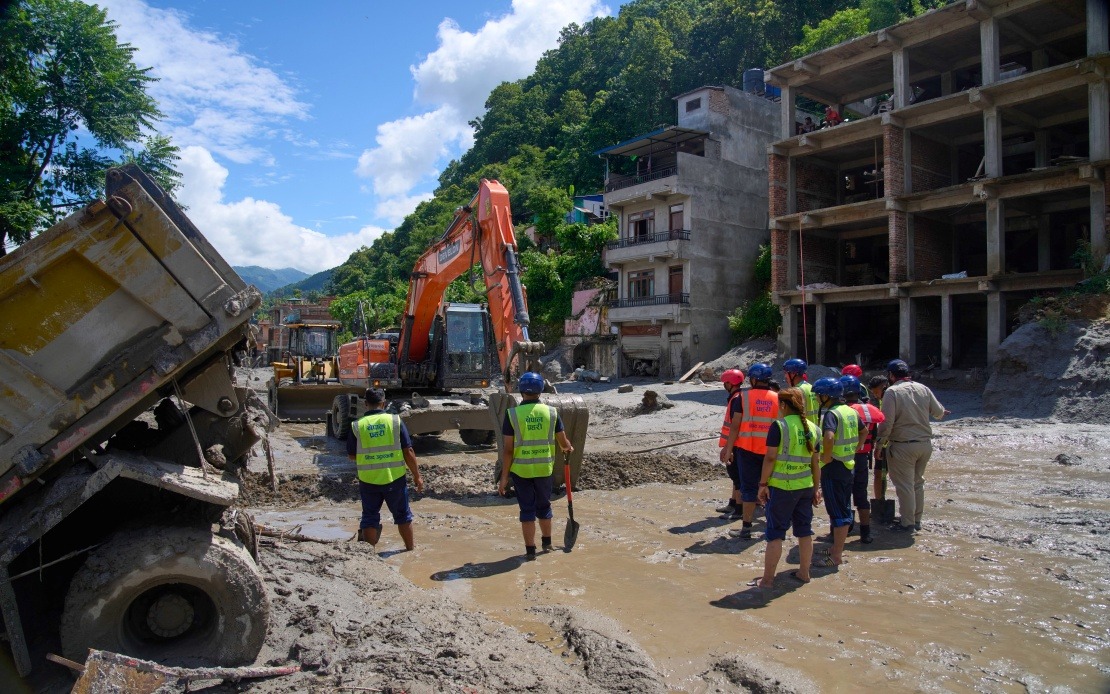
Nepal's Foreign Ministry has mobilised an Emergency Response Team in the aftermath of catastrophic flooding along the Bhotekoshi River, establishing a dedicated coordination mechanism to account for missing foreign nationals and facilitate rescue operations in Rasuwa district. The team represents a formal governmental response to a humanitarian crisis that has overwhelmed conventional administrative channels, with hundreds of international visitors among those still unaccounted for in the aftermath of the disaster that struck on Wednesday morning.
The scale of the tragedy underscores the vulnerability of remote mountain regions to sudden hydrological disasters. According to Nepali authorities, the death toll had reached 359 by Thursday evening, with rescue personnel having extracted 31 survivors from the floodwaters. However, the true measure of the crisis lies in the staggering number of missing persons—over 800 individuals remain unaccounted for, a figure that reflects both the disaster's reach and the communication challenges inherent in responding to emergencies in mountainous terrain where infrastructure is often limited and fragile.
The composition of the missing reflects Nepal's role as a major destination in the South Asian tourism circuit. The majority of those unaccounted for are citizens of India and Nepal, though numerous foreign tourists from various nations were in the region during the disaster. This mix has complicated response efforts, necessitating coordination across multiple national governments and diplomatic channels simultaneously. For Malaysia, Foreign Minister Datuk Seri Mohamad Hasan has acknowledged that confirmation regarding missing Malaysian nationals remains outstanding, pending official verification from Nepali authorities—a delay that reflects the fog surrounding casualty figures in the immediate aftermath of such disasters.
The Emergency Response Team will function as a centralised information hub, tasked with compiling and verifying data on affected foreign nationals. Rather than relying on fragmented reports from various rescue parties, hospitals, and government offices, the ERT consolidates incoming information about missing persons and cross-references it against confirmed casualties and rescue records. This coordination mechanism proves essential given that early disaster reports often contain duplication, confusion, and unverified claims that can lead families to false hope or incorrect conclusions about the status of loved ones.
Consular assistance represents a critical component of the team's mandate. Diplomatic missions operating in Nepal—including embassies and consulates representing countries with citizens affected by the disaster—will coordinate through the ERT to access verified information and support their nationals. This formalised channel reduces duplication and ensures that authoritative updates flow through official diplomatic networks rather than through social media rumours or informal channels that often propagate misinformation during crisis periods.
To facilitate reporting and information gathering, Nepal's Foreign Ministry has publicised direct contact channels through which affected families, rescue personnel, international organisations, and the general public can submit leads on missing persons. The designated phone numbers, +977-9744441227 and +977-9744441228, are available via voice calls and WhatsApp messaging, while email submissions can be directed to [email protected]. This multi-channel approach recognises that those with relevant information may lack consistent access to particular communication methods, particularly in a region where network infrastructure has likely been disrupted by flooding.
The disaster highlights vulnerabilities within the Himalayan tourism infrastructure that merit broader regional consideration. Rasuwa district's Bhotekoshi River gorge attracts adventure tourists seeking rafting, trekking, and mountaineering experiences, yet the region's rapid flash-flood risk—exacerbated by monsoon rains and the narrow canyon topography—remains incompletely understood among international visitors. For Southeast Asian nations whose citizens frequently travel to Nepal, this incident serves as a cautionary reminder regarding the environmental hazards present in mountain regions, regardless of how established the tourism infrastructure may appear.
The Nepali government's establishment of the Emergency Response Team reflects lessons learned from previous disasters and reflects international best practices in crisis coordination. By designating a single institutional focal point rather than allowing multiple agencies to operate independently, information management becomes more effective and response coordination less chaotic. For Malaysian officials and others tracking the situation, this centralised mechanism should eventually provide clearer information regarding their respective nationals, though the initial period of confusion—now likely extending beyond 48 hours post-disaster—typically persists until comprehensive casualty recording occurs.
The incident carries implications for disaster preparedness across South and Southeast Asia more broadly. Mountain regions traversed by seasonal rivers present endemic flood risks that intensify during monsoon periods, yet tourism development in such areas often proceeds without corresponding enhancement of early warning systems or evacuation infrastructure. Nepal's response, while necessary and commendable, addresses the crisis after the fact; forward-looking policy in Nepal and comparable destinations should emphasise predictive capability and rapid warning dissemination to tourists who may be unfamiliar with local hydrological hazards.
For Malaysian travellers and their families awaiting confirmation of loved ones' status, the formal establishment of Nepal's Emergency Response Team signals that official mechanisms are now engaged in systematic verification work. However, the timeline for definitive answers typically extends over days and weeks rather than hours, particularly when victims have been dispersed across multiple hospitals and rescue zones. Malaysian consular officials coordinating with the ERT will gradually accumulate reliable information, though the uncertainty surrounding the missing will persist until comprehensive casualty verification processes conclude.

