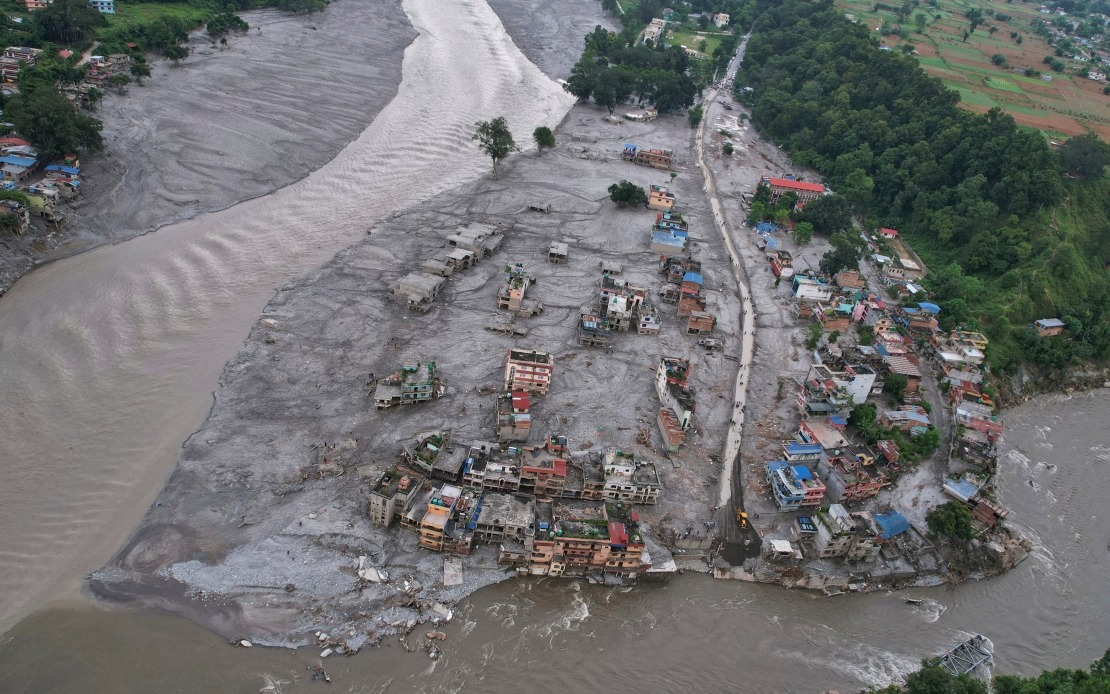
The Nepalese government is taking a measured approach to incoming international offers of help in the wake of devastating floods that tore through its central and northern regions on Wednesday, with authorities signalling they will first assess on-the-ground conditions before committing to additional search and rescue teams from foreign nations. The decision reflects the scale of the crisis unfolding across Nepal and China, where the initial wave of destruction from the Bhote Koshi and Trishuli river flooding has already claimed more than 633 lives, with nearly 3,000 people still unaccounted for, including several hundred expatriates.
Currently, Nepal has already accepted search and rescue operations from four countries: Australia, China, India, and South Korea. According to Mohd Firdaus Azman, charge d'affaires at the Malaysian Embassy in Kathmandu, Nepalese officials communicated to the diplomatic community that they intend to conduct a comprehensive evaluation of the disaster's scope and their immediate operational capacity before deciding whether to deploy teams from additional nations. This cautious stance suggests that Nepal's government and emergency response agencies are working to prevent duplication of efforts and ensure that incoming rescue teams can be effectively deployed where they are most needed.
Malaysia is among numerous countries that have volunteered to participate in the rescue effort. Prime Minister Datuk Seri Anwar Ibrahim announced earlier that Malaysia is actively coordinating humanitarian assistance destined for Nepal and is preparing the Malaysian Special Search and Rescue Team (SMART) for potential deployment. This commitment underscores Malaysia's traditional role as a humanitarian partner in the Indo-Pacific region and reflects the strong bilateral ties between Kuala Lumpur and Kathmandu. The Malaysian Foreign Ministry has indicated particular concern for the welfare of 55 Malaysians who remained uncontactable in Nepal as of Saturday evening, along with an additional 36 Malaysians stranded in China.
The catastrophe has exposed vulnerabilities in Nepal's hydropower sector, which faces its worst crisis in recent memory. More than 900 workers employed across 11 hydropower projects—many still under construction—are currently trapped in tunnels and underground powerhouses, according to reports from Nepalese media outlets. The entrapment of such a large number of workers, combined with the structural damage from the flooding, has created an exceptionally complex rescue scenario that requires specialized expertise and equipment. Several of the workers hail from the four countries already providing assistance, which partially explains why their governments were the first to commit rescue resources and why they possess relevant technical knowledge of the affected facilities.
The nature of the trapped workers' predicament underscores why Nepal's initial acceptance of SAR assistance came from countries with direct nationals in harm's way. Australia, China, India, and South Korea each have personnel at various hydropower installations, giving them both a compelling interest in ensuring rapid rescue operations and potentially relevant operational knowledge of the affected sites. This constellation of nations reflects the international character of Nepal's development partnerships and the cross-border nature of contemporary infrastructure projects in the region.
For Malaysia and other Southeast Asian nations offering assistance, the Nepalese government's deliberate approach carries implications for how regional disaster response mechanisms operate. While a coordinated response that prevents redundancy is administratively sound, it also means that nations pledging assistance must remain prepared for sudden requests from Kathmandu as the situation develops. Malaysia's positioning of SMART for rapid deployment demonstrates this readiness, even as the government respects Nepal's autonomy in determining the scale and composition of incoming rescue teams.
The scale of displacement and missing persons suggests that Kathmandu's initial assessment phase may be relatively short. With nearly 3,000 people unaccounted for and hundreds of foreign nationals among the missing, the Nepalese authorities face intense pressure to rapidly scale up rescue operations. The decision to initially accept assistance only from the four nations with citizens in the disaster zones may also reflect Nepal's concern about managing communications, coordination, and logistics—challenges that multiply when too many international teams operate simultaneously in a constrained geographic area.
The situation carries particular weight for the broader South Asian region, as Nepal remains vulnerable to cascading disasters during monsoon season. The August flooding serves as a reminder of climate-induced risks that increasingly challenge Nepal's mountainous terrain and rapid urbanization patterns. Malaysia's role as a potential contributor to relief efforts positions it within a growing network of Indo-Pacific nations extending humanitarian assistance beyond immediate bilateral relationships, reflecting emerging patterns of regional solidarity and interdependence.
As Nepal's government continues its damage assessment, the diplomatic channels remain open and countries like Malaysia stand ready to mobilize resources on short notice. The coming days will likely clarify whether Nepal's initial caution was a temporary measure pending fuller data, or whether the country intends to maintain a tightly controlled international response. Either way, the episode illustrates both the complexity of coordinating multinational disaster response and the critical importance of clear communication between affected nations and contributing countries.

