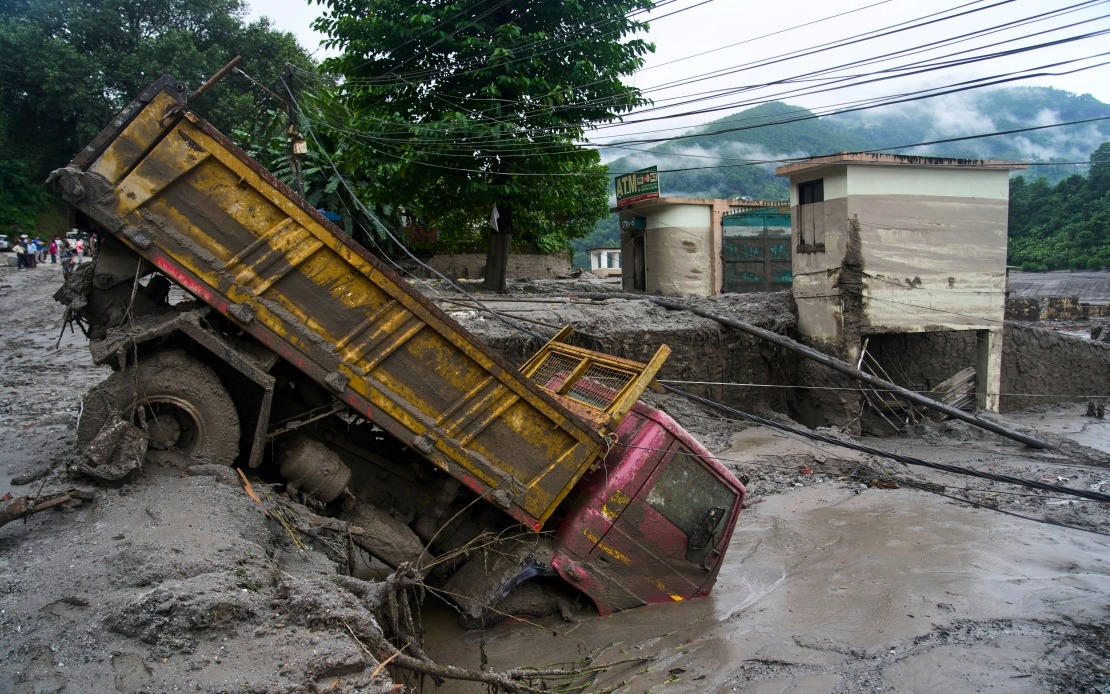
Nepal's National Disaster Risk Reduction and Management Authority issued a fresh alert on Friday concerning the Bhote Koshi River in Rasuwa district, where water levels and debris flows have intensified once again in the exact location struck by a calamitous flash flood just two days earlier. The latest warning signals that the crisis gripping this Himalayan nation remains far from contained, with hydrological conditions continuing to deteriorate along one of the region's most treacherous waterways.
The authority's notice revealed that significant volumes of water mixed with mud and debris have begun accumulating again in the Bhote Koshi, the same river system that unleashed devastation on August 26. This renewed surge represents an immediate and tangible threat to ongoing search and rescue operations, which have been stretched thin across multiple disaster zones. The recurrence of dangerous flows highlights the unpredictable nature of monsoon-season flooding in Nepal, where mountain rivers can transition from manageable to catastrophic within hours.
Official death tolls from the initial disaster have climbed to 475, with rescue teams estimating that hundreds more remain unaccounted for. The scale of missing persons underscores both the fury of the original flash flood and the challenging terrain where search operations must unfold. Nepal's mountainous geography, characterized by steep valleys and limited road access, has consistently complicated emergency response efforts and complicated the recovery process across affected districts.
In response to the escalating threat, the National Disaster Risk Reduction and Management Authority directed all personnel engaged in rescue, recovery, and relief work along the Bhote Koshi and adjacent Trishuli River to maintain heightened vigilance. The directive extends to civilians remaining in identified high-risk zones, who have been counselled to evacuate immediately upon observing warning signs such as unusual water discoloration, rising water levels, or the sound of debris-laden flows approaching from upstream.
The situation reflects a broader vulnerability facing Nepal during the annual monsoon season, when swollen rivers and saturated slopes create conditions ripe for flash floods and landslides. The Bhote Koshi, which originates in the high Himalayan passes bordering Tibet, is particularly susceptible to glacial melt and rapid runoff during heavy rainfall periods. Communities settled along its banks have historically endured periodic inundation, yet the concentration of seasonal workers, construction projects, and hydroelectric installations in recent years has increased the human cost of such natural events.
For Southeast Asian nations monitoring this crisis, the Nepalese experience offers a cautionary reminder of regional climate vulnerabilities. Countries across the Mekong Basin and beyond face similar monsoon-driven flood risks, and the challenges faced by Nepalese authorities in coordinating rescue operations across mountainous terrain mirror difficulties encountered elsewhere in the region. The incident underscores how infrastructure development in seismically and hydrologically sensitive zones requires careful risk assessment and comprehensive disaster preparedness frameworks.
The authority's emphasis on immediate evacuation protocols reflects lessons learned from previous disasters. Search teams continue methodically working their way downstream, scouring river embankments, trapped debris fields, and temporary settlements where flood waters deposited survivors and victims alike. The work proceeds against a background of environmental instability, where secondary flooding and localized landslides pose continuing hazards to rescue personnel.
Nepal's government has been coordinating with international aid organizations and neighbouring countries to augment search capabilities and distribute humanitarian assistance. However, the recurrence of dangerous flows complicates logistics and diverts resources at a critical moment when rescue operations require maximum intensity. Weather forecasts suggesting continued precipitation in the coming days have intensified calls for accelerated evacuations from vulnerable communities.
The alert also carries implications for hydroelectric projects operating in the region, several of which have suspended operations in response to the emergency. The Bhote Koshi system supports multiple dams and power stations, infrastructure vital to Nepal's energy security yet vulnerable to extraordinary flood conditions. Balancing energy production with public safety during monsoon emergencies remains an ongoing policy challenge for Nepalese authorities.
For the broader South Asian region, the Nepalese flooding serves as confirmation that climate patterns are intensifying hydrological extremes. Researchers have documented increasing variability in monsoon timing and intensity, creating uncertainty for communities dependent on predictable seasonal cycles. Nepal's experience with back-to-back flood threats within a 48-hour period exemplifies this emerging pattern of compressed disaster cycles.
The fresh alert concludes a difficult week for Nepal, one marked by scenes of devastation in villages along the Bhote Koshi and desperate searches for survivors in remote locations. Local authorities have appealed for patience as recovery efforts necessarily slow during periods of elevated water flow, when rescue operations themselves become hazardous. The immediate priority remains ensuring no additional lives are lost to renewed flooding, followed by the longer, more difficult work of accounting for the missing and rebuilding communities destroyed by the initial deluge.

