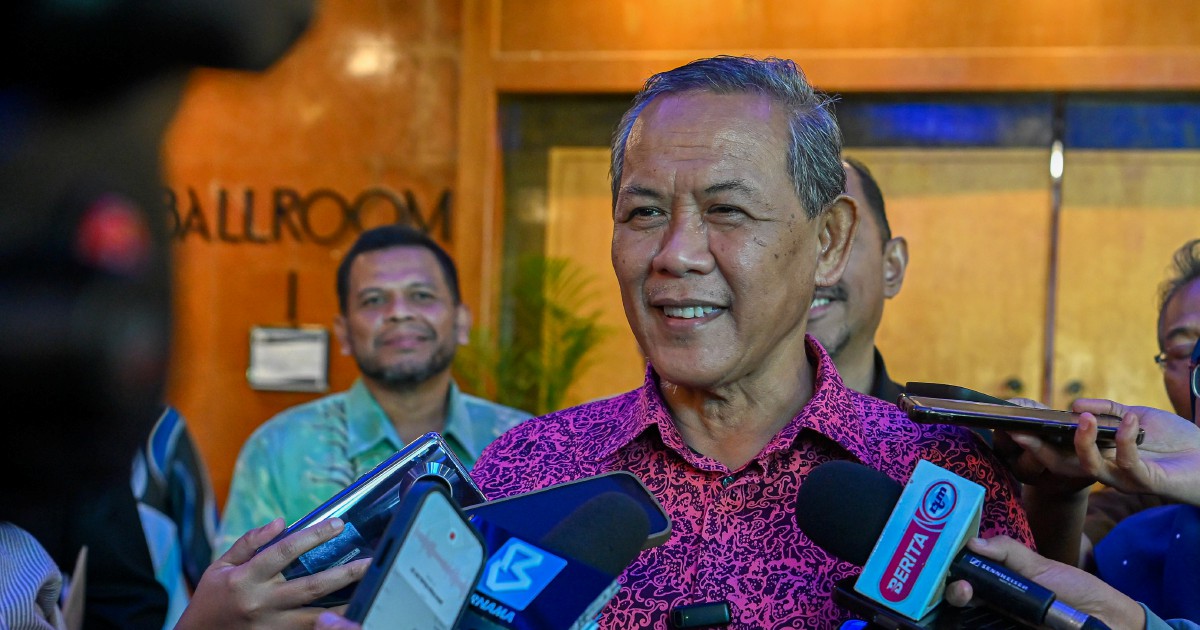
Negri Sembilan Menteri Besar Datuk Seri Aminuddin Harun has made a direct appeal to constituents to judge the government's response to the Linggi district's chronic flooding problem on its merits rather than allowing the matter to become ensnared in election-year politics. Speaking in Seremban, he urged voters to evaluate the practical measures and infrastructure initiatives already underway, emphasizing that solutions to such serious community concerns should transcend partisan considerations as the 16th state election approaches.
The Linggi area has long struggled with repetitive inundation, a problem that resurfaces with disturbing regularity and affects thousands of residents across multiple neighbourhoods. Rather than viewing this as a political football, Aminuddin suggested that communities should focus on how different administrations have actually responded to the crisis. The timing of his statement reflects growing concern that opposition parties may attempt to weaponize the flooding issue to gain electoral advantage, transforming a genuine hardship into campaign fodder without offering substantive alternative solutions.
This appeal arrives at a particularly sensitive moment in Negri Sembilan's political calendar. The state election campaign season traditionally sees intensified scrutiny of government performance on issues that directly impact public welfare and safety. Flooding and water management are precisely the type of visible, everyday concerns that voters weigh heavily when deciding their electoral preferences. Aminuddin's intervention suggests the state administration recognizes the political sensitivity surrounding Linggi's predicament and wants to reframe the conversation around concrete achievements rather than emotional rhetoric.
The Menteri Besar emphasized that mitigation work is actively progressing on the ground. These efforts presumably encompass drainage improvements, river management initiatives, and other infrastructure upgrades designed to reduce the frequency and severity of flooding events. Such projects typically require substantial capital investment and coordinated implementation across multiple government agencies, a reality that opposition narratives sometimes downplay when criticizing flood management responses. By highlighting ongoing work, Aminuddin is attempting to demonstrate government competence and commitment.
For Malaysian voters generally, and Negri Sembilan residents specifically, the Linggi flooding represents a failure of long-term planning and infrastructure development. That successive administrations have struggled to resolve the issue comprehensively speaks to the complexity of flood management in urban and peri-urban settings, particularly in a nation where extreme weather events are intensifying due to climate change. The persistence of the problem suggests that previous solutions, whether structural or administrative, have proven inadequate to the scale of the challenge.
The political dimension of Aminuddin's statement cannot be separated from the broader context of Malaysian electoral competition. In contemporary Malaysian politics, infrastructure failures and natural disaster responses have become prime targets for opposition criticism. When constituencies experience repeated flooding despite government assurances and allocated budgets, public confidence erodes quickly. Opposition parties have legitimate grounds to question why certain problems persist, and they inevitably seek to leverage such failures in campaign messaging. However, Aminuddin's point about depoliticization carries some weight—if all solutions become weaponized, substantive discussion of root causes and realistic remedies becomes impossible.
For the Linggi community itself, the real test lies not in political rhetoric but in whether flooding frequency actually decreases over coming months and years. Residents who have endured repeated evacuations, property damage, and disrupted livelihoods care far less about who deserves credit than whether their homes remain dry. This ground-level perspective should inform how voters ultimately judge the government's flood management record. The electorate will make its own assessment of whether mitigation work represents genuine progress or merely election-season damage control.
The timing of infrastructure projects, particularly those launched or accelerated ahead of elections, understandably invites scepticism among Malaysian voters. A history of election-year announcements that proved temporary or incompletely implemented has made the public naturally cautious about accepting government claims regarding flood solutions without evidence of sustained implementation. Aminuddin's call for non-partisan evaluation, while reasonable in principle, must contend with this accumulated wariness.
Regional analysis suggests that flooding mitigation requires sustained, multi-term commitment regardless of which coalition controls state government. The Linggi issue has persisted across different political administrations, indicating that the problem transcends any single electoral cycle. Both the ruling coalition and opposition parties must therefore be held accountable not just for their immediate responses but for realistic long-term strategies that acknowledge climate change impacts and urbanization pressures affecting drainage capacity throughout the peninsula.
The broader implication of Aminuddin's statement extends beyond Negri Sembilan. Throughout Malaysia, infrastructure failures consistently become election issues, and governments routinely appeal to voters to move beyond politicization. Yet such appeals often ring hollow when the underlying problems remain unresolved. The challenge for the current administration lies in demonstrating that the Linggi mitigation work will produce tangible, verifiable improvements that persist beyond the election campaign season and address the root causes of the recurring crisis.
Ultimately, Aminuddin's call represents an attempt to reclaim narrative control over an issue where government performance has been demonstrably inadequate. By framing discussion around ongoing work and asking voters to judge on merits rather than politics, he seeks to deflate opposition momentum on the issue. Whether this rhetorical strategy succeeds depends entirely on whether the mitigation efforts produce visible results that residents can directly experience in their daily lives.

