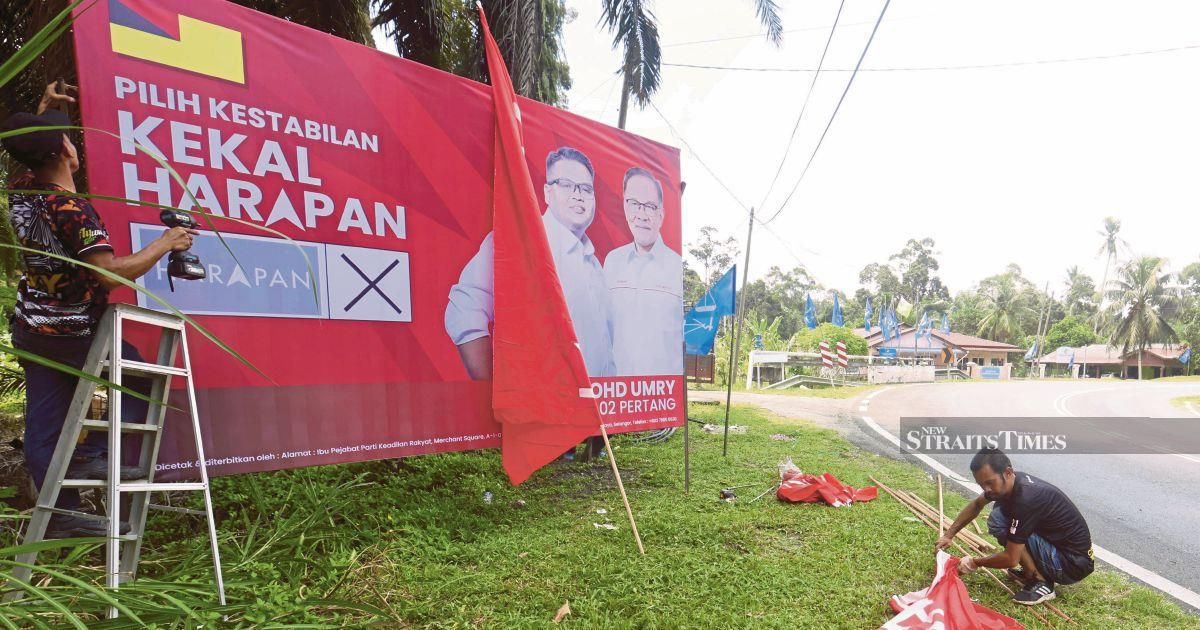
The Negri Sembilan state election has become a focal point in Malaysian politics, with 103 candidates competing for 36 legislative seats in what observers describe as a closely contested affair reflecting broader coalition dynamics at play across the country. The election serves as a barometer for the evolving relationship between Barisan Nasional and Perikatan Nasional, two major political blocs whose cooperation or competition will significantly influence the state's political trajectory and potentially reverberate through national politics.
For Bersatu, the Malaysian United Indigenous Party, the Negri Sembilan contest represents far more than a routine state poll. The party finds itself at a decisive crossroads, forced to balance competing pressures from its traditional power bases, its relationship with federal leadership structures, and the practical realities of coalition mathematics in the state assembly. How Bersatu navigates this election will provide crucial signals about its long-term viability and relevance in Malaysia's political ecosystem, particularly as the party continues to redefine its role following significant internal shifts and electoral setbacks in recent years.
The cooperation framework between Barisan Nasional and Perikatan Nasional has fundamentally altered the competitive landscape in Negri Sembilan. Historically, these coalitions operated as distinct rival blocs, but recent political developments have introduced unprecedented cooperation mechanisms that complicate traditional voting patterns and party allegiances. This shift has created strategic opportunities for some parties whilst simultaneously exposing vulnerabilities for others, forcing candidates and supporters to recalibrate their political calculations.
Bersatu's position within this cooperation arrangement remains ambiguous and contested. The party must reconcile its status as a component of Perikatan Nasional with the reality of BN-PN coordination, where seat-sharing arrangements and electoral understandings may not always favour Bersatu's immediate interests. This tension between maintaining coalition loyalty and pursuing Bersatu's independent political agenda creates internal pressure that will become evident as campaigns intensify in coming weeks.
The 36 seats up for election represent significant political capital in a state where no single party or coalition has demonstrated overwhelming dominance. The distribution of these seats will determine not only who governs Negri Sembilan but also who wields influence in national coalition negotiations and policy-making. Each seat carries amplified importance given Malaysia's current political fluidity, where single-digit parliamentary majorities at state level can trigger significant constitutional and political crises if coalition dynamics shift unexpectedly.
Candidacy distribution across the 103 nominees reflects competing strategic priorities among the various political formations. Some parties appear to be testing ground in constituencies where they have limited historical presence, whilst others are consolidating strongholds against anticipated opposition challenges. The nomination pattern itself becomes data for political analysts attempting to decipher coalition intentions and confidence levels in different geographic and demographic constituencies.
For Bersatu specifically, candidate selection has become a proxy for internal power struggles and factional alignments. The party's leadership must balance rewarding loyal supporters, attracting new talent, managing geographic representation, and ensuring candidates possess realistic winning chances. Poor candidate placement decisions could signal weakness to both internal party members and external political actors, potentially accelerating Bersatu's marginalisation within Malaysian politics.
Negri Sembilan's voters face a complex decision-making environment shaped by state-specific issues, national political developments, and personal assessments of coalition performance. The state has distinct economic characteristics, demographic patterns, and developmental priorities that differ from peninsular Malaysia's urban centres. Local voters will evaluate candidates and parties against this backdrop whilst simultaneously considering national implications of their voting choices, creating multi-layered decision-making contexts.
The election's regional significance extends beyond Negri Sembilan's borders. Outcomes here will influence political calculations across Pahang, Selangor, and Perak, where comparable coalition dynamics and Bersatu presence create similar strategic considerations. A strong Bersatu performance would reinvigorate party claims to relevance and bargaining power, whilst disappointing results would accelerate concerns about organisational capacity and electoral viability that have already surfaced following recent federal boundary redistributions favouring other parties.
Observers particularly scrutinise how Bersatu manages potential conflicts between BN-PN cooperation frameworks and Perikatan Nasional's stated opposition to Barisan Nasional in national politics. This apparent contradiction has already created confusion amongst party grassroots members and swing voters attempting to understand coalition positions. Bersatu's ability to articulate clear messaging about these tensions whilst maintaining internal coherence will significantly influence both campaign effectiveness and post-election coalition negotiations.
The polling campaign will reveal whether Bersatu can capitalise on state-level popularity or whether nationwide perceptions of political uncertainty and coalition instability undermine local political actors. Party organisational machinery faces tests not only in candidate support and voter mobilisation but also in maintaining narrative consistency across messages directed toward different audiences with competing expectations.
Negri Sembilan's 2024 election ultimately represents a referendum on contemporary Malaysian coalition politics. The 103 candidates competing for 36 seats embody broader questions about political stability, coalition viability, and voter preferences regarding governance approaches in an era of unprecedented political complexity and fluid alliances.

