Negeri Semilan's Parti Keadilan Rakyat has completed the first stage of its electoral preparation by forwarding a comprehensive list of prospective candidates to the party's central command for vetting and approval. The submission covers all 16 state assembly seats the party intends to contest in the 16th Negeri Semilan state election, scheduled for August 1. Speaking in Seremban on July 1, state chairman Datuk Seri Aminuddin Harun disclosed that the submission includes multiple options for each constituency, offering the leadership a range of choices during the selection process.
The decision to nominate between three and five candidates per seat reflects a deliberate strategy to balance representation across demographic groups. Aminuddin stressed that the candidate pool deliberately encompasses women candidates, younger political aspirants, and individuals with established track records in public service or party work. This approach signals PKR's commitment to generational renewal while retaining experienced voices within the party structure—a consideration particularly important in state-level contests where local knowledge and constituency connections remain decisive factors in determining electoral outcomes.
As chairman of the Negeri Semilan branch of Pakatan Harapan, Aminuddin also confirmed that the coalition's other components have followed suit with their own submissions. Both the Democratic Action Party and the National Amanah Mandate confirmed they had forwarded their respective candidate lists through their central bodies for consideration. The coordination among PH's three main parties signals an attempt to maintain coalition discipline and prevent intra-alliance competition, though the parties have not yet scheduled a formal announcement of the finalised slate.
The electoral calendar for Negeri Semilan remains tight, with the Election Commission having established July 18 as nomination day and July 28 for early polling. These dates compress the period between candidate announcement and nomination into a narrow window, leaving parties with limited time to organize campaigning logistics. The August 1 polling date itself follows the standard practice of conducting state elections on weekdays to minimize disruption to commercial and administrative activity.
The seat allocation agreement reached between Pakatan Harapan partners underscores ongoing negotiations within the coalition regarding power distribution. PKR secured 16 of the 36 available seats, positioning it as the largest single party in the coalition's representation. The Democratic Action Party received 11 seats, while Amanah was allocated the remaining nine. This distribution roughly reflects both the relative strength of each party in the state and historical patterns of support, though precise seat-by-seat negotiations often involve complex considerations regarding incumbent performance and demographic changes in individual constituencies.
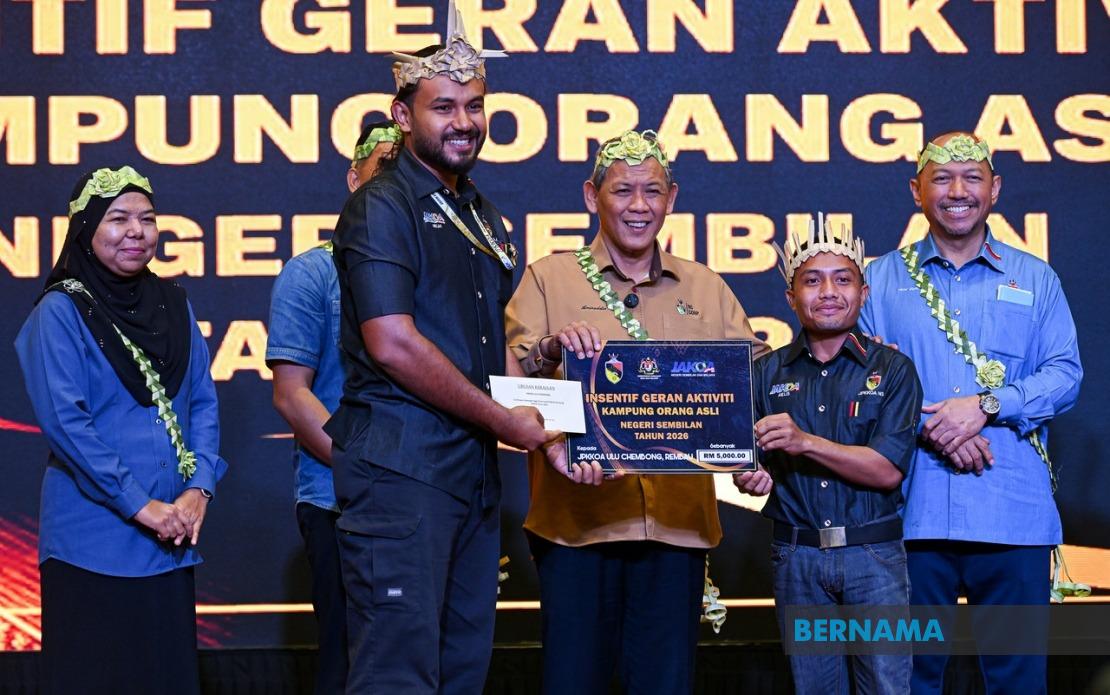
Aminuddin, who holds the dual position of Menteri Besar and PKR's state chief, represents a convergence of party leadership and executive authority that has become standard in Malaysian state politics following the 2018 general election and subsequent electoral cycles. His role in orchestrating PKR's candidacy process carries particular weight given his simultaneous responsibility for the state administration. The grant announcement he made during his remarks—RM415,000 in Orang Asli Village Activity Grant Incentives—also suggests the executive branch is leveraging administrative functions to maintain political visibility during the pre-election period.
For Malaysian political observers, the Negeri Semilan state election represents a significant test for Pakatan Harapan's continued viability as a governing coalition in non-federal contexts. The state has been governed by PH since 2018, and the upcoming poll will determine whether the coalition retains control or faces a resurgence from the Barisan Nasional, which traditionally dominated Negeri Semilan politics for decades before its 2018 collapse. Voter sentiment regarding the coalition's performance in state administration, particularly on economic development, infrastructure, and service delivery, will likely prove decisive.
The candidate selection process itself reflects broader shifts in Malaysian political culture. The explicit inclusion of younger candidates and female representatives addresses demographic representation concerns that have gained prominence in recent years, though questions remain about whether such representation translates into meaningful decision-making authority or remains largely symbolic. The multiple-candidates-per-seat approach also acknowledges the unpredictability of electoral politics, where unforeseen circumstances ranging from personal scandals to local controversies can force last-minute changes to campaign strategies.
Regional dynamics add another layer of complexity to Negeri Semilan's electoral landscape. The state's geographic proximity to the Federal Territory and Selangor means that national political trends and federal-level developments exercise outsized influence on state voting patterns. Decisions made in Kuala Lumpur regarding policy, ministerial appointments, or coalition management frequently reverberate into state-level politics, potentially affecting voter sentiment independently of local considerations. The timing of the Negeri Semilan election, coming in the midst of broader discussions regarding Malaysia's political direction, means that the results may carry implications extending well beyond the state's borders.
As the August 1 election date approaches, PKR and its coalition partners face the fundamental challenge of translating organizational preparation into electoral success. Candidate quality, campaign effectiveness, and ground-level party machinery will ultimately determine whether PH's careful allocation and selection process translates into retained control of the state assembly. The coming weeks will test whether the diversity of candidates, the breadth of the candidate pool, and the coalition's continued unity prove sufficient to withstand what could be a determined challenge from opposition forces seeking to reclaim the state.

