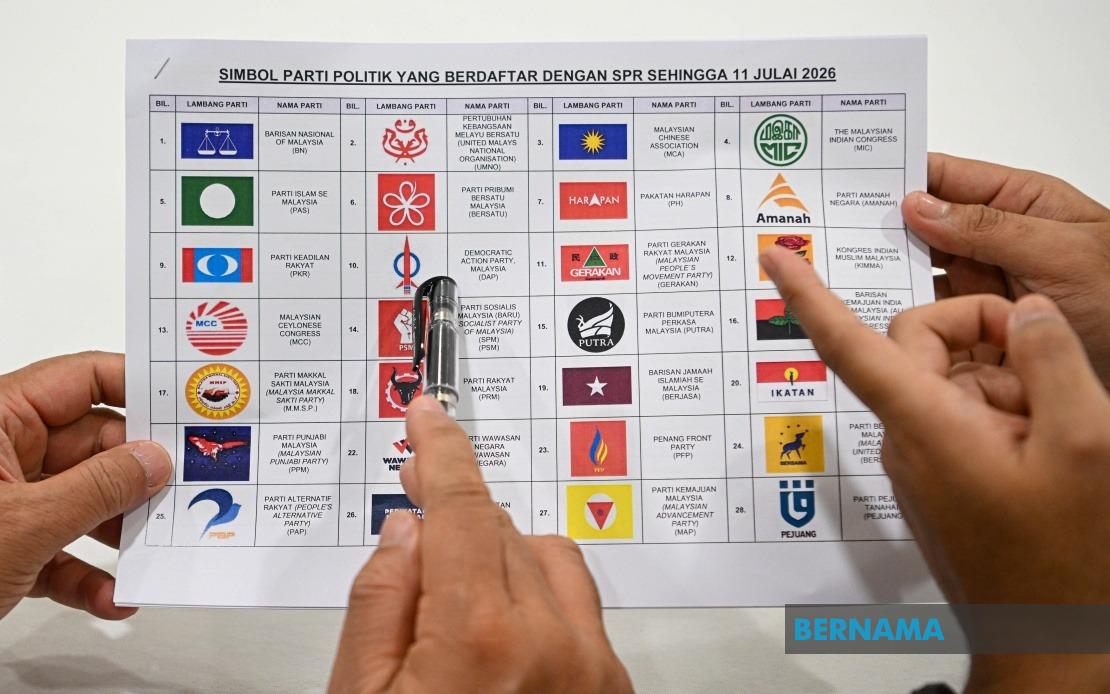
Negeri Sembilan embarked on its electoral journey today as the nomination process for the 16th state election got underway, with prospective candidates submitting their papers at eight designated centres across the state beginning at 9 am. This formal launching marks the commencement of an intense political battle that will unfold over the coming fortnight, as the state's major political coalitions position themselves to secure voter support and control of the state government.
The nomination deadline at 10 am represents the final checkpoint for aspiring candidates wishing to contest seats in this election cycle. Once the Election Commission officially validates and announces the eligible candidates list, the political landscape will shift into its 14-day campaign sprint, running through to 11.59 pm on July 31. This condensed timeframe presents a strategic challenge for parties seeking to maximise their outreach, particularly in a multi-cornered contest involving numerous coalitions and independent hopefuls.
The electoral machinery has been set in motion following the dissolution of the Negeri Sembilan State Legislative Assembly on June 5, executed with the formal consent of Tuanku Muhriz Tuanku Munawir, the Yang Dipertuan Besar of Negeri Sembilan. Early voting has been scheduled for July 28, allowing those unable to vote on polling day on August 1 to cast their ballots in advance. This staged voting approach is designed to accommodate the diverse circumstances of the state's electorate and ensure maximum participation.
Demographic preparations underscore the scale of this election undertaking. A total of 889,490 registered voters across Negeri Sembilan are eligible to participate, comprising 867,151 ordinary voters alongside 16,884 military personnel and their spouses, and 5,455 police personnel and their spouses. This substantial electorate represents the ultimate arbiters of which political formation will govern the state for the next five years, making every demographic segment strategically significant to the competing coalitions.
As of the day before nomination, the Election Commission had distributed 464 nomination forms to interested parties, whilst 70 prospective candidates had already submitted their required election deposits, signalling serious intent to contest. These figures suggest a moderately competitive field, though the final candidate slate would only become apparent following the official announcement of eligible nominees. The deposit requirement serves as a financial threshold that filters out frivolous candidacies and demonstrates genuine commitment to electoral participation.
Packatan Harapan has adopted an aggressive strategy by fielding candidates across all 36 state seats, projecting confidence in its ability to contest every constituency. Barisan Nasional, the long-dominant coalition, is contesting 25 seats in what appears a more selective approach, whilst Perikatan Nasional is fielding 11 candidates. Beyond these major coalitions, smaller parties including Parti Orang Asli Malaysia, the Socialist Party of Malaysia, and Parti Barisan Jemaah Islamiah Se-Malaysia are each fielding single candidates, diversifying the political spectrum. Parti Pribumi Bersatu Malaysia has mounted a challenge in 24 seats, including two candidates using the Bersatu banner from the coalition partner Urimai, illustrating the complex alliance arrangements shaping this contest.
The comparative performance in the 2023 election provides crucial context for understanding current positioning. In that ballot, Pakatan Harapan secured 17 of 36 seats, Barisan Nasional won 14, and Perikatan Nasional captured five seats. These results suggest a fragmented electorate without a commanding majority for any single bloc, meaning that coalition arithmetic and potential post-election alliances could prove decisive in determining which formation ultimately forms government. The three-year interval since that contest has witnessed significant political developments both nationally and at state level that may shift voter preferences.
Security and operational readiness have been prioritised ahead of the nomination day festivities. The Negeri Sembilan police have mobilised 4,800 officers and personnel, reinforced by an additional 1,373 personnel from Bukit Aman headquarters, totalling over 6,100 law enforcement officers overseeing the electoral process. This substantial security presence reflects the Election Commission's commitment to maintaining order during what is expected to be a high-energy day, with large crowds of party supporters, candidate entourages, and political dignitaries converging on the eight nomination centres across the state.
The Election Commission has issued explicit reminders to all candidates, campaign teams, and supporters to strictly adhere to electoral regulations and refrain from any provocative conduct that might disrupt the nomination proceedings. Maintaining institutional integrity and public confidence in the electoral process represents a paramount concern, particularly given Malaysia's experience with politically charged elections where tensions occasionally escalate. This preventive messaging underscores the critical importance of orderly, transparent nomination procedures as the foundation for a credible electoral exercise.
Weather patterns could influence turnout at nomination centres and subsequent campaign activities. The Malaysian Meteorological Department has forecast generally fair conditions across most areas in the morning, with the exception of Port Dickson and Seremban where rain is anticipated. Afternoon conditions across Negeri Sembilan are forecast to feature thunderstorms, potentially affecting candidate movements and campaign scheduling. Political parties will need to adapt their nomination day and early campaign strategies in response to these meteorological conditions.
For the broader Malaysian political landscape, the Negeri Sembilan election carries significance beyond the state's borders. As one of Malaysia's more compact states with 889,490 voters, it serves as a barometer for political sentiment and coalition strength in an important demographic slice of the country. The results could influence perceptions of momentum heading into future national political contests and provide insights into voter receptiveness to the competing coalitions' policy offerings and leadership credentials across different regions.
The commencement of the nomination process represents the formal transition from backroom political manoeuvring and candidate selection into the public electoral arena. Over the coming two weeks, political parties will deploy their campaign machinery, leaders will traverse constituencies, and voters will be presented with competing visions for the state's governance and development. The stage is now set for an intensive democratic contest that will determine which coalition earns the people's mandate to steer Negeri Sembilan's affairs for the next electoral cycle.

