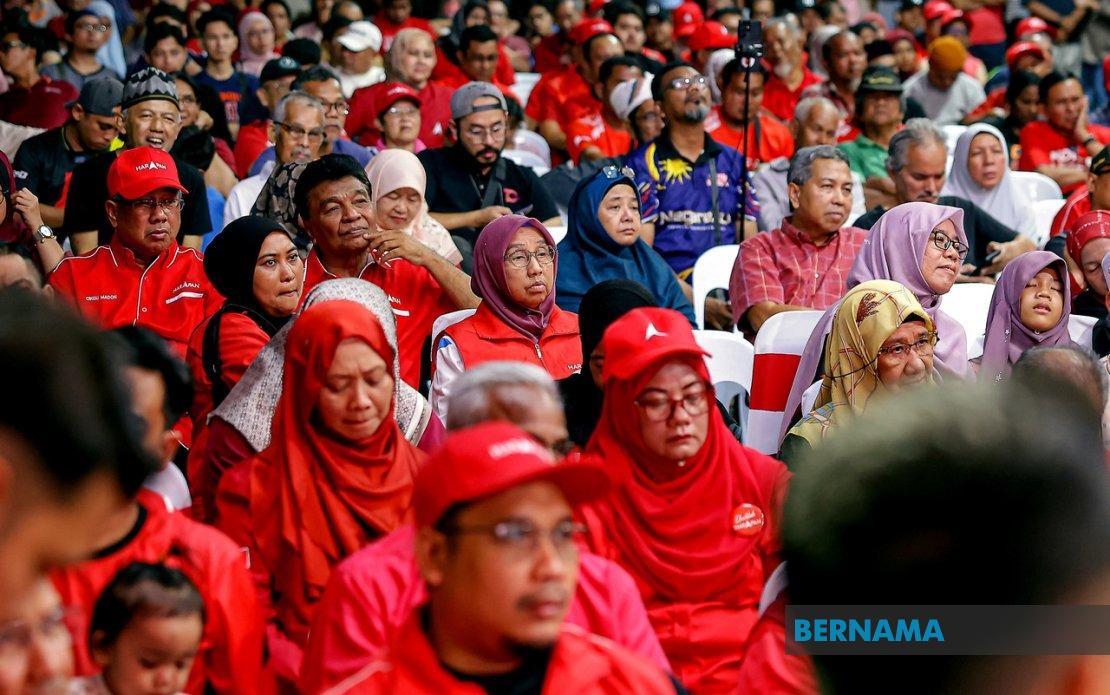
As the 16th Negeri Sembilan state election entered its second week of campaigning, a distinct pattern emerged from conversations with voters across the state: charisma and local pedigree pale beside the capacity to genuinely listen and deliver concrete improvements to everyday life. Rather than gravitating towards establishment figures or long-serving representatives, the electorate appears increasingly focused on identifying leaders who blend approachability with demonstrable competence—a shift that carries implications beyond the state's boundaries in an era when voters across Southeast Asia are reassessing what they demand from their representatives.
A survey conducted during the campaign revealed that Negeri Sembilan's 889,490 registered voters are fundamentally pragmatic about their electoral choices. Rather than viewing elections primarily as popularity contests or tribal reaffirmations of party loyalty, many voters articulated a framework centred on whether candidates could credibly bridge the gap between constituent concerns and legislative action. This sentiment underscores a broader evolution in Malaysian political behaviour, where voters increasingly function as consumers of governance rather than passive participants in predetermined outcomes.
Kamarulzaman Ab Aziz, a 64-year-old retiree with a career in teaching, articulated this perspective with particular clarity. His lived experience had convinced him that geographic origins were subordinate to relational capacity. An outsider willing to maintain regular contact, respond to community problems, and demonstrate genuine engagement stood on firmer footing than a hometown candidate who maintained social distance or treated accessibility as an optional courtesy. This testimony reflects a maturation in voter expectations—the realisation that shared background creates no binding obligation for attentiveness, and that transactional relationships based on visible responsiveness outweigh sentimental connections to a candidate's street of origin.
The economic pressures confronting ordinary Negeri Sembilan residents emerged as perhaps the most viscerally felt concern animating electoral calculations. Nurulainee Hamidon, a 37-year-old trader operating a food business in Linggi, Port Dickson, provided a window into the squeeze affecting small business operators across Malaysia. Her costs for raw materials and supplies had risen substantially, compressing margins regardless of how aggressively she adjusted retail prices. She articulated a familiar dilemma: raising prices to maintain profitability invites customer resentment, while absorbing costs erodes sustainability. This predicament, replicated across countless small enterprises nationwide, translates into a political demand structure centred on cost-of-living alleviation—a theme that transcends state boundaries and resonates across the country's economic geography.
Rural and estate communities represent another constituency articulating distinct priorities. M. Manisha, a 38-year-old housewife, emphasised that development agendas required equitable geographic distribution. Estate residents and those in less densely populated areas reported feeling marginalised in infrastructure and amenity planning, suggesting that the next state government would face pressure to demonstrate that development benefits would flow beyond urban and peri-urban centres. This concern reflects longstanding regional disparities within Malaysia and points towards a political environment where candidates campaigning in less-developed areas face heightened expectations to articulate specific commitments rather than generic promises.
Employment quality and wage adequacy emerged as priorities among younger voters entering the electoral process. Mohammad Najmi Aiman, a 22-year-old college student voting for the first time in Paroi, called for stronger emphasis on creating employment opportunities where remuneration aligned with qualifications and skillsets. This articulation of concern—framed not merely as job availability but as decent work—indicates that first-time voters are calibrating expectations around meaningful career progression rather than accepting whatever positions become available. The implication extends beyond individual career planning: widespread underemployment of university graduates, a phenomenon observed across Malaysia, registers as a political failure demanding correction.
The tone of electoral competition itself attracted commentary, with voters articulating preferences for civility and substantive engagement over personal attacks. Lim Kian, a 43-year-old private sector employee based in Port Dickson, advocated for mature conduct from all participating parties, emphasising that whichever coalition secured governance would require societal cohesion to function effectively. This sentiment, while seemingly straightforward, reflects a deeper intuition about the relationship between campaign conduct and governing capacity—the understanding that poisoned relationships between competing factions complicate post-election collaboration on matters of mutual state interest. In a context where single-party dominance has become less assured across Malaysia, this concern about democratic civility acquires particular salience.
The electoral logistics for the 16th Negeri Sembilan state election reflected established Malaysian procedures. The Election Commission registered 889,490 eligible voters, subdivided into regular voters (867,151), military personnel and spouses (16,884), and police officers and spouses (5,455). These classifications themselves merit consideration: the structured inclusion of security sector personnel in electoral calculations reflects Malaysian institutional design, where these constituencies maintain designated electoral weight. One hundred and three candidates competed for 36 state seats across two voting phases—early polling on July 28 and general polling on August 1—a schedule demanding intensive campaigning within compressed timeframes.
The composition of the eligible electorate and the candidate distribution suggested competitive races across multiple constituencies. With an average of nearly three candidates per seat, many contests would likely prove closely fought, amplifying the significance of voter sentiment around accessibility and demonstrable competence. Constituencies like Paroi, from which first-time voter Mohammad Najmi Aiman would cast his ballot, would feature diverse age cohorts and varied economic interests, reflecting the complexity that any successful candidate would need to navigate.
The priorities articulated by Negeri Sembilan voters during this electoral cycle—accessibility, economic relief, inclusive development, employment quality, and civic maturity—transcend the state's boundaries to illuminate broader patterns in Malaysian political behaviour. These voters were not primarily motivating themselves through identity-based affiliations or ideological abstractions, but rather through instrumentalist calculations about which candidates and parties could measurably improve their circumstances. This represents a significant shift from electoral patterns organised primarily around ethnicity, religion, or traditional party loyalty, and it positions Negeri Sembilan as a useful barometer for understanding how Malaysian voters are recalibrating their relationship to political competition at a moment when demographic change, economic strain, and institutional realignment are reshaping electoral dynamics across the country.

