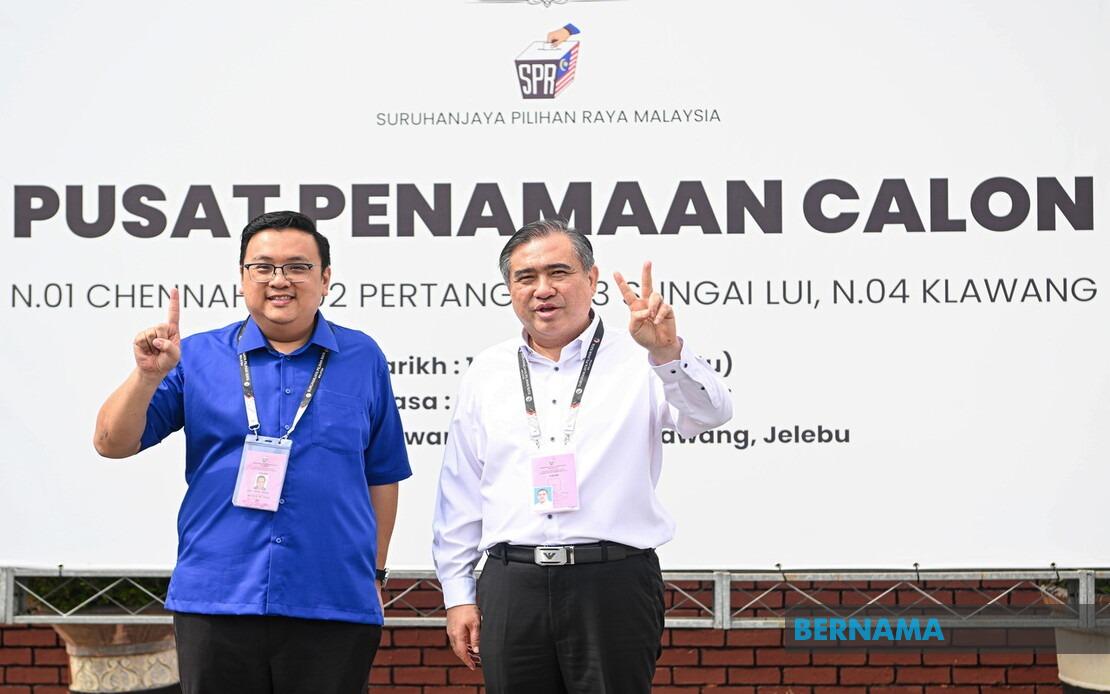
The Negeri Sembilan state election scheduled for August 1 will showcase a fundamentally altered political landscape, with unprecedented fragmentation replacing the two-coalition dominance that has characterised Malaysian electoral contests in recent years. Of the 36 state assembly seats being contested, the composition reveals a striking shift: while 11 constituencies will feature straightforward two-candidate races, the majority of battlegrounds will pit three or more candidates against each other, signalling how political alliances have fractured and how regional players have seized opportunities to expand their presence.
The most notable change concerns three-cornered contests, which have surged from just seven seats in the 2023 state election to 21 seats this time around. This near-tripling of triangular races reflects the growing viability of independent political forces in Malaysian state politics, particularly Parti Pribumi Bersatu Malaysia (Bersatu), which has positioned itself as an alternative to both Pakatan Harapan and Barisan Nasional in multiple constituencies. Additionally, two seats will witness four-way contests and two others will feature five-cornered tussles—races involving a diverse array of candidates that did not materialise in the 2023 polls. This proliferation of multi-candidate contests complicates vote-splitting dynamics and may prove consequential in determining which coalition emerges with control of the state assembly.
Among the straight fights, Transport Minister Anthony Loke, who serves as the DAP secretary-general, will defend the Chennah seat for Pakatan Harapan against Barisan Nasional's Siow Kong Choon. This contest carries symbolic weight as Loke represents the urban, non-Malay demographic that has traditionally anchored DAP's electoral strength. His presence in a direct fight rather than a three-cornered contest suggests DAP holds this seat with sufficient confidence to avoid vote-splitting scenarios. Similarly, the Rantau constituency will witness a head-to-head battle between UMNO deputy president Mohamad Hasan, who also serves as Foreign Minister, and Pakatan Harapan's Dr Azizul Hakim Mahdi. Hasan's status as a senior UMNO figure and his successful defence of his ministerial portfolio demonstrate Barisan Nasional's determination to retain this seat against the opposition.
The three-cornered contests introduce considerable unpredictability into several key races. Linggi, held by Pakatan Harapan's Menteri Besar Datuk Seri Aminuddin Harun, will see him facing challenges from Barisan Nasional's Datuk Mohd Faizal Ramli and Bersatu's Zamri Md Said. The presence of a Bersatu candidate in a seat held by Pakatan Harapan's most senior figure in the state underscores how effectively Bersatu has inserted itself into constituencies where vote fragmentation could benefit the Perikatan Nasional coalition. Pertang, meanwhile, will pit Barisan Nasional's Negeri Sembilan UMNO chairman Datuk Seri Jalaluddin Alias against Pakatan Harapan's Mohd Umry Abdul Khois and Bersatu's Mohd Faizal Fadli Mohd Idrus, creating another scenario where traditional two-cornered contests have evolved into more complex competitions.
The Klawang seat illustrates how family legacies and political realignment intersect in contemporary Malaysian elections. Danni Rais, son of the venerable Tan Sri Rais Yatim, will contest under Perikatan Nasional's banner against incumbent Pakatan Harapan representative Datuk Bakri Sawir and Bersatu's Muhammad Adib Musa. Rais Yatim's political influence, which once anchored significant support for Barisan Nasional and later bridged various coalitions, has evidently transitioned to his son through Perikatan Nasional, demonstrating how established political families adapt to shifting coalition arrangements.
The four-cornered contests introduce even greater unpredictability. In Jeram Padang, incumbent Barisan Nasional representative Datuk Mohd Zaidy Abdul Kadir faces three opponents: Pakatan Harapan's G. Manivannan, Bersatu's R. Sri Sanjeevan, and Dayana Dal from Parti Orang Asli Malaysia. The presence of an Orang Asli party candidate reflects how constituency-specific concerns and indigenous representation have gained traction in state-level politics. Rahang similarly features a diverse contest with incumbent Pakatan Harapan's Siaw Meow Keong challenged by Barisan Nasional's Yap Siok Moy, Parti Sosialis Malaysia's S. Thinagaran, and Bersatu's Tang Jay San, introducing an explicitly left-wing socialist perspective into what would traditionally be right-of-centre or centrist contests.
The two five-cornered contests represent the most dramatic departure from conventional Malaysian electoral patterns. Nilai's incumbent Pakatan Harapan representative J. Arul Kumar will defend his seat against Barisan Nasional's Lai Chien Kong, Bersatu's Datuk V. Saravana Kumar, Berjasa's Zamani Ibrahim, and independent candidate Omar Mohd Isa. The fragmentation across multiple coalitions and independent candidacy suggests that no single force dominates voter preferences decisively, potentially amplifying the impact of campaign strategy, local mobilisation, and residual voter loyalty. Sri Tanjung presents a comparable scenario, with incumbent Pakatan Harapan's Datuk Dr G. Rajasekaran facing five opponents across the political spectrum, including two independent candidates alongside representatives from Barisan Nasional, Bersatu, and effectively broadening the competitive arena beyond traditional party structures.
The emergence of multiple independent candidates and smaller parties reflects broader trends in Malaysian electoral politics, where voter disenchantment with established coalitions, grievances over specific local issues, and opportunities for non-traditional candidates to secure viable nominations have created space for alternative voices. Berjasa's participation and the prominence of independent candidacies in Nilai and Sri Tanjung suggest that Negeri Sembilan voters have proven willing to consider options beyond the dominant Pakatan Harapan and Barisan Nasional frameworks that have structured Malaysian politics for decades.
From a practical standpoint, the voting mechanics in these multi-cornered contests will differ markedly from traditional two-candidate races. Vote-splitting dynamics become crucial; a candidate winning a three-cornered or five-way race could potentially capture the seat with a plurality significantly lower than 50 percent. This phenomenon may particularly advantage candidates fielded by parties with superior grassroots mobilisation or those representing specific demographic constituencies where concentration of support exceeds that of rivals. Local factors—constituency-specific development priorities, perceived grievances against sitting representatives, and community-based networks—likely assume heightened importance when electorate choice fragments across numerous candidates.
The Election Commission has set July 28 for early voting and August 1 as polling day. A total of 889,490 electors are registered to participate, comprising 867,151 ordinary voters, 16,884 military personnel and their spouses, and 5,455 police personnel. This electoral base represents a crucial demographic consideration: military and police voters, traditionally aligned with Barisan Nasional, constitute approximately two percent of total eligible voters—a modest but potentially pivotal margin in closely contested seats. The early voting window accommodates the scheduling requirements of security personnel, many of whom may be deployed or on duty on polling day itself.
The Negeri Sembilan election holds significance beyond the state's boundaries. As one of Malaysia's smaller states in terms of population and seats, it often serves as a bellwether for broader electoral trends and coalition dynamics. The extent to which Pakatan Harapan can retain or expand its presence, how effectively Barisan Nasional mobilises its base, and the degree to which Perikatan Nasional and independent candidates fragment the opposition vote will collectively offer insights into Malaysian political realignment heading toward potential federal elections. The unprecedented prevalence of multi-cornered contests suggests that Malaysian electoral politics continues evolving toward greater fragmentation and unpredictability, with traditional binary coalitional structures yielding to more complex, regionally-variable political configurations.

