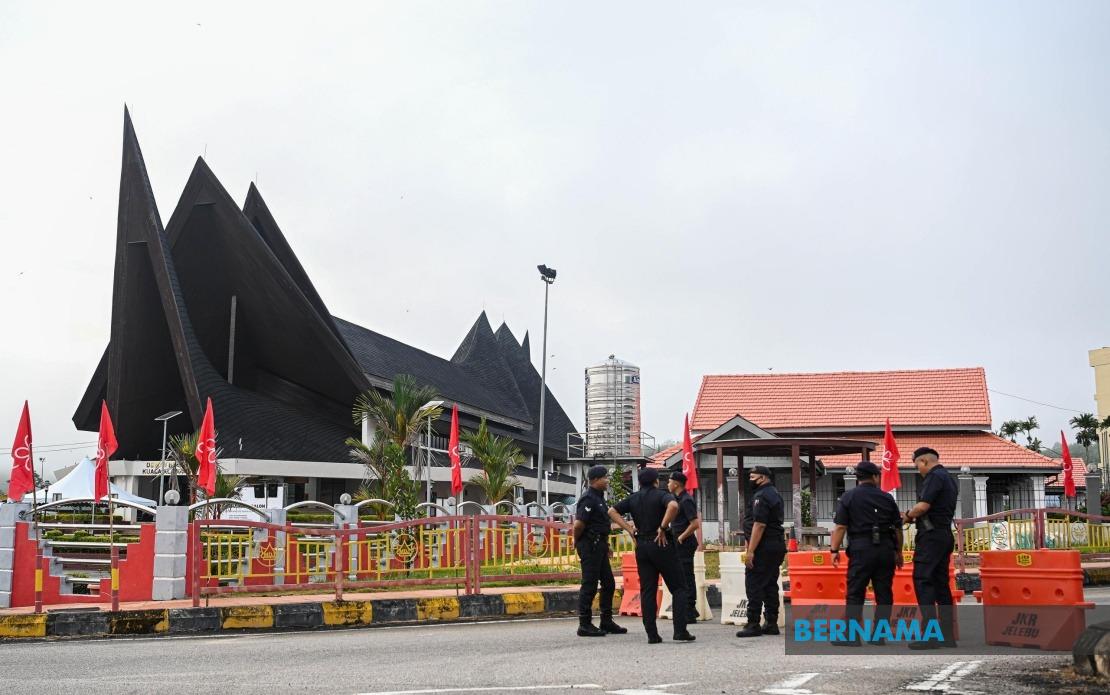
The nomination process for Negeri Sembilan's 16th state election proceeded smoothly on July 18, with clear skies and stable weather conditions enabling Election Commission officials and political parties to execute their respective duties across eight nomination centres distributed throughout the state. The timing proved fortuitous, as inclement weather during nomination day could have complicated candidate registration and logistical arrangements for the various participating coalitions and independent parties.
Election Commission preparations were evident from early morning, with officials conducting final checks at nomination centres to ensure adherence to procedural requirements. The nomination window, running from 9 am to 10 am, represented a compressed timeframe reflecting standard electoral protocols. Media representatives, anticipating competitive races and significant party contests, arrived well before the official opening, with some positioning themselves at nomination centre compounds as early as 7 am to capture candidate arrivals and party activities. This early media mobilisation underscored the election's significance within Malaysia's political landscape, particularly given recent shifts in state-level coalitions and representation.
Political party supporters began congregating at nomination centres in the hours leading up to the process, demonstrating the groundswell of grassroots engagement accompanying electoral campaigns. These gatherings, while routine during nomination periods, reflected the competitive nature of the contest and the determination of various coalitions to mobilise supporters from the outset. The visible party presence signalled that despite a compressed campaign period—with polling scheduled for August 1—all contesting parties intended to mount serious candidacy efforts across their respective seat allocations.
The 36-seat Negeri Sembilan State Assembly had been dissolved on June 5 following standard electoral procedures, triggering the nomination and campaign machinery. The Election Commission subsequently announced that early voting would occur on July 28, with general polling day scheduled for August 1. This timeline compressed the formal campaign period into approximately two weeks, a duration that would test each coalition's capacity to mobilise voters and communicate their respective policy platforms effectively across the state's diverse constituencies.
The electoral population in Negeri Sembilan comprises 889,490 eligible voters, a substantial electorate reflecting the state's demographic composition. This figure encompasses 867,151 ordinary voters who would participate through standard polling procedures, alongside 16,884 military personnel and their spouses voting under military voting arrangements, and 5,455 police personnel exercising their electoral rights. The inclusion of uniformed personnel within the voter base reflected Malaysia's constitutional framework regarding service members' participation in democratic processes, though their concentrated voting patterns have historically influenced outcomes in certain constituencies.
Pakatan Harapan announced its intention to contest all 36 available seats, positioning itself as the only coalition seeking a comprehensive presence across every state constituency. This strategic decision reflected confidence in the coalition's ground machinery and candidate quality, though it also signified ambitions to achieve an outright majority rather than relying on post-election negotiations or independent support. Barisan Nasional opted for a more selective approach, fielding candidates in 25 seats and effectively ceding ground in eleven constituencies to other contenders. This selective strategy suggested internal discussions regarding resource allocation and realistic winning prospects in specific areas.
Perikatan Nasional committed to contesting 11 seats, attempting to maintain relevance in state politics while conserving organisational resources. Smaller parties also staked claims in the election: Parti Orang Asli Malaysia (ASLI), Parti Sosialis Malaysia (PSM), and Parti Barisan Jemaah Islamiah Se-Malaysia (Berjasa) each announced participation in single seats, reflecting niche positioning within the broader political ecosystem. These smaller parties' nominal candidacies often serve symbolic purposes within Malaysia's pluralistic political system, occasionally influencing vote distribution even when lacking realistic winning probabilities.
Pesti Pribumi Bersatu Malaysia's announcement as a solo contender proved particularly noteworthy, as the party decided to contest 24 of the 36 available seats. This substantial presence indicated Bersatu's determination to establish itself as an independent force rather than functioning exclusively within existing coalitions. The party's arrangement with Parti Bersepakat Hak Rakyat Malaysia (Urimai), under which Urimai would field two candidates using the Bersatu logo, reflected evolving intra-coalition arrangements and the fluid nature of Malaysian political partnerships at the state level.
The previous 2023 Negeri Sembilan state election results provided crucial context for assessing competitive dynamics in the forthcoming contest. Pakatan Harapan secured 17 of 36 seats in that election, establishing itself as the largest bloc but falling short of the eighteen-seat majority threshold necessary for government formation. Barisan Nasional captured 14 seats, maintaining significant representation despite broader national electoral challenges. Perikatan Nasional's five seats established it as a relevant but limited player in state politics. These results suggested that Negeri Sembilan's electorate remained competitive and volatile, with potential for substantial seat redistribution depending on campaign effectiveness, voter sentiment shifts, and turnout patterns.
The geographic and demographic diversity within Negeri Sembilan's constituencies compounds electoral unpredictability. Urban areas surrounding Seremban and Kuala Lumpur's fringe demonstrate different electoral preferences compared to rural and semi-rural constituencies, creating opportunities for sophisticated campaign targeting and coalition-building. Economic conditions, employment patterns, and local development priorities vary considerably across districts, requiring candidates and parties to address localized concerns while articulating broader policy visions.
The nomination day proceedings established the formal campaign infrastructure, with party machinery subsequently engaging in intensive voter outreach and messaging. The transition from nomination to active campaigning would determine whether the field divisions reflected in seat allocation announcements translated into actual electoral outcomes. Campaign effectiveness, candidate quality, and evolving voter preferences during the compressed two-week campaign period would ultimately determine the composition of Negeri Sembilan's next state government and the balance of power within Malaysia's federal system.

