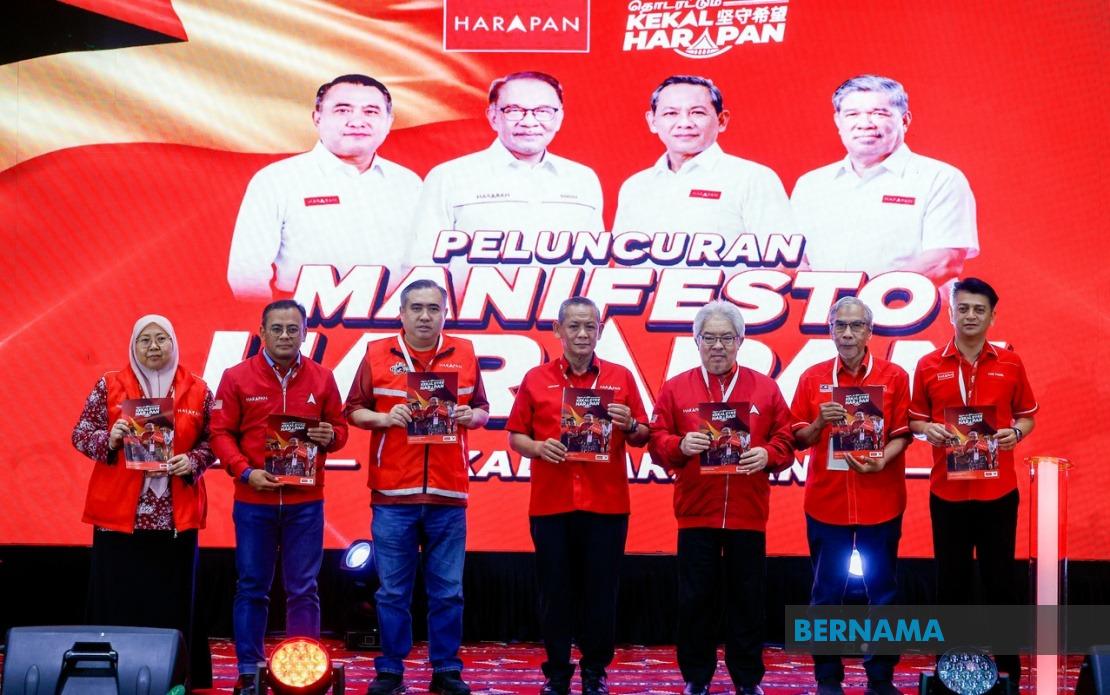
Pakatan Harapan is positioning itself as a coalition committed to concrete outcomes rather than campaign promises when it contests the upcoming Negeri Sembilan state election. State coalition chairman Datuk Seri Aminuddin Harun made this distinction clear during the launch of PH's election manifesto in Seremban on July 20, underscoring that the document represents achievable goals grounded in the coalition's track record in the state rather than aspirational rhetoric designed solely to attract voters.
The manifesto, unveiled under the theme 'Negeri Sembilan Kekal Harapan' (Negeri Sembilan Stays With Harapan), encapsulates ten key commitments that Aminuddin says reflect lessons learned from eight years of PH governance at the state level. This approach represents a strategic shift in how the coalition is framing its electoral pitch. Rather than announcing bold new initiatives, PH is emphasising continuity and incremental improvement of programmes already underway, a positioning that attempts to appeal to voters by demonstrating tangible results from past administrations.
Aminuddin, who also serves as Menteri Besar and is defending his seat in the Linggi state constituency, explained that the coalition's strategy for the next five years centres on consolidating gains and strengthening the foundations of existing programmes. This incremental approach suggests PH believes voter confidence is best earned through proven performance rather than ambitious new pledges. The manifesto therefore reads as a continuation agenda, one that acknowledges both achievements and the need for enhancement rather than wholesale reinvention.
The distinction Aminuddin drew between deliverable promises and political rhetoric carries particular significance in Malaysia's contemporary political landscape, where voter scepticism regarding unfulfilled campaign promises remains high. Negeri Sembilan voters, in particular, have experienced eight years of PH governance and can evaluate the coalition's performance against its previous pledges. This creates both an opportunity and a vulnerability for the incumbent coalition: it can point to concrete outcomes, but it must also defend any shortcomings in implementation or results that fall short of earlier commitments.
The five-year timeframe outlined in the manifesto represents PH's projected governance period following the election. By focusing on foundational strengthening and programme enhancement, the coalition appears to be adopting a measured narrative that emphasises stability and proven competence over transformative change. This strategy may resonate with voters who value predictability and gradual improvement, though it potentially cedes ground to opposition parties willing to promise more dramatic reforms or new directions.
The launch of the manifesto signals the beginning of active campaigning and policy articulation as Negeri Sembilan moves toward polling day. For Malaysian voters and observers across Southeast Asia, the state election serves as an important indicator of regional political sentiment and public confidence in incumbent coalitions. The result will offer insights into whether voters reward continuity and incremental progress or prefer parties offering alternative visions and new policy directions.
Aminuddin's emphasis on building foundations for future generations suggests PH is attempting to frame its agenda as long-term and responsible governance rather than short-term political opportunism. This intergenerational framing attempts to position the coalition as thinking beyond immediate electoral cycles and considering Negeri Sembilan's future development trajectory. Whether voters find this messaging persuasive will depend partly on how effectively PH can demonstrate that its existing programmes have indeed produced measurable benefits in education, healthcare, infrastructure, and economic development.
The manifesto's ten key commitments remain the detailed framework against which PH's campaign will be evaluated. These specific pledges will become the basis for scrutiny from both opposition parties and media throughout the campaign period. Each commitment must be assessed not only for its policy merit but also for its feasibility within a five-year timeframe and the state government's fiscal capacity.
For Southeast Asian observers, Negeri Sembilan's election offers a microcosm of broader regional political trends, including the tension between incumbent coalitions seeking to consolidate power through demonstrated competence and opposition forces offering alternative approaches. The state's outcome may influence political calculations in other Malaysian states and provide lessons for regional coalitions elsewhere navigating similar electoral challenges.
The coalition's choice to emphasise deliverability over rhetoric reflects broader recognition that Malaysian voters have grown increasingly pragmatic and outcome-focused in their political decision-making. Promises alone no longer suffice; voters increasingly demand evidence of implementation and tangible improvements in public services and living standards. PH's manifesto strategy appears calibrated to this evolved voter expectation, though success will ultimately depend on whether the coalition can effectively communicate and deliver on its specific ten commitments during the campaign and beyond.

