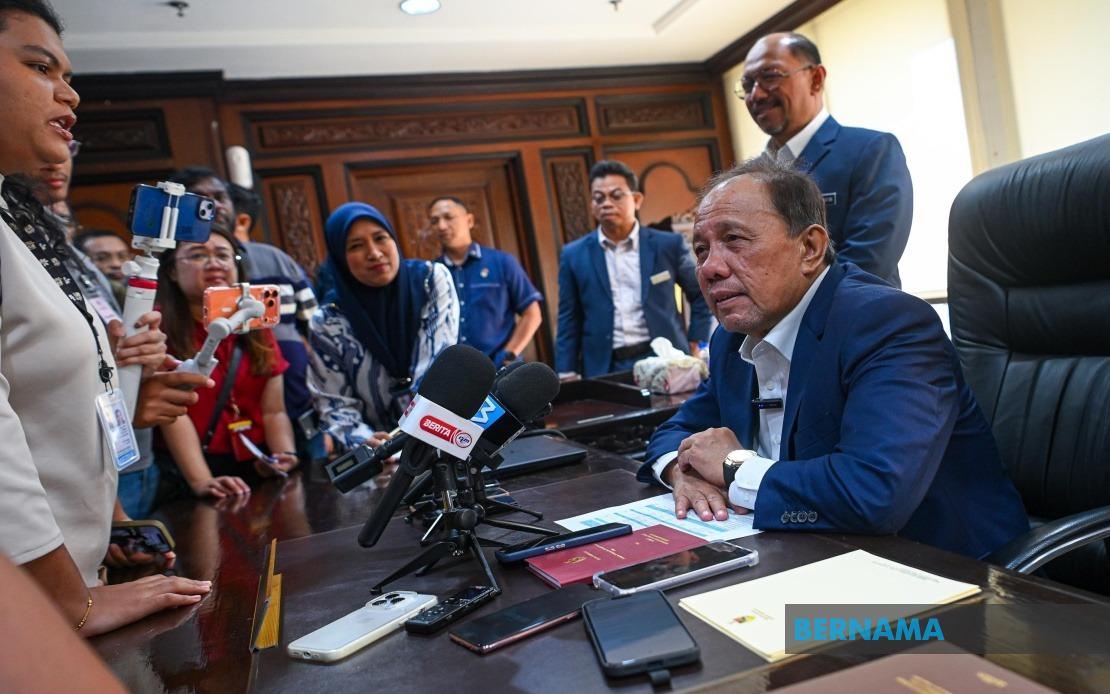
Negeri Sembilan's administration under newly sworn-in Menteri Besar Datuk Ismail Lasim is exploring a significant restructuring of its executive framework by proposing the creation of Deputy Executive Council positions across multiple portfolios. The move, announced on his first working day at Wisma Negeri, represents a pragmatic response to the electoral landscape that emerged from the state's recent polls, where the governing coalitions must balance representation among their constituent parties while maintaining effective governance.
Ismail disclosed that the proposed Deputy Exco posts would be distributed among assemblymen representing the Barisan Nasional coalition partners alongside PAS and Parti Wawasan Negara, signalling an attempt to broaden the executive structure beyond the traditionally limited number of full Exco positions. This arrangement reflects both political necessity and administrative innovation in a state where the coalition's electoral gains have created expectations for ministerial roles across multiple parties. The challenge facing the Menteri Besar is familiar to Malaysian state governments managing complex multi-party coalitions—the mathematics of cabinet formation often produces more aspirant politicians than available senior posts.
According to Ismail's statement at Wisma Negeri, the specific portfolios designated for Deputy Exco positions have not yet been finalised, though the government deems several areas sufficiently important to warrant this new tier of support. The creation of Deputy positions essentially creates an intermediate level of executive responsibility, allowing the government to distribute influence and maintain coalition cohesion without diluting the authority of senior Exco members. This architectural adjustment in state governance has become increasingly common across Malaysian states as coalitions grow more complex and internally diverse.
The timeline for finalising the complete Exco structure remains fluid, with Ismail indicating that the full lineup would likely be announced by Friday of that week, with Monday serving as an absolute deadline. This compressed timeline underscores the pressure on the new administration to establish its cabinet quickly and signal stability to the public and financial markets. The delay in finalising even the Senior Exco appointments—positions for which constitutional provisions exist—suggests ongoing negotiations among coalition partners over portfolio allocation and seniority rankings.
Ismail, the 67-year-old Juasseh state assemblyman, was formally sworn in before Tuanku Muhriz Tuanku Munawir at Istana Besar Seri Menanti on the preceding Sunday, marking the culmination of the state's post-election transition process. His first day in office followed the customary protocol of a welcoming ceremony by State Secretary Datuk Mohd Zafir Ibrahim and departmental heads, establishing the administrative continuity essential for effective governance. This procedural orderliness contrasts with some state transitions elsewhere in Malaysia, reflecting the institutional stability that Negeri Sembilan has generally maintained.
The electoral outcome that shaped Ismail's mandate reflected a decisive shift toward the Barisan Nasional-Perikatan Nasional axis, with the combined coalitions securing 25 of the 36 state assembly seats. Barisan Nasional's 18 seats formed the larger component of this government, while Perikatan Nasional's seven seats provided the additional buffer necessary for a commanding two-thirds majority. This comfortable margin offers Ismail considerable legislative flexibility and reduces his dependence on splinter votes or defections, yet the distribution of seats between the two coalitions complicates executive arrangements.
Pakatan Harapan's reduced representation to 11 seats marked a significant retreat from its earlier dominance in Negeri Sembilan's politics, reflecting broader national trends in voter preference and regional political dynamics. This outcome demonstrated that Negeri Sembilan voters, despite being in a state often considered a bellwether for national sentiment, had shifted decisively toward the incumbent federal coalition structures. For Malaysian political observers, the state election served as another data point in tracking the consolidation of Malaysia's post-2020 political realignment.
The proposal to create Deputy Exco positions must be understood within the context of Malaysian state governance conventions, where the number of full Executive Council positions is typically constrained by constitutional or practical limitations. Negeri Sembilan's state constitution, like those of other Malaysian states, establishes a maximum number of Exco members, with the precise figure dependent on the state's constitutional framework. By introducing a Deputy tier, the Menteri Besar navigates this constraint creatively, offering substantive roles and portfolio responsibilities to additional assemblymen without formally expanding the statutory Exco.
This structural innovation carries implications beyond Negeri Sembilan. Other Malaysian states, particularly those governed by fractious multi-party coalitions, may view this model with interest as they face similar challenges of accommodating multiple coalition partners within constitutional limits. The success or failure of this Deputy Exco arrangement in Negeri Sembilan could influence how other state governments approach coalition management in coming years, potentially establishing a precedent for executive reorganisation across the federation.
The strengthening of state administration through expanded executive capacity addresses genuine operational challenges. State governments oversee substantial budgets, multiple departments, and complex policy implementation across areas including education, health, local government, and economic development. Additional Deputy Exco positions could potentially improve portfolio management and reduce the workload on individual senior ministers, although they might equally become sinecures if not properly defined with clear responsibilities and accountability frameworks.
For Negeri Sembilan residents and businesses, the restructuring promises to clarify the new government's approach to portfolio distribution and administrative priorities. The announcement of the complete Exco lineup would signal which areas the government considers most pressing and which coalition partners gain influence over key departments. The state's economic interests—particularly in areas like manufacturing, services, and tourism—would be attuned to which figures gain responsibility for development and investment portfolios.
Ismail's careful communication about the pending announcements reflected an experienced politician mindful of managing expectations and coalition sensitivities. His acknowledgment that insufficient traditional Exco posts exist to satisfy all coalition aspirations demonstrated transparency about the political constraints governing his administration. The Deputy Exco proposal, framed as a response to resource limitations rather than mere political accommodation, attempted to reframe internal coalition negotiations as a governance innovation.
As Negeri Sembilan's new government settled into operation, the administration's structural choices would soon become apparent, along with their practical effects on state governance effectiveness and coalition stability. The coming weeks would reveal whether the Deputy Exco arrangement successfully balanced coalition demands with administrative efficiency, or whether it created inefficiencies through unclear hierarchies and divided responsibility. For Malaysian political watchers and state residents alike, this experiment in executive restructuring warrants close attention.

