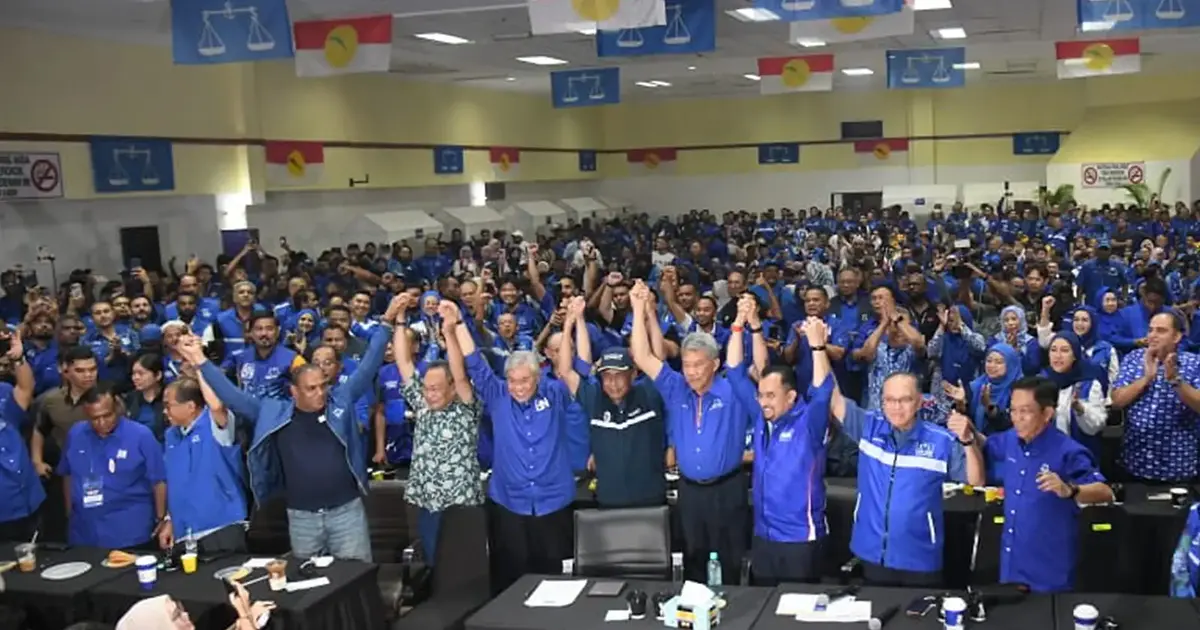
Barisan Nasional's commanding performance in the Negeri Sembilan state election has fundamentally altered the momentum in Malaysian politics, reinforcing the coalition's recovery from the 2018 general election watershed and signalling potential trajectory for national politics. The scale of BN's victory represents more than simply winning seats; it demonstrates the coalition's capacity to reassemble its traditional voter coalitions across different demographics and regions, a recovery many political analysts had questioned barely five years ago. For Prime Minister Anwar Ibrahim's government, the results present an uncomfortable reckoning with the limits of Pakatan Harapan's appeal outside specific urban and younger voter concentrations.
The weakening of Pakatan Harapan's position in Negeri Sembilan reflects broader challenges facing the opposition coalition that extend far beyond a single state contest. The coalition has struggled to translate its 2022 general election gains into sustained momentum, finding itself unable to establish decisive dominance even in states where it previously held significant ground. Observers point to multiple contributing factors: fractious internal dynamics between PKR, DAP, and Amanah have occasionally overshadowed messaging to voters; competition from Perikatan Nasional's twin coalitions has fragmented anti-incumbent votes; and local governance issues have eroded confidence in some constituencies. For Anwar's government at the federal level, weakness in state-level contests complicates its narrative of national renewal and raises questions about its ability to defend parliamentary seats in the next general election should similar patterns emerge nationwide.
Within Perikatan Nasional, the Negeri Sembilan outcome has intensified internal fissures, particularly regarding Bersatu's strategic positioning and future viability. Bersatu's contested performance and its role within the broader PN alliance have become flashpoints for coalition tensions, with competing visions emerging over whether the party can function effectively as a coalition partner or whether structural obstacles limit its contributions. The party faces mounting pressure to demonstrate electoral relevance independent of its association with Muhyiddin Yassin, whose stewardship has proven divisive. Some within PN question whether Bersatu's presence strengthens or complicates the coalition's messaging and unity, especially in states where multiple PN components compete for similar voter bases.
Geographically, BN's consolidation in Negeri Sembilan carries strategic importance for regional politics. The state occupies a middle ground between the federal territories and southern Selangor, territories where BN traditionally held sway before the 2018 upheaval. Rebuilding dominance in Negeri Sembilan suggests BN's machinery remains capable of reconnecting with voters in transitional zones, communities that might otherwise drift toward opposition alternatives. This capacity becomes crucial for the national political balance, since Malaysian electoral mathematics often turn on precisely these intermediate regions rather than the most polarised strongholds.
The election's class and demographic dimensions deserve particular attention for Malaysian observers. BN's strength in Negeri Sembilan spans both rural and suburban constituencies, indicating success in bridging economic divides that have sometimes complicated coalition cohesion. This contrasts with Pakatan Harapan's recent tendency toward concentration among urban, higher-income, and younger voters, demographics that compose proportionally smaller shares of Malaysia's overall electorate. Without expanding its reach into working-class and middle-income suburban communities, PH faces a structural ceiling that even superior performance in metropolitan areas cannot overcome.
Muhyiddin Yassin's Perikatan Nasional coalition has positioned itself as an alternative to both BN and PH, yet the Negeri Sembilan results complicate that messaging. PN failed to mount a decisive challenge to BN in a state where the coalition might plausibly have expected stronger performance given its stated appeal to anti-establishment voters. This weakness invites scrutiny regarding PN's organizational capacity and whether its component parties genuinely function as a coordinated force or remain largely separate entities sharing a label. For Bersatu specifically, the inability to translate its federal influence into state-level breakthroughs suggests that the party's political capital remains narrow and dependent on association with particular personalities rather than institutional strength.
Malaysian voters' behaviour in Negeri Sembilan also reflects a broader recalibration of political preferences after the turbulent 2020-2022 period. The nation endured unprecedented political instability, government collapses, and leadership transitions that exhausted public patience for further disruption. BN's electoral gains potentially reflect voter appetite for stability and experienced governance rather than ideological commitment, a dynamic that differs markedly from the 2018 election's change narrative. This stability preference, if sustained, could significantly advantage BN across multiple state contests and make opposition breakthroughs substantially more difficult.
Regional observers across Southeast Asia will monitor these Malaysian electoral trends closely, particularly given the region's broader patterns of democratic consolidation and coalition politics. Malaysia's experience demonstrates how coalition governments, even when facing initial rejection, can rebuild through demonstrating administrative competence and reconnecting with traditional voter bases. Conversely, opposition forces struggle when unable to translate initial victories into sustained governance performance and voter satisfaction. These patterns may presage broader regional shifts as Southeast Asian democracies mature and voters prioritize performance over protest.
Looking forward, the Negeri Sembilan results will likely shape strategic calculations for the next general election. BN enters the contest with renewed credibility in state administration and political organization, potentially attracting fence-sitting voters who previously drifted toward opposition alternatives. Pakatan Harapan faces pressure to reinvigorate its appeal and demonstrate that it offers concrete benefits beyond opposition to incumbency. Perikatan Nasional must clarify its strategic positioning and prove that component parties, especially Bersatu, contribute meaningfully rather than merely complicating coalition management. The state election thus represents far more than a localized contest; it serves as a barometer for national political alignment and a preview of contests likely to unfold across coming months in other state constituencies.

