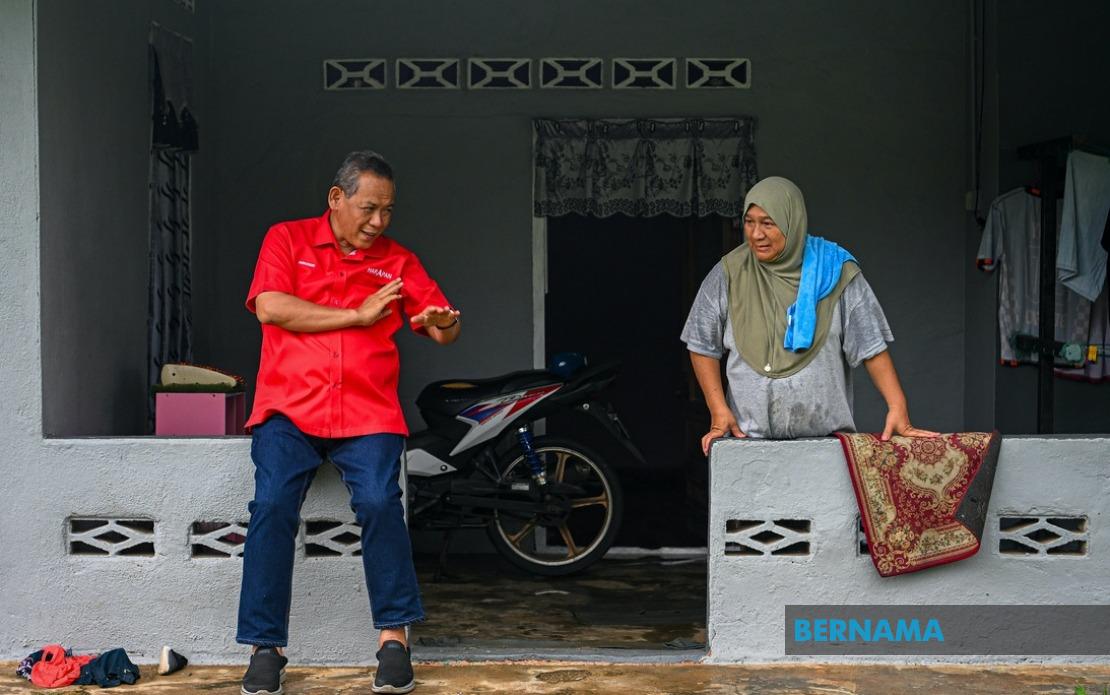
Negeri Sembilan's Pakatan Harapan coalition is pivoting its election strategy squarely toward the governance credentials of incumbent Menteri Besar Datuk Seri Aminuddin Harun, banking on nearly two terms of scandal-free administration to convince voters that political continuity and economic stability should take precedence at the ballot box on August 1.
The coalition's election director, Datuk Seri Amirudin Shari, has characterised the opening phase of campaigning as exceptionally encouraging, with field reports indicating that voters remain satisfied with Aminuddin's stewardship and see no pressing reason to change course. Speaking as both the PKR vice-president and Selangor Menteri Besar, Amirudin conveyed confidence that this groundswell of support, while not always manifest in large public gatherings, reflects genuine approval among ordinary residents who have encountered PH representatives during doorstep and community engagement efforts.
What distinguishes PH's positioning in this election is the explicit emphasis on clean governance as a competitive advantage. Amirudin repeatedly underscored that the Pakatan Harapan administration has not been tainted by major corruption scandals or administrative malfeasance since coming to power, a claim designed to resonate with Malaysian voters who have grown increasingly attuned to integrity standards in public office following years of high-profile graft cases. By framing the election partly as a referendum on honest stewardship versus unknown alternatives, PH seeks to neutralise opposition attacks and shift voter focus away from bread-and-butter grievances toward the safer ground of political stability.
The coalition's confidence appears anchored in its well-entrenched grassroots machinery, which Amirudin identified as a decisive organizational asset. In Negeri Sembilan's 36 state assembly seats, PH won 17 in the 2023 election, a plurality but not an outright majority. The coalition's ability to retain these seats and potentially expand its footprint will depend heavily on the activation and efficiency of its ground networks—the ward officers, grassroots volunteers, and community leaders who translate campaign messaging into localized contact and momentum. Amirudin's emphasis on grassroots feedback suggests that internal polling or canvassing has yielded data supportive of a PH victory narrative.
Prime Minister Datuk Seri Anwar Ibrahim's role as PH chairman and his national standing have been explicitly factored into the state election calculus. Amirudin cited the Johor state election as a precedent, noting that Anwar's public support and credibility have historically boosted candidate performance in regional contests. The implicit logic is that a strong national leader enhances the appeal of local PH candidates and provides reassurance about the coalition's governing capability. This vertical linkage between federal and state electoral dynamics is crucial in Malaysian politics, where voters often conflate national governance performance with state-level decisions.
Aminuddin himself brings dual credentials to the campaign—his record as Menteri Besar and his concurrent tenure as Port Dickson Member of Parliament. This dual role allows him to market himself as both a tested state administrator and a voice in federal decision-making, potentially appealing to voters who value representation at multiple tiers of government. The fact that he has navigated nearly two full terms without major controversy or scandal removal suggests institutional durability and political survival skills that opposition parties find difficult to counter.
PH's campaign manifesto, to be unveiled during the campaign period, is designed to marry continuity with innovation. Amirudin indicated that the manifesto would blend ongoing development initiatives with fresh policy proposals, signalling that a re-elected PH government would neither rest on past laurels nor pursue radical departures from established governance patterns. This centrist positioning appeals to moderate and swing voters who favour incremental progress over disruptive change, and it allows PH to claim both developmental achievement and responsiveness to emerging public needs.
The electoral mathematics in Negeri Sembilan provide important context. With 889,490 registered voters participating in this election—comprising 867,151 ordinary voters, 16,884 military personnel and spouses with early voting privileges, and 5,455 police personnel voting before August 1—the state represents a meaningful test of coalition strength. The 2023 result saw Barisan Nasional capture 14 seats and Perikatan Nasional five, leaving PH as the only bloc with an outright plurality. For PH to secure a fresh mandate and avoid a hung assembly, it will likely need to defend most of its existing seats while making inroads into swing constituencies.
The dissolution of the state assembly on June 5 and the setting of early voting for July 28 and main polling for August 1 compressed the campaign window and forced parties into rapid mobilisation. Early voting provisions for military and police, traditionally more conservative blocs, add complexity to PH's path to victory, as these uniformed voters have historically tilted toward Barisan Nasional in peninsular elections. PH's emphasis on clean administration and Aminuddin's personal credibility must therefore prove compelling enough to peel away swing voters and maintain its existing coalition without relying excessively on opposition-leaning demographics.
For Malaysian observers and Southeast Asian analysts monitoring state-level politics in the region, the Negeri Sembilan election serves as a barometer of public satisfaction with the Pakatan Harapan-led federal government under Anwar Ibrahim. If PH succeeds in defending its mandate with the integrity and stability argument, it signals that Malaysian voters reward clean governance and political predictability. Conversely, any significant erosion of PH's seat count would suggest that economic pressures, dissatisfaction with federal performance, or opposition mobilisation has overcome the coalition's governance messaging. The outcome will likely influence campaign strategies in other state elections due over coming years and provide feedback to Anwar's administration about voter priorities heading toward the next general election cycle.

